
















Copyright: ©Author(s) 2026.
World J Gastroenterol. Jul 21, 2026; 32(27): 118794
Published online Jul 21, 2026. doi: 10.3748/wjg.118794
Published online Jul 21, 2026. doi: 10.3748/wjg.118794
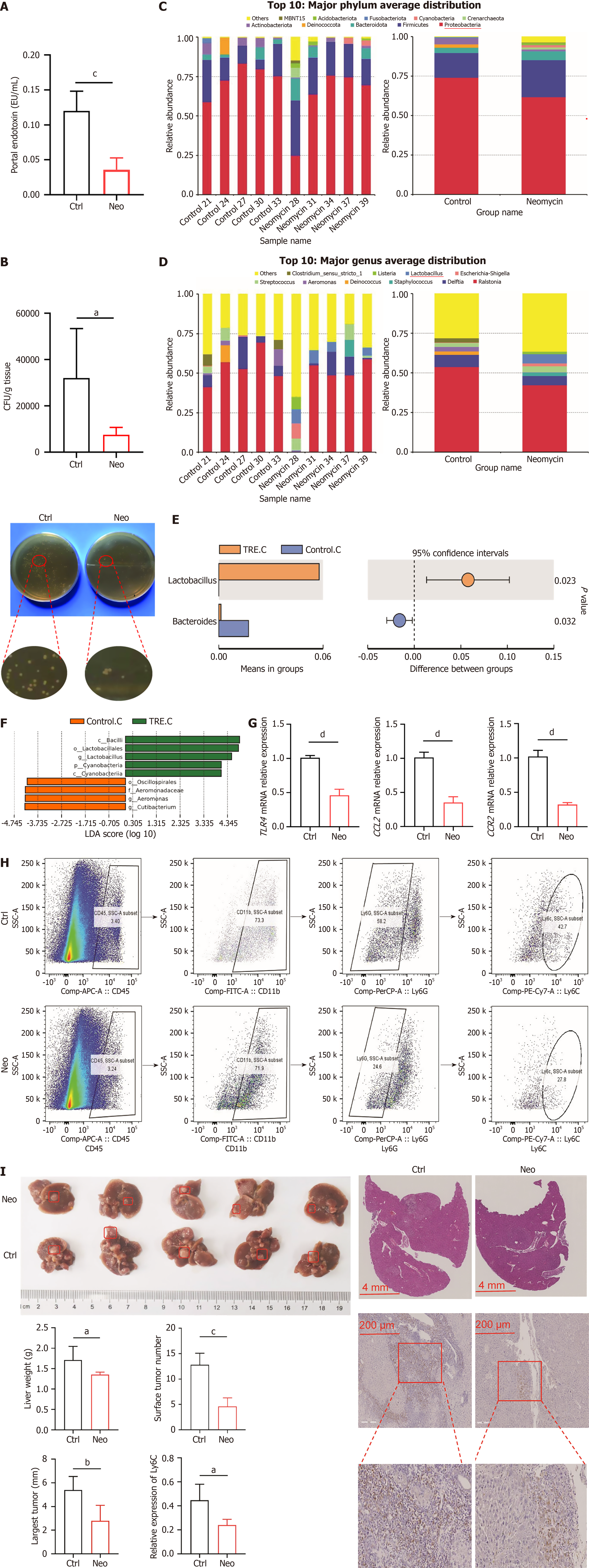
Figure 7 Neomycin sensitive Gram-negative bacteria promote hepatocellular carcinoma growth.
A: Portal endotoxin levels in control (Ctrl) and neomycin groups; B: Hepatocellular carcinoma tissues from Ctrl and neomycin mice were homogenized and cultured on a medium without antibiotics. The clone formation units were calculated; C: Major phylum average distribution in Ctrl and neomycin groups; D: Major genus average distribution in Ctrl and neomycin groups; E: The differential bacteria at genus level was detected in Ctrl and neomycin groups by t-test; F: The LEfSe analysis revealed genus-level differences in bacterial composition between the Ctrl and neomycin groups; G: The mRNA expression levels of TLR4, CCL2, and CCR2 were detected by reverse transcription-quantitative PCR in Ctrl and neomycin groups; H: The aggregation of monocytic myeloid-derived suppressor cells was detected by flow cytometry in Ctrl and neomycin groups; I: The relative expression of Ly6C was detected by immunohistochemical in Ctrl and neomycin groups. Tumor size, maximum tumor diameter, and liver weight were assessed in in Ctrl and neomycin groups (n = 5 for each group). aP < 0.05, bP < 0.01; cP < 0.001; dP < 0.0001. CFU: Clone formation unit; Ctrl: Control; Neo: Neomycin.
- Citation: Zhang Y, Zhou YL, Nie X, Zhang LJ, Xu WW, Wang JQ, Zhao HL, Xu JK, Xu J, Xu HM, Li JH, Huang WQ, Yang J, Yang YX, Zhan Q, Lin Y, Nie YQ. Gram-negative bacteria and endotoxins promote hepatocellular carcinoma progression through the recruitment of myeloid-derived suppressor cells. World J Gastroenterol 2026; 32(27): 118794
- URL: https://www.wjgnet.com/1007-9327/full/v32/i27/118794.htm
- DOI: https://dx.doi.org/10.3748/wjg.118794