
















Copyright: ©Author(s) 2026.
World J Gastroenterol. Jul 21, 2026; 32(27): 118794
Published online Jul 21, 2026. doi: 10.3748/wjg.118794
Published online Jul 21, 2026. doi: 10.3748/wjg.118794
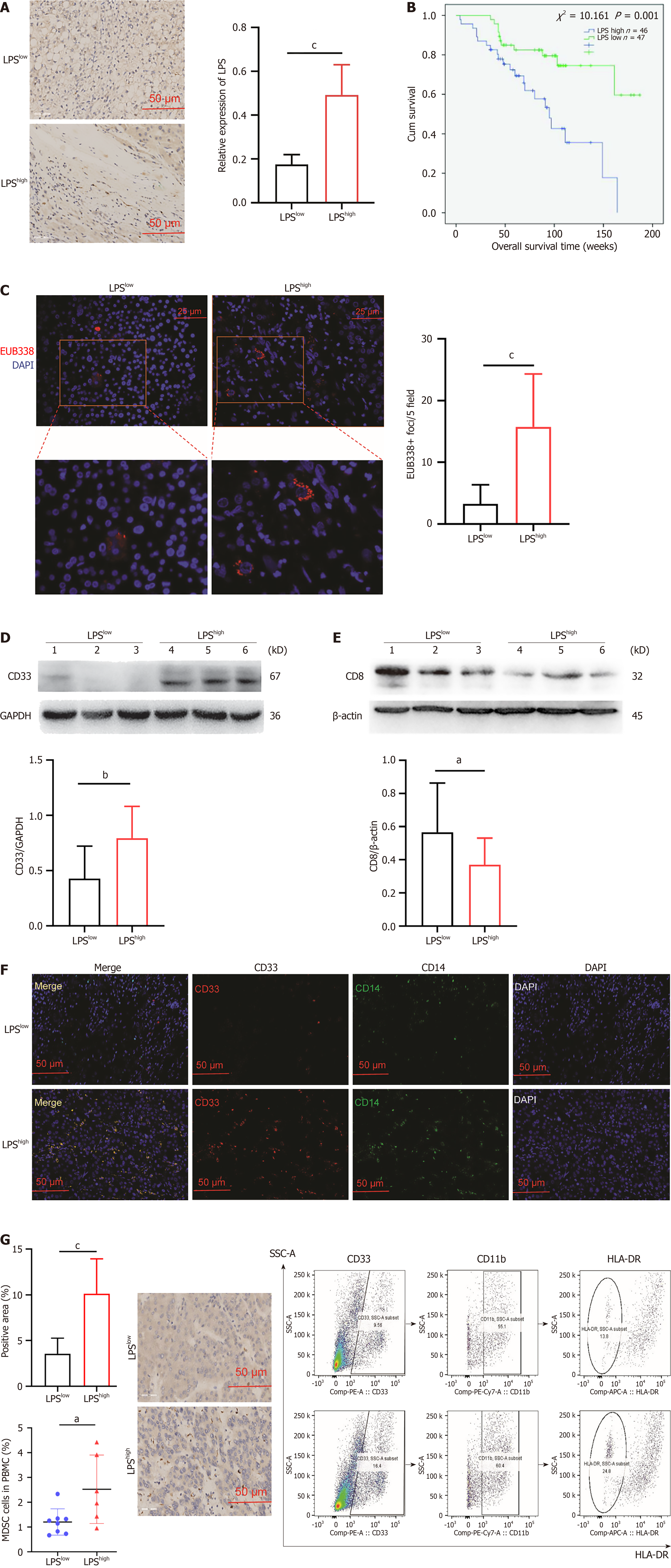
Figure 3 Gram-negative bacteria and endotoxins affected the survival of hepatocellular carcinoma patients through recruitment of monocytic myeloid-derived suppressor cells.
A: Relative expression of lipopolysaccharide (LPS) in LPSlow and LPShigh groups; B: Kaplan-Meier survival analysis of LPSlow and LPShigh groups; C: EUB338 fluorescence in situ hybridization of LPSlow and LPShigh groups (LPSlow, n = 47; LPShigh, n = 46); D and E: The relative expression levels of CD33 and CD8 in LPSlow and LPShigh groups (LPSlow, n = 16; LPShigh, n = 14); F: Representative images of IF staining with CD33+CD14+ cells in group of LPSlow and LPShigh (LPSlow, n = 16; LPShigh, n = 14); G: The flow cytometry data of MDSCs in LPSlow and LPShigh groups (LPSlow, n = 8, LPShigh, n = 6). aP < 0.05, bP < 0.01; cP < 0.0001. LPS: Lipopolysaccharide.
- Citation: Zhang Y, Zhou YL, Nie X, Zhang LJ, Xu WW, Wang JQ, Zhao HL, Xu JK, Xu J, Xu HM, Li JH, Huang WQ, Yang J, Yang YX, Zhan Q, Lin Y, Nie YQ. Gram-negative bacteria and endotoxins promote hepatocellular carcinoma progression through the recruitment of myeloid-derived suppressor cells. World J Gastroenterol 2026; 32(27): 118794
- URL: https://www.wjgnet.com/1007-9327/full/v32/i27/118794.htm
- DOI: https://dx.doi.org/10.3748/wjg.118794