
















Copyright: ©Author(s) 2026.
World J Gastroenterol. Jul 7, 2026; 32(25): 118597
Published online Jul 7, 2026. doi: 10.3748/wjg.118597
Published online Jul 7, 2026. doi: 10.3748/wjg.118597
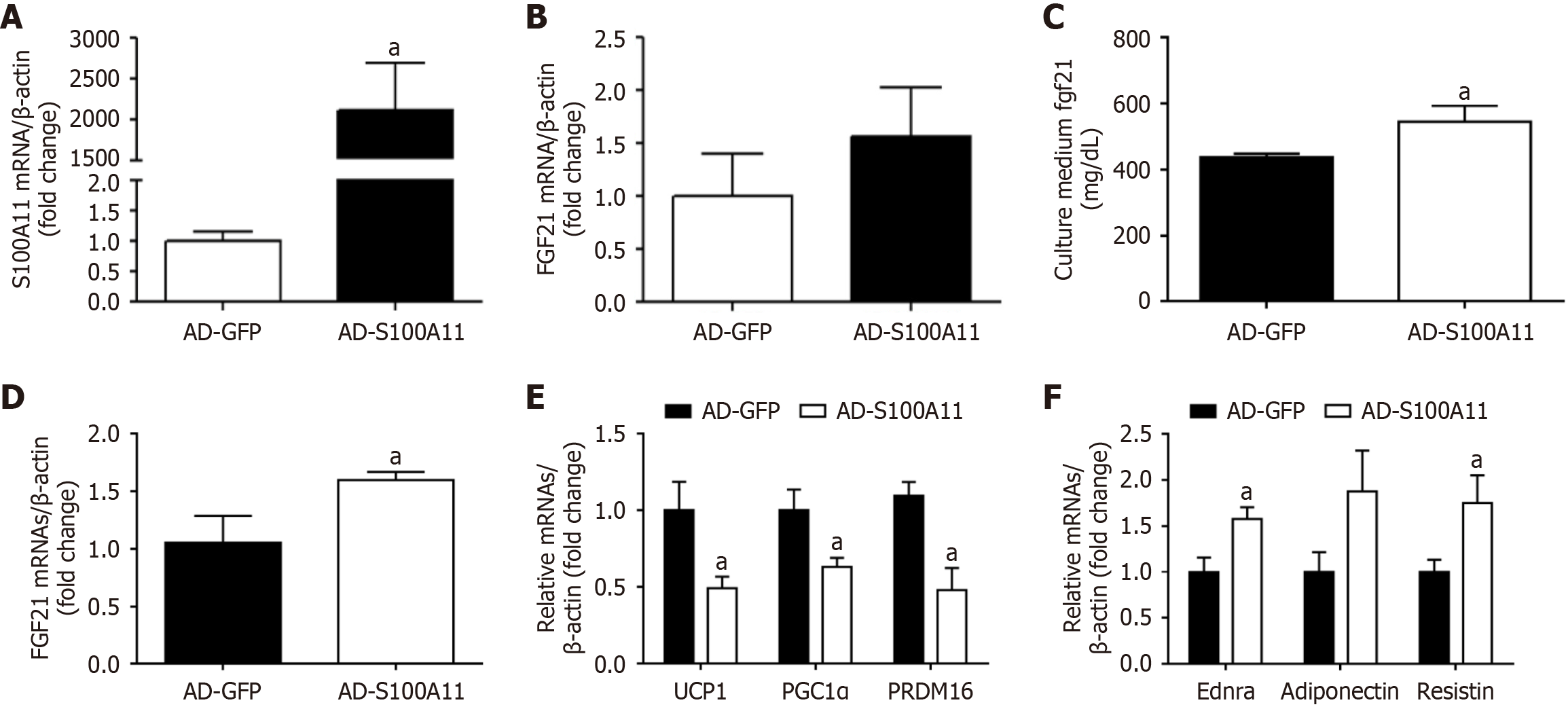
Figure 8 S100A11 overexpression in hepatocytes promotes lipid accumulation in adipocytes.
All data are presented as mean ± SE. n = 5 or 6 biological repeats. Statistical analysis was performed using unpaired two-tailed Student’s t test: aP < 0.05 vs recombinant adenoviruses encoding green fluorescent protein. Mouse-derived normal liver AML12 cells were cocultured with preadipocyte 3T3-L1 cells in vitro. When 3T3-L1 cells were approximately 70% confluent, adipogenic differentiation was performed, and recombinant adenoviruses encoding S100A11 were transfected into hepatocytes. Real-time polymerase chain reaction was used to detect related mRNA levels of AML12 cells and 3T3-L1 cells after 72 hours. A: MRNA level of S100A11 in AML12 cells; B: MRNA level of fibroblast growth factor 21 (FGF21) in AML12 cells; C: FGF21 level in AML12 cell culture supernatant; D: MRNA level of Fgf21 in 3T3-L1 cells; E and F: Expression levels of genes related to brown adipose tissue and white adipose tissue in 3T3-L1 cells. FGF21: Fibroblast growth factor 21; AD-GFP: Recombinant adenoviruses encoding green fluorescent protein; AD-SA/AD-S100A11: Recombinant adenoviruses encoding S100A11; UCP1: Uncoupling protein 1; PGC1α: Peroxisome proliferator-activated receptor gamma coactivator 1-α; PRDM16: PR domain containing 16.
- Citation: Zhang QQ, Lu XQ, Shang BZ, Liu LC, Lu ET, Li HY, Xia MM, Jin YX, Zhang WZ, Zhang Y, Han JY, Li Y. Calcium-dependent signaling protein family member S100A11 promotes liver and adipose lipid accumulation through fibroblast growth factor 21. World J Gastroenterol 2026; 32(25): 118597
- URL: https://www.wjgnet.com/1007-9327/full/v32/i25/118597.htm
- DOI: https://dx.doi.org/10.3748/wjg.118597