
















Copyright: ©Author(s) 2026.
World J Gastroenterol. Jul 7, 2026; 32(25): 118140
Published online Jul 7, 2026. doi: 10.3748/wjg.118140
Published online Jul 7, 2026. doi: 10.3748/wjg.118140
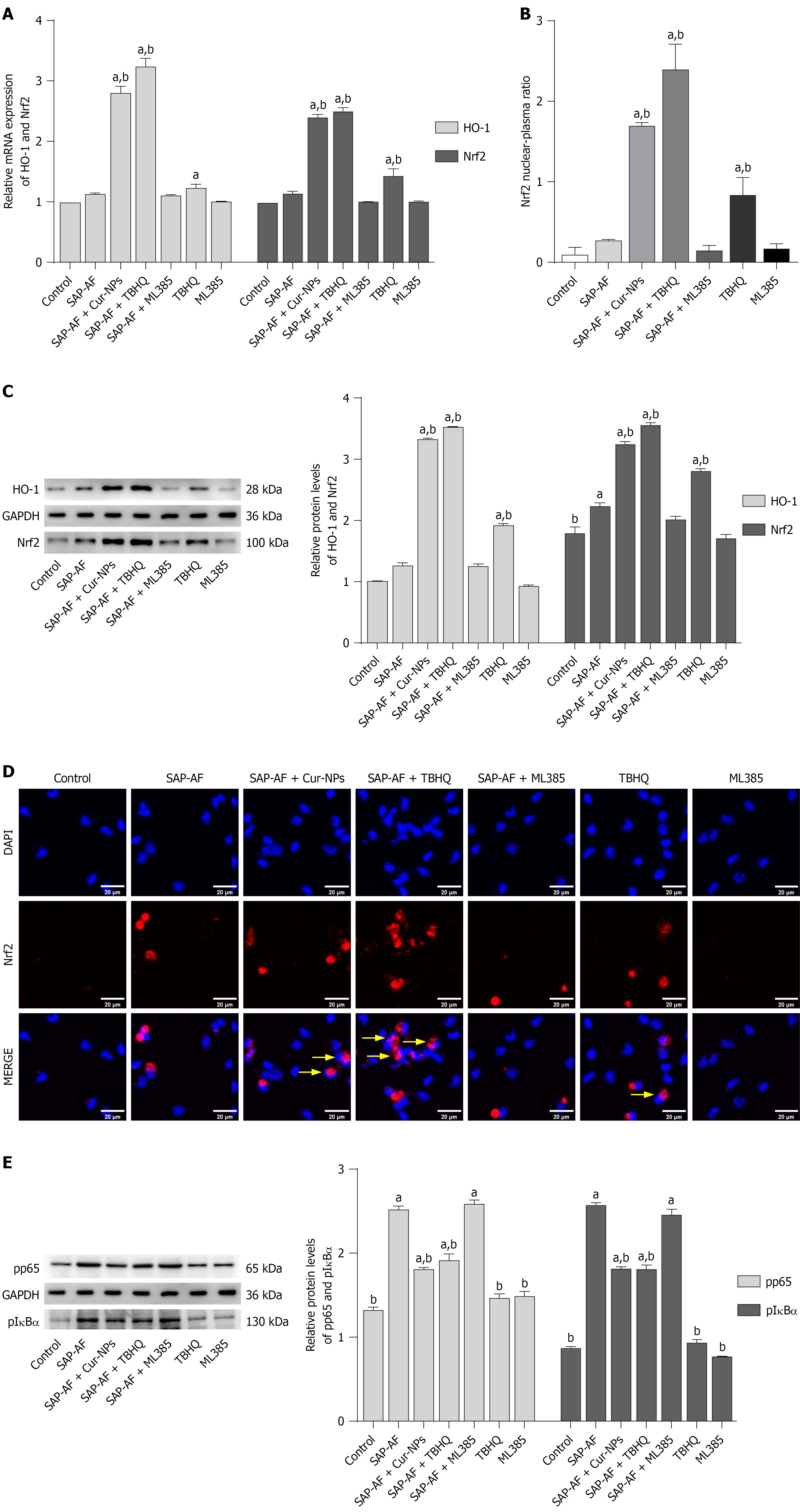
Figure 5 Curcumin nanoparticles mediate the suppression of nuclear factor kappa-B activation through a nuclear factor erythroid 2-related factor 2-dependent mechanism in vitro.
A: The expression levels of nuclear factor erythroid 2-related factor 2 (Nrf2) and heme oxygenase-1 (HO-1) mRNA, with the internal reference gene GAPDH normalized; B: Quantitative Nrf2 nuclear translocation based on the ratio of nuclear/cytoplasmic fluorescence intensity; C: Representative immunoblots of Nrf2 and HO-1 proteins with corresponding quantitative grayscale analysis; D: Subcellular localization of Nrf2 (red), nuclei stained by DAPI (blue), with arrows highlighting nuclear translocation; E: Representative immunoblots of pp65 and pIκBα proteins with corresponding quantitative grayscale analysis. The data were expressed as mean ± SD (n = 6 rats in each group). aP < 0.05 vs sham, bP < 0.05 vs severe acute pancreatitis. Cur-NPs: Curcumin nanoparticles; SAP: Severe acute pancreatitis; iNOS: Inducible nitric oxide synthase; HO-1: Heme oxygenase-1; Nrf2: Nuclear factor erythroid 2-related factor 2.
- Citation: Yang L, Liao DX, Wang XY, Fan YH, Luo ZL, Wen Y. Curcumin nanoparticles mitigate early inflammation in severe acute pancreatitis by modulating peritoneal macrophage polarization via Nrf2/HO-1 pathway activation. World J Gastroenterol 2026; 32(25): 118140
- URL: https://www.wjgnet.com/1007-9327/full/v32/i25/118140.htm
- DOI: https://dx.doi.org/10.3748/wjg.118140