
















Copyright: ©Author(s) 2026.
World J Gastroenterol. Jul 7, 2026; 32(25): 118140
Published online Jul 7, 2026. doi: 10.3748/wjg.118140
Published online Jul 7, 2026. doi: 10.3748/wjg.118140
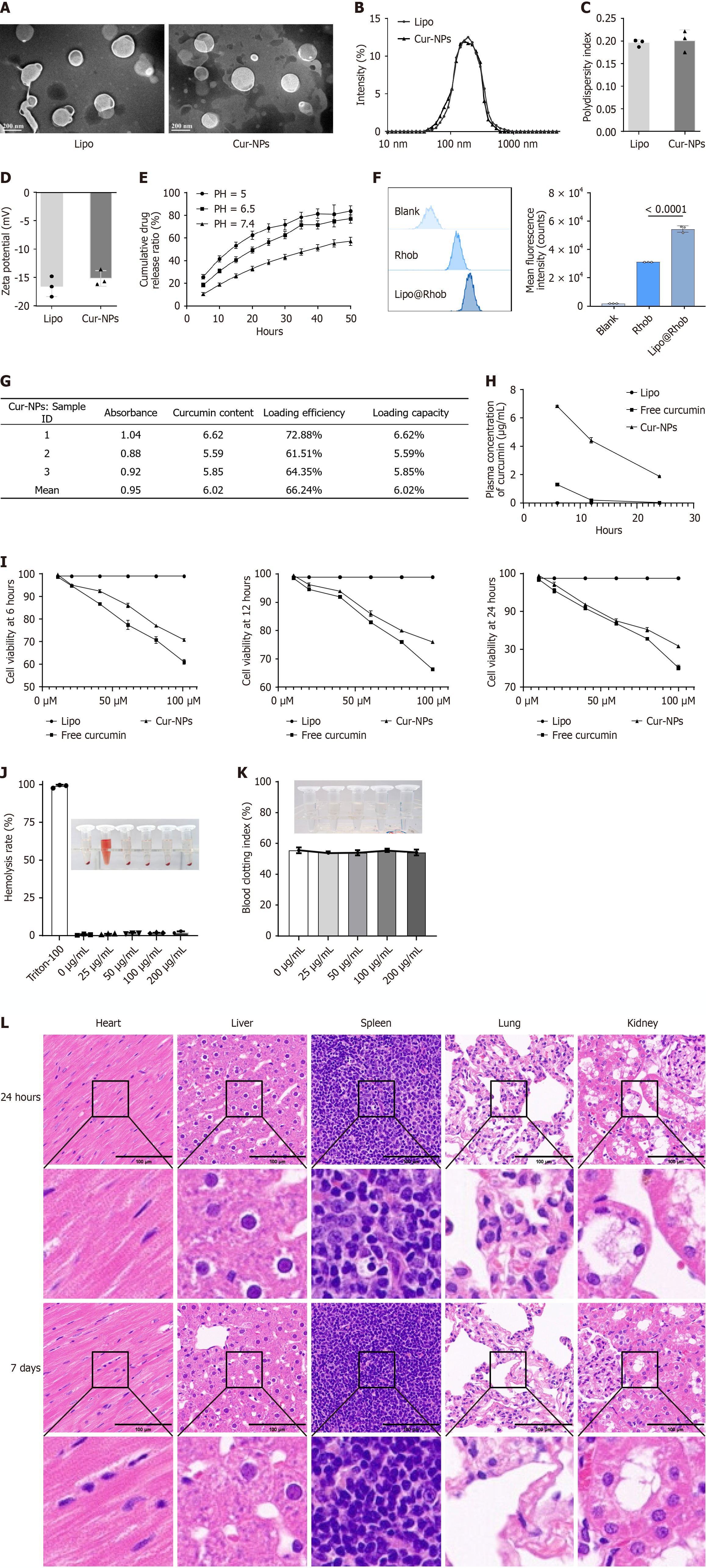
Figure 1 Characterization and safety verification of curcumin nanoparticles.
A: Morphological characteristics of curcumin nanoparticles (Cur-NPs); B: Particle size distribution of Cur-NPs; C: Polydispersion index of Cur-NPs; D: Zeta potential of curcumin nanoparticles; E: Cumulative drug release rate of Cur-NPs under different pH (5, 6.5, 7.4) conditions; F: Representative images of rhodamine B fluorescence signal in peritoneal macrophages of each group (Blank, Rhod, Lipo@Rhod); the mean fluorescence intensity in each group was quantitatively analyzed by flow cytometry; G: Encapsulation efficiency and drug loading capacity of Cur-NPs; H: Plasma concentrations of curcumin (Lipo, free curcumin, Cur-NPs) after 6 hours, 12 hours and 24 hours of treatment; I: Cell viability after 6 hours, 12 hours, and 24 hours of treatment in each group; J: Hemolysis rate (%) of Cur-NPs at each concentration; K: Coagulation index (%) of Cur-NPs at each concentration; L: Representative hematoxylin and eosin stained sections of five major organs: Heart, liver, spleen, lung, and kidney after 24 hours and 7 days of Cur-NPs treatment. Cur-NPs: Curcumin nanoparticles.
- Citation: Yang L, Liao DX, Wang XY, Fan YH, Luo ZL, Wen Y. Curcumin nanoparticles mitigate early inflammation in severe acute pancreatitis by modulating peritoneal macrophage polarization via Nrf2/HO-1 pathway activation. World J Gastroenterol 2026; 32(25): 118140
- URL: https://www.wjgnet.com/1007-9327/full/v32/i25/118140.htm
- DOI: https://dx.doi.org/10.3748/wjg.118140