
















Copyright: ©Author(s) 2026.
World J Gastroenterol. Jun 21, 2026; 32(23): 117320
Published online Jun 21, 2026. doi: 10.3748/wjg.v32.i23.117320
Published online Jun 21, 2026. doi: 10.3748/wjg.v32.i23.117320
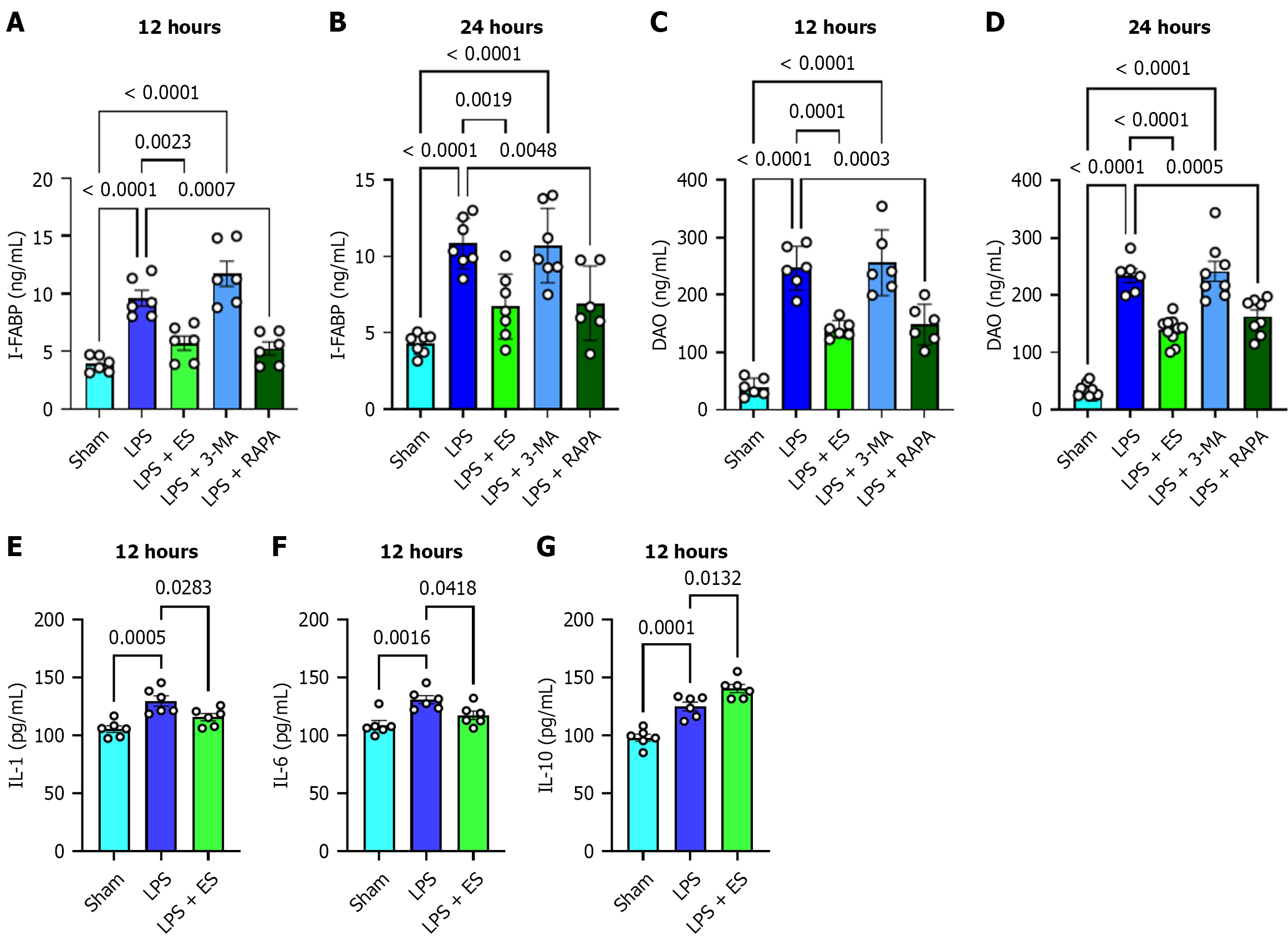
Figure 4 Esmolol suppressed the levels of fatty acid-binding protein, diamine oxidase, interleukin-1, and interleukin-6 and increased the levels of interleukin-10 in rats with lipopolysaccharide-induced sepsis.
A: Fatty acid-binding protein (I-FABP) concentration at 12 hours; B: I-FABP concentration at 24 hours; C: Diamine oxidase (DAO) concentration at 12 hours; D: DAO concentration at 24 hours; E: Interleukin (IL-1) level at 12 hours; F: IL-6 level at 12 hours; G: IL-10 level at 12 hours. Lipopolysaccharide (LPS) significantly increased the production of I-FABP and DAO, whereas esmolol (ES) and rapamycin markedly decreased their serum levels (A-D). LPS significantly increased the production of IL-1 and IL-6 and decreased that of IL-10 at 12 hours. ES suppressed the levels of IL-1 and IL-6 and increased those of IL-10 in rats with LPS-induced sepsis at 12 hours. n = 6 in each group. I-FABP: Fatty acid-binding protein; DAO: Diamine oxidase; ES: Esmolol; 3-MA: 3-methyladenine; IL: Interleukin; RAPA: Rapamycin.
- Citation: Zhang YB, Yu ZJ, Jin J, Liu MX, Ji FH, Yang XJ. Esmolol alleviates lipopolysaccharide-induced intestinal injuries by enhancing autophagy through the AMPK/mTOR/ULK1 pathway. World J Gastroenterol 2026; 32(23): 117320
- URL: https://www.wjgnet.com/1007-9327/full/v32/i23/117320.htm
- DOI: https://dx.doi.org/10.3748/wjg.v32.i23.117320