
















Copyright: ©Author(s) 2026.
World J Gastroenterol. Jun 14, 2026; 32(22): 118745
Published online Jun 14, 2026. doi: 10.3748/wjg.v32.i22.118745
Published online Jun 14, 2026. doi: 10.3748/wjg.v32.i22.118745
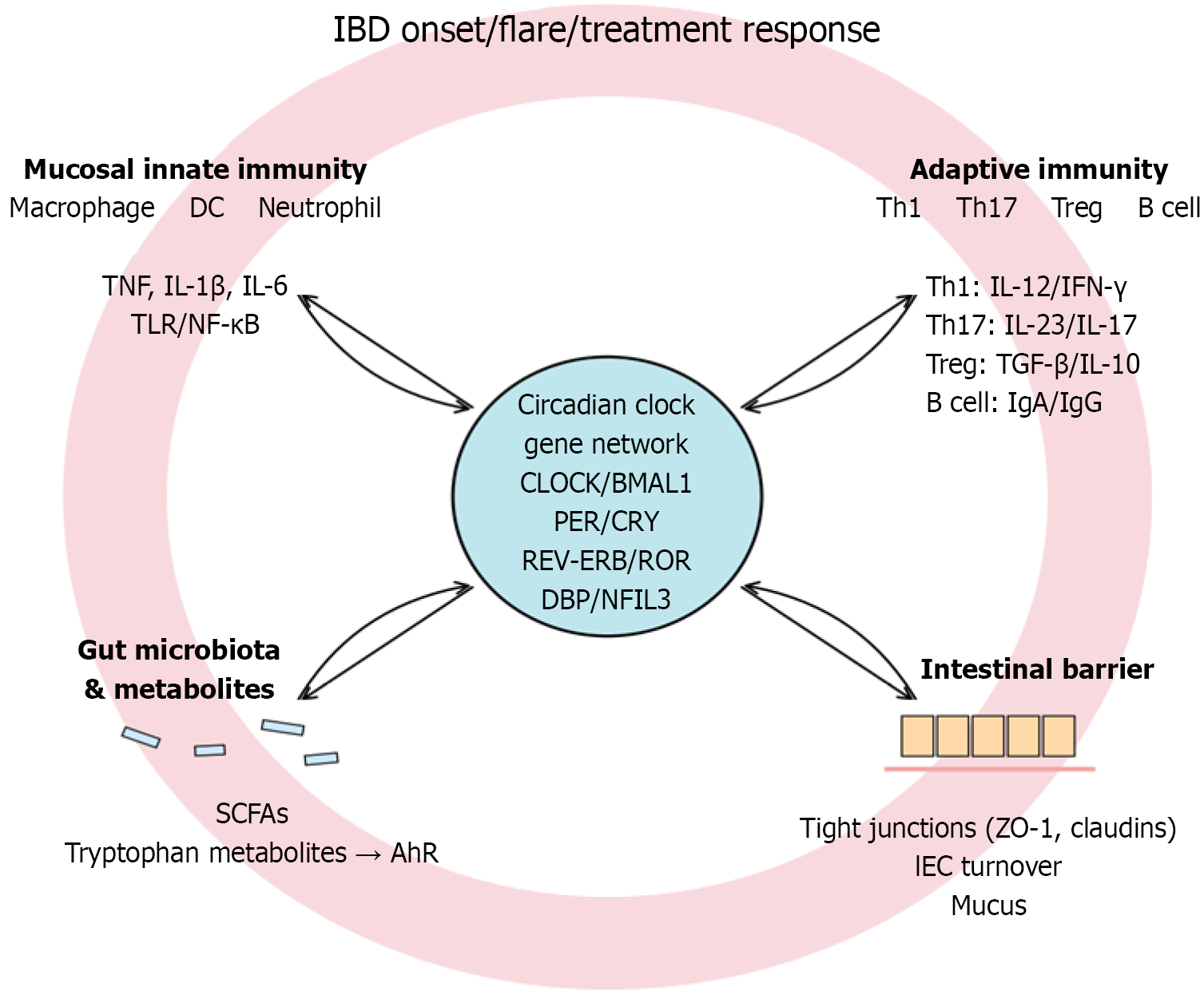
Figure 4 Integrated model illustrating circadian clock gene networks as multidimensional hubs linking mucosal immunity, gut microbiota, and epithelial barrier function in inflammatory bowel disease.
This integrated model combines evidence from human observational studies and experimental systems. Mechanistic links are proposed based on preclinical data, and clinical causality should not be assumed without prospective validation. IBD: Inflammatory bowel disease; DC: Dendritic cell; TNF: Tumour necrosis factor; IL: Interleukin; TLR: Toll-like receptor; NF-κB: Nuclear factor-κB; SCFA: Short-chain fatty acid; AhR: Aryl hydrocarbon receptor; ZO-1: Zonula occludens-1; IEC: Intestinal epithelial cell; Th: T helper cell; IFN-γ: Interferon-γ; Treg: Regulatory T cell; TGF-β: Transforming growth factor-β; CLOCK: Circadian locomotor output cycles kaput; BMAL1: Brain and muscle ARNT-like 1; PER: Period; CRY: Cryptochrome; REV-ERBα: Reverse erythroblastosis virus α; ROR: Retinoic-acid-related orphan receptor; DBP: D-box binding protein; NFIL3: Nuclear factor, interleukin-3.
- Citation: Yu KX, Lu ZJ. Circadian clock at the interface of mucosal immunity, gut microbiota and epithelial barrier in inflammatory bowel disease. World J Gastroenterol 2026; 32(22): 118745
- URL: https://www.wjgnet.com/1007-9327/full/v32/i22/118745.htm
- DOI: https://dx.doi.org/10.3748/wjg.v32.i22.118745