
















Copyright: ©Author(s) 2026.
World J Gastroenterol. Jun 14, 2026; 32(22): 118323
Published online Jun 14, 2026. doi: 10.3748/wjg.v32.i22.118323
Published online Jun 14, 2026. doi: 10.3748/wjg.v32.i22.118323
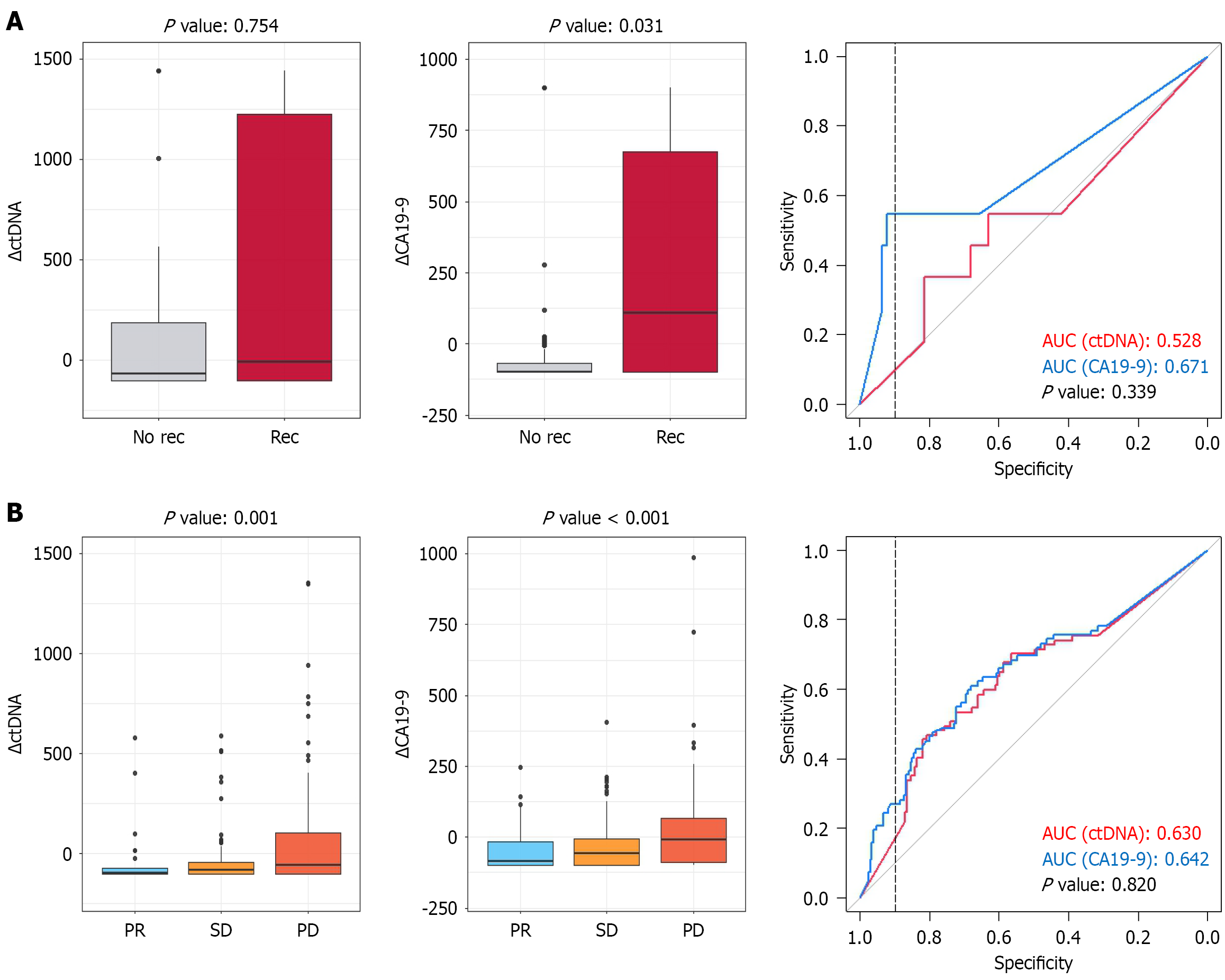
Figure 4 Comparison of changes in circulating tumor DNA and carbohydrate antigen 19-9 for predicting recurrence and treatment response.
A: Comparison of changes in circulating tumor DNA (ΔctDNA) and carbohydrate antigen 19-9 (ΔCA19-9) in the resection group. Box plots demonstrated the distribution of ΔctDNA and ΔCA19-9 values between recurrence and non-recurrence groups. The diagnostic performance of ΔctDNA and ΔCA19-9 for predicting tumor recurrence was compared using receiver operating characteristic curves; B: Comparison of ΔctDNA and ΔCA19-9 in the chemotherapy group. Box plots demonstrated the distribution of ΔctDNA and ΔCA19-9 values across different radiological response groups (partial response, stable disease, progressive disease). The diagnostic performance of ΔctDNA and ΔCA19-9 for predicting treatment response was compared using receiver operating characteristic curves. ctDNA: Circulating tumor DNA; CA19-9: Carbohydrate antigen 19-9; AUC: Area under the curve; PR: Partial response; SD: Stable disease; PD: Progressive disease.
- Citation: Jung K, Lee J, Jang D, Ahn J, Kim B, Yang S, Kim JH, Youn Y, Lee JC, Kim J, Hwang JH. Serial circulating tumor DNA as a biomarker for monitoring and prognostication in patients with pancreatic cancer. World J Gastroenterol 2026; 32(22): 118323
- URL: https://www.wjgnet.com/1007-9327/full/v32/i22/118323.htm
- DOI: https://dx.doi.org/10.3748/wjg.v32.i22.118323