
















Copyright: ©Author(s) 2026.
World J Gastroenterol. May 28, 2026; 32(20): 117044
Published online May 28, 2026. doi: 10.3748/wjg.v32.i20.117044
Published online May 28, 2026. doi: 10.3748/wjg.v32.i20.117044
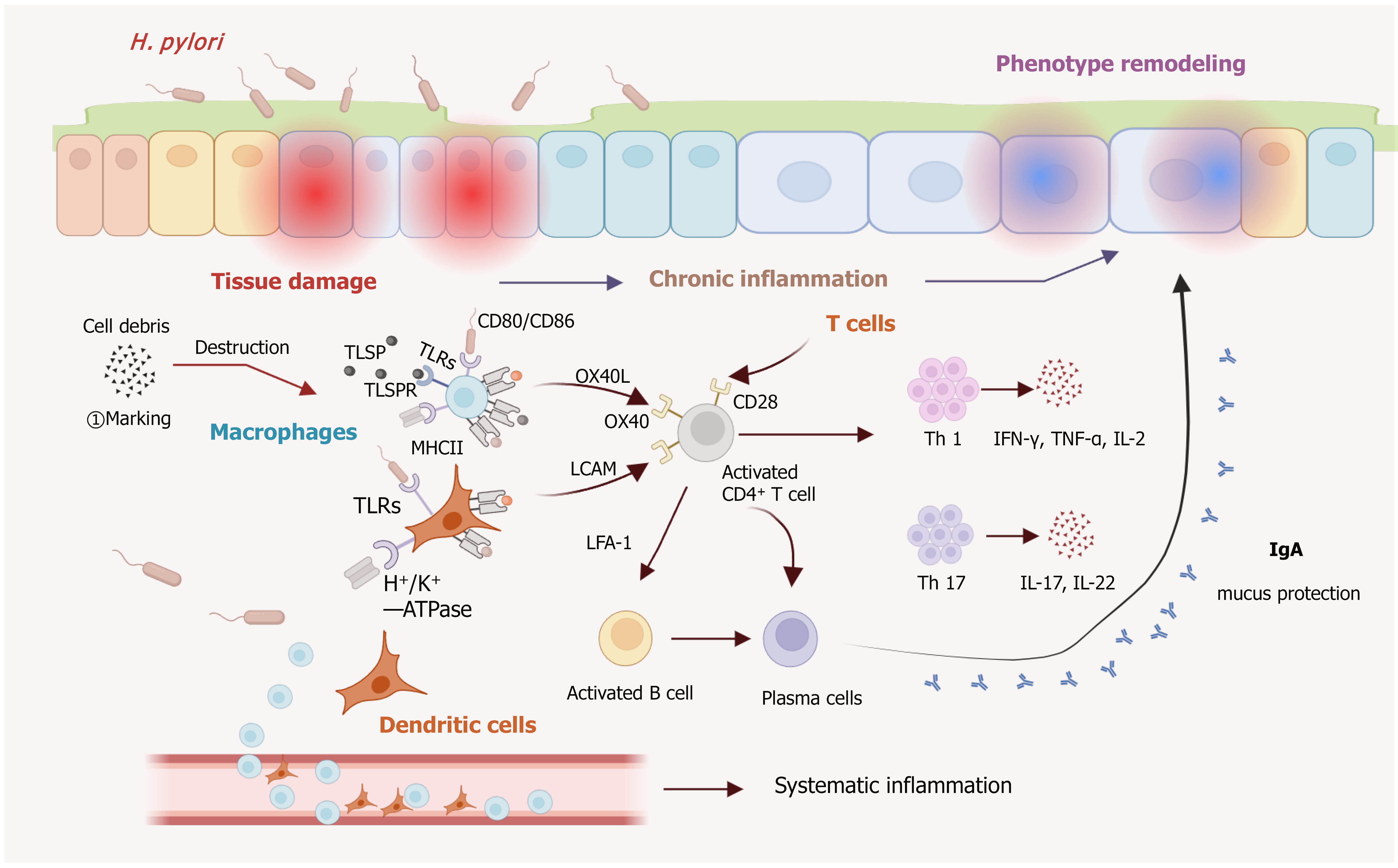
Figure 3 Helicobacter pylori-induced epithelial injury triggers the release and clearance of cell debris by macrophages, activating innate immune signaling and antigen presentation.
Dendritic cells and macrophages promote CD4+ T-cell activation through co-stimulatory pathways, driving Th1 and Th17 differentiation. The resulting cytokines (e.g., interferon-γ, tumor necrosis factor-α, interleukin-17) amplify chronic inflammation and contribute to remodeling of the epithelial phenotype. B cells activated through T-cell help differentiate into plasma cells and secrete IgA to support mucosal protection. Together, these interactions link local tissue damage with chronic inflammation and downstream epithelial changes. H. pylori: Helicobacter pylori; IL: Interleukin; IFN: Interferon; TNF-α: Tumor necrosis factor-α.
- Citation: Zheng HC, Zhou T, Sun L, Ding X. Gastric microenvironment and gastric cancer: Interplay of acid, microbiota, and inflammation. World J Gastroenterol 2026; 32(20): 117044
- URL: https://www.wjgnet.com/1007-9327/full/v32/i20/117044.htm
- DOI: https://dx.doi.org/10.3748/wjg.v32.i20.117044