
















©The Author(s) 2026.
World J Gastroenterol. Jan 14, 2026; 32(2): 114097
Published online Jan 14, 2026. doi: 10.3748/wjg.v32.i2.114097
Published online Jan 14, 2026. doi: 10.3748/wjg.v32.i2.114097
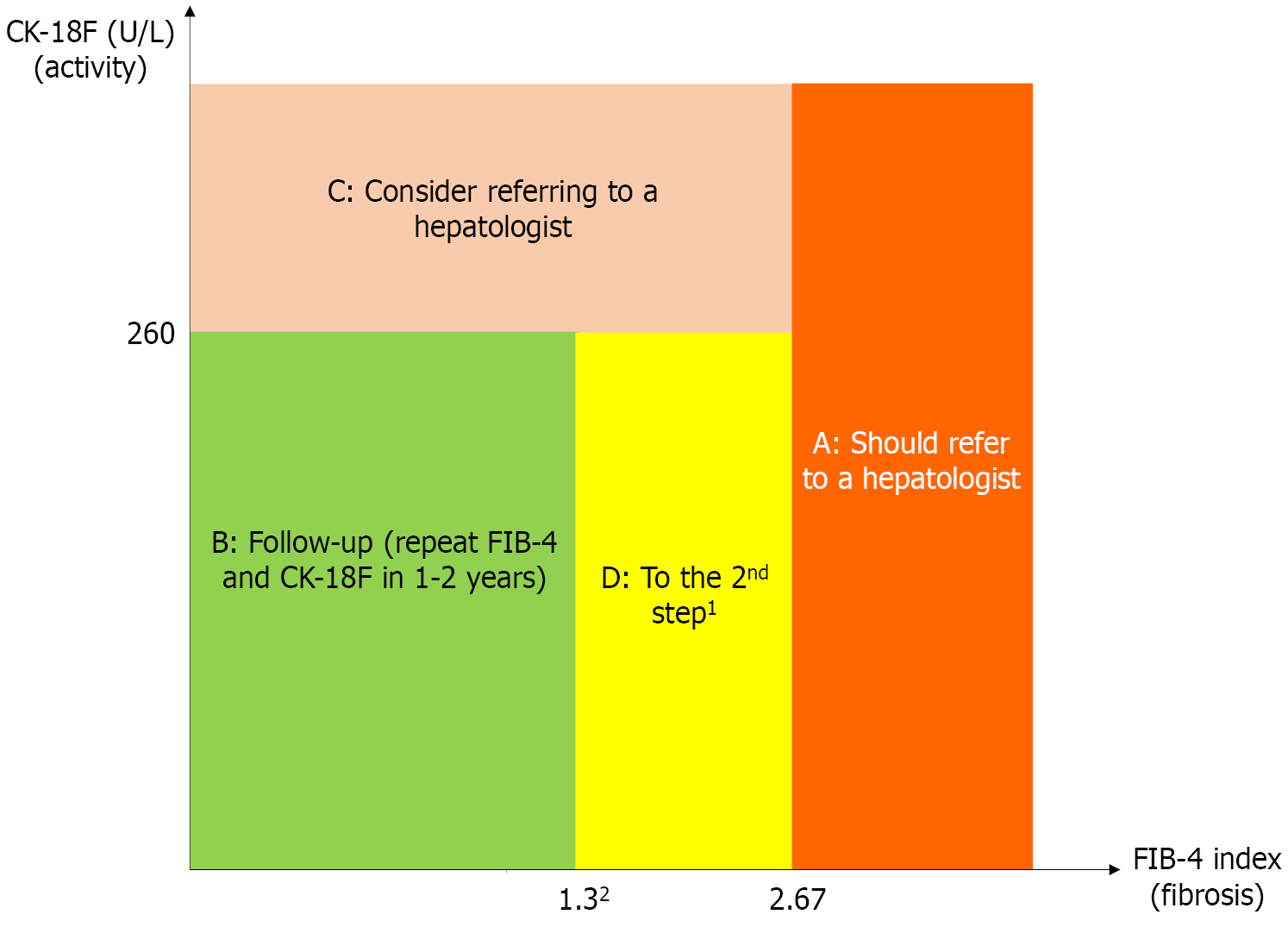
Figure 2 Stepwise approach for evaluating metabolic dysfunction-associated steatotic liver disease using the fibrosis-4 index and the cytokeratin 18 fragment biomarker.
A: High-risk group (orange). Patients with fibrosis-4 (FIB-4) > 2.67 should be referred to a hepatologist regardless of cytokeratin 18 fragment (CK-18F) levels due to the high risk of advanced fibrosis; B: Low-risk group (green). Patients with FIB-4 < 1.3 and CK-18F < 260 U/L are considered to have minimal fibrosis and inflammation. Follow-up with repeat FIB-4 and CK-18F testing every 1-2 years is recommended; C: Referral consideration group (pink). Patients with CK-18F ≥ 260 U/L may have progressive inflammation. Consider referring to a hepatologist for pathologic evaluation; D: Intermediate-risk group (yellow). Patients with FIB-4 of 1.30-2.67 and CK-18F < 260 U/L may include cases of full-blown metabolic dysfunction-associated steatohepatitis with advanced fibrosis. 1Indicates further evaluation with the enhanced liver fibrosis test, Mac-2-binding protein glycosylation isomer, type IV collagen 7S, vibration-controlled transient elastography, or magnetic resonance elastography will be necessary to confirm fibrosis status. 2Indicates a fibrosis-4 index of 2.0 is considered intermediate risk for patients age 65 or older. CK-18F: Cytokeratin 18 fragment; FIB-4: Fibrosis-4.
- Citation: Kamada Y, Sumida Y, Takahashi H, Ishiba H, Kawanaka M, Tada T, Yoneda M, Imajo K, Seko Y, Fujii H, Nakajima A. Noninvasive strategies for metabolic dysfunction-associated steatotic liver disease assessment and referral in Japan. World J Gastroenterol 2026; 32(2): 114097
- URL: https://www.wjgnet.com/1007-9327/full/v32/i2/114097.htm
- DOI: https://dx.doi.org/10.3748/wjg.v32.i2.114097