
















©The Author(s) 2026.
World J Gastroenterol. Jan 14, 2026; 32(2): 114097
Published online Jan 14, 2026. doi: 10.3748/wjg.v32.i2.114097
Published online Jan 14, 2026. doi: 10.3748/wjg.v32.i2.114097
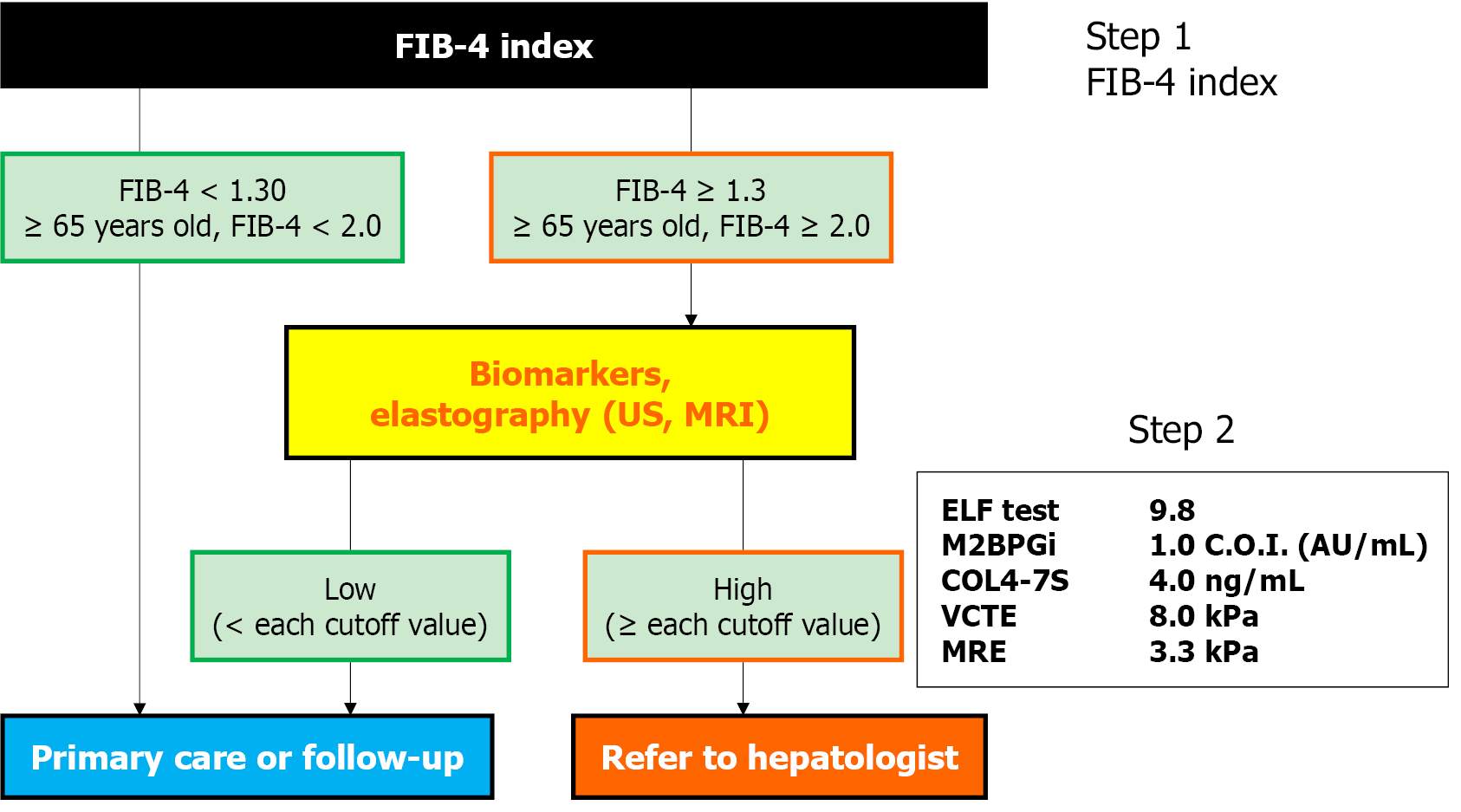
Figure 1 Algorithm for referral of patients with metabolic dysfunction-associated steatotic liver disease using noninvasive tests for liver fibrosis.
The algorithm for referral from a primary care physician to a hepatologist to narrow down cases of metabolic dysfunction-associated steatotic liver disease with advanced liver fibrosis is shown. First, the fibrosis-4 index is evaluated (step 1), and if the score is 1.30 or equal to or greater than 2.00 age 65 or older, the patient is evaluated using one of the various noninvasive tests (step 2). Patients with high values are referred to a hepatologist (refer to hepatologist). In cases followed by a family physician or a regular physician (primary care or follow-up), it is recommended to repeat the above procedure every 2-3 years. FIB-4: Fibrosis-4; US: Ultrasound; MRI: Magnetic resonance imaging; ELF: Enhanced liver fibrosis; M2BPGi: Mac-2-binding protein glycosylation isomer; C.O.I.: Cutoff index; COL4-7S: Type IV collagen 7S; VCTE: Vibration-controlled transient elastography; MRE: Magnetic resonance elastography.
- Citation: Kamada Y, Sumida Y, Takahashi H, Ishiba H, Kawanaka M, Tada T, Yoneda M, Imajo K, Seko Y, Fujii H, Nakajima A. Noninvasive strategies for metabolic dysfunction-associated steatotic liver disease assessment and referral in Japan. World J Gastroenterol 2026; 32(2): 114097
- URL: https://www.wjgnet.com/1007-9327/full/v32/i2/114097.htm
- DOI: https://dx.doi.org/10.3748/wjg.v32.i2.114097