
















©The Author(s) 2026.
World J Gastroenterol. Jan 14, 2026; 32(2): 112132
Published online Jan 14, 2026. doi: 10.3748/wjg.v32.i2.112132
Published online Jan 14, 2026. doi: 10.3748/wjg.v32.i2.112132
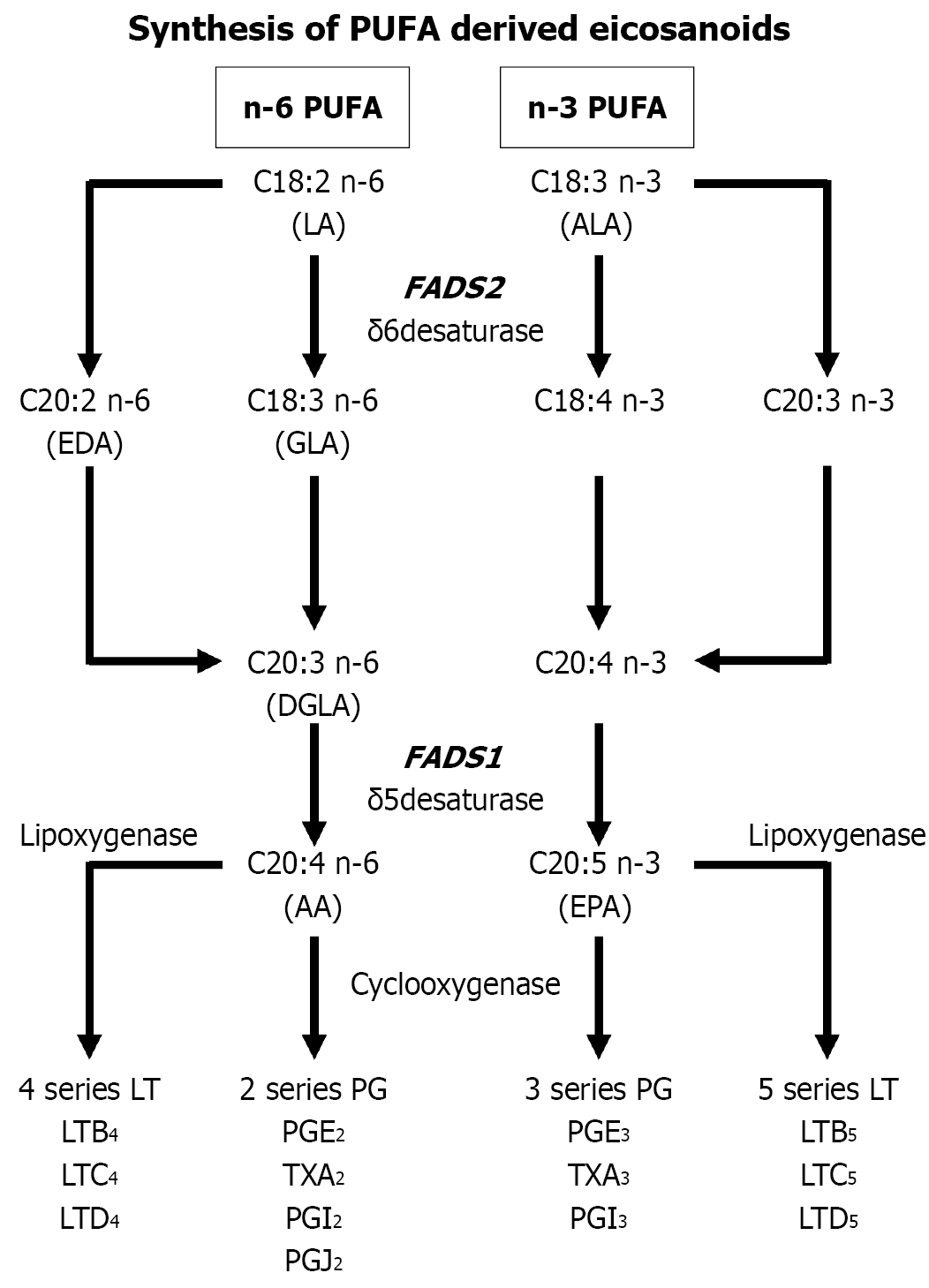
Figure 1 Polyunsaturated fatty acid metabolism and synthesis of polyunsaturated fatty acid derived eicosanoids.
n-6 polyunsaturated fatty acids (n-6 PUFA) such as linoleic acid are metabolized to arachidonic acid by delta 6 and delta 5 desaturases. Additionally, n-3 polyunsaturated fatty acids (n-3 PUFA) such as α-linolenic acid (ALA) are also metabolized to eicosapentaenoic acid (EPA) by these desaturases. n-3 PUFAs such as ALA and EPA may inhibit the metabolism of n-6 PUFA and the arachidonate cascade by competitively antagonizing enzymes involved in the metabolic process; i.e., delta 6 and delta 5 desaturases, cyclooxygenase, and 5 lipoxygenase. AA: Arachidonic acid; ALA: Α-linolenic acid; DGLA: Dihomo-γ-linolenic acid; EDA: Eicosadienoic acid; EPA: Eicosapentaenoic acid; GLA: γ-linolenic acid; LA: Linoleic acid; LT: Leukotriene; PUFA: Polyunsaturated fatty acid; PG: Prostaglandin; TX: Thromboxane.
- Citation: Matsuzawa H, Ito Z, Uchiyama K, Motoi Y, Ohtaki Y, Iwashita Y, Suzuki S, Nakada T, Koido S, Kojima K, Murohashi K, Saruta M, Ohkusa T, Kubota T. Association of FADS2 polymorphism rs174538 with fatty acid metabolism and disease severity in Japanese patients with Crohn’s disease. World J Gastroenterol 2026; 32(2): 112132
- URL: https://www.wjgnet.com/1007-9327/full/v32/i2/112132.htm
- DOI: https://dx.doi.org/10.3748/wjg.v32.i2.112132