
















Copyright: ©Author(s) 2026.
World J Gastroenterol. May 7, 2026; 32(17): 119419
Published online May 7, 2026. doi: 10.3748/wjg.v32.i17.119419
Published online May 7, 2026. doi: 10.3748/wjg.v32.i17.119419
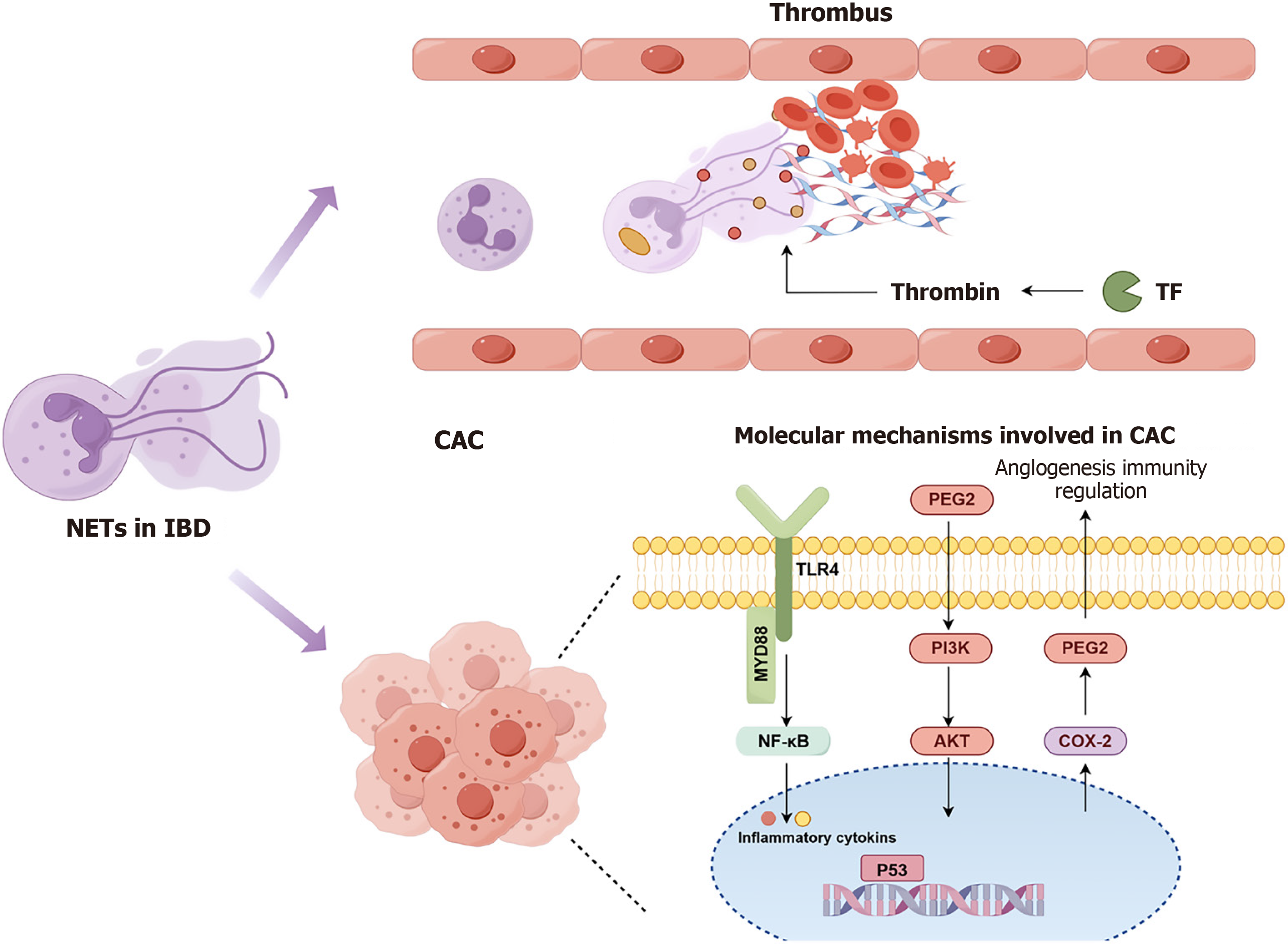
Figure 3 Neutrophil extracellular traps constitute a central component in thrombosis formation and colitis-associated colorectal cancer.
Neutrophil extracellular traps promote the thrombotic tendency in inflammatory bowel disease. The molecular mechanisms included in colitis-associated colorectal cancer: Mutations on protein p53 result in its over-expression and the turbulence of anti-tumor signaling. MyD88-dependent Toll-like receptor 4 alterations trigger and amplify a pro-inflammatory environment through nuclear factor kappa-B pathway. Cyclooxygenase-2 up-regulates prostaglandin E2 production, which in turn promotes angiogenesis and modulates immune responses through phosphatidylinositol 3-kinase (PI3K) signaling. The PI3K/protein kinase B axis stimulates many cytokines and facilitates glucose transporter 4 migration, thereby enhancing metabolic activity in T helper (Th) 2 and Th17 lymphocytes. TF: Tissue factor; NETs: Neutrophil extracellular traps; IBD: Inflammatory bowel disease; CAC: Colitis-associated colorectal cancer; TLR: Toll-like receptor; PGE2: Prostaglandin E2; PI3K: Phosphatidylinositol 3-kinase; AKT: Protein kinase B; NF-κB: Nuclear factor kappa-B; COX-2: Cyclooxygenase-2.
- Citation: Qi Y, Ma L, Zhang Y, Liu Y, Su M, Cai TT, Wang M, Sun KW. Insights into the pathogenic roles and targeted therapy of neutrophil extracellular traps in inflammatory bowel disease. World J Gastroenterol 2026; 32(17): 119419
- URL: https://www.wjgnet.com/1007-9327/full/v32/i17/119419.htm
- DOI: https://dx.doi.org/10.3748/wjg.v32.i17.119419