
















Copyright: ©Author(s) 2026.
World J Gastroenterol. May 7, 2026; 32(17): 119419
Published online May 7, 2026. doi: 10.3748/wjg.v32.i17.119419
Published online May 7, 2026. doi: 10.3748/wjg.v32.i17.119419
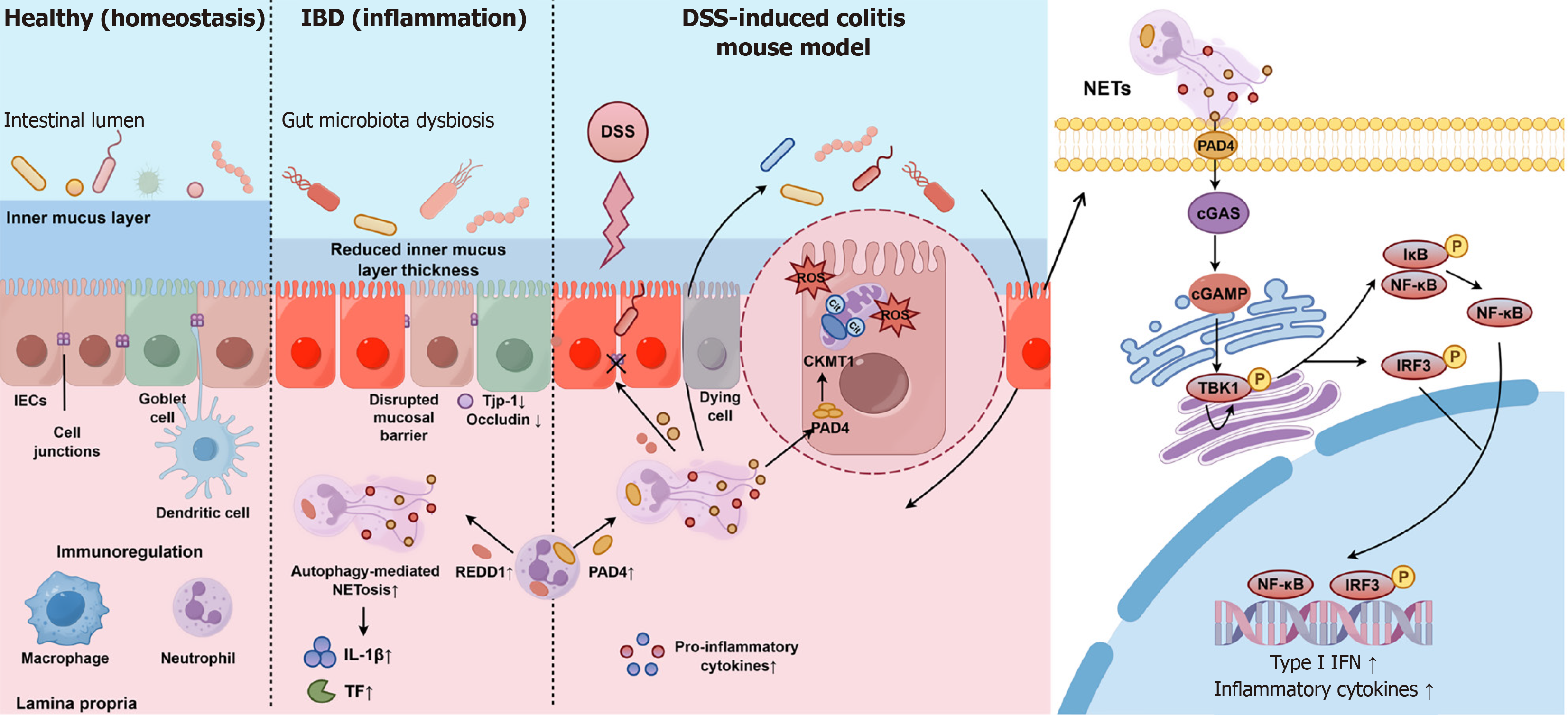
Figure 2 Pathogenic mechanisms of neutrophil extracellular traps in the pathogenesis of inflammatory bowel disease.
In ulcerative colitis (UC) patients, increased REDD1 from gut neutrophils triggers the generation of autophagy-driven neutrophil extracellular traps (NETs) decorated with bioactive interleukin-1β and tissue factor, exacerbates the inflammatory environment of UC. In dextran sulfate sodium-induced colitis mouse model to mimic human ulcerative colitis, Intestinal neutrophil-derived peptidylarginine deiminase (PAD) 4 induces mitochondrial creatine kinase 1 citrullination and intestinal epithelial cells apoptosis, leading to exacerbation of mucosal inflammation. NETs activate the cyclic guanosine monophosphate-adenosine monophosphate synthase-stimulator of interferon genes (STING) pathway to induce barrier dysfunction. PAD4-induced recruitment of TBK1 by STING subsequently activates downstream Interferon regulatory factor 3 and nuclear factor kappa-B signaling pathways, leading to the production of type I interferon and inflammatory cytokines. IECs: Intestinal epithelial cells; IBD: Inflammatory bowel disease; IL-1β: Interleukin-1β; TF: Tissue factor; DSS: Dextran sulfate sodium; ROS: Reactive oxygen species; PAD4: Peptidylarginine deiminase 4; CKMT1: Mitochondrial creatine kinase 1; NETs: Neutrophil extracellular traps; cGAS: Cyclic guanosine monophosphate-adenosine monophosphate synthase; cGAMP: Cyclic guanosine monophosphate-adenosine monophosphate; NF-κB: Nuclear factor kappa-B; IκB: Inhibitor of nuclear factor kappa-B; IRF3: Interferon regulatory factor 3; IFN: Interferon.
- Citation: Qi Y, Ma L, Zhang Y, Liu Y, Su M, Cai TT, Wang M, Sun KW. Insights into the pathogenic roles and targeted therapy of neutrophil extracellular traps in inflammatory bowel disease. World J Gastroenterol 2026; 32(17): 119419
- URL: https://www.wjgnet.com/1007-9327/full/v32/i17/119419.htm
- DOI: https://dx.doi.org/10.3748/wjg.v32.i17.119419