
















Copyright: ©Author(s) 2026.
World J Gastroenterol. May 7, 2026; 32(17): 118502
Published online May 7, 2026. doi: 10.3748/wjg.v32.i17.118502
Published online May 7, 2026. doi: 10.3748/wjg.v32.i17.118502
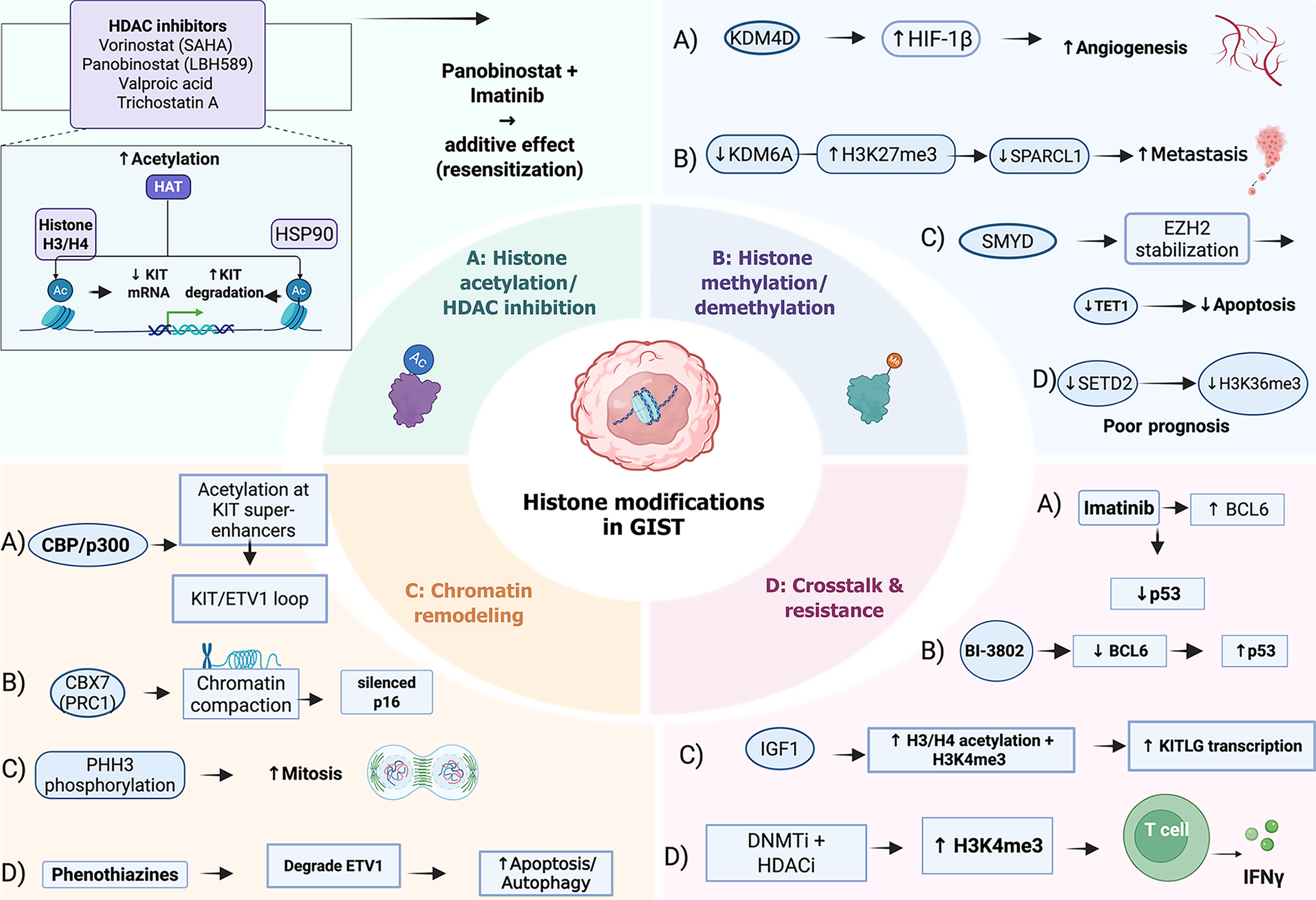
Figure 2 Histone modifications in gastrointestinal stromal tumors.
Histone acetylation (A) regulates KIT expression, with histone deacetylase (HDAC) inhibitors increasing acetylation, suppressing KIT transcription, destabilizing KIT protein, and restoring sensitivity to imatinib. Histone methylation (B) influences tumor behavior through KDM4D-driven angiogenesis, KDM6A loss promoting metastasis, SMYD2-EZH2-TET1 repression reducing apoptosis, and SETD2 deficiency predicting poor prognosis. Chromatin remodeling (C) sustains oncogenic transcription via CREB binding protein/p300 and ETV1, silences tumor suppressors through CBX7, drives mitosis via PHH3 phosphorylation, and enables therapeutic targeting of ETV1 with phenothiazines. Crosstalk and resistance (D) arise from imatinib-induced BCL6-SIRT1-p53 repression, reversed by BI-3802, synergistic DNA methyltransferase inhibitor + HDAC inhibitors mediated interferon activation, insulin-like growth factor-1-driven KITLG upregulation, and succinate dehydrogenase subunit B loss linking metabolism to epithelial-mesenchymal transition through ZNF148. HDAC: Histone deacetylase; GIST: Gastrointestinal stromal tumors; CBP: CREB binding protein; HIF: Hypoxia-inducible factor; IGF: Insulin-like growth factor; DNMTi: DNA methyltransferase inhibitor; IFN: Interferon.
- Citation: Papadakos SP, Mandrakis G, Siakavellas SI, Memos N, Gakiopoulou H, Schizas D, Theocharis S. Epigenetic landscape of gastrointestinal stromal tumors: Mechanistic insights and therapeutic opportunities. World J Gastroenterol 2026; 32(17): 118502
- URL: https://www.wjgnet.com/1007-9327/full/v32/i17/118502.htm
- DOI: https://dx.doi.org/10.3748/wjg.v32.i17.118502