
















Copyright: ©Author(s) 2026.
World J Gastroenterol. May 7, 2026; 32(17): 117823
Published online May 7, 2026. doi: 10.3748/wjg.v32.i17.117823
Published online May 7, 2026. doi: 10.3748/wjg.v32.i17.117823
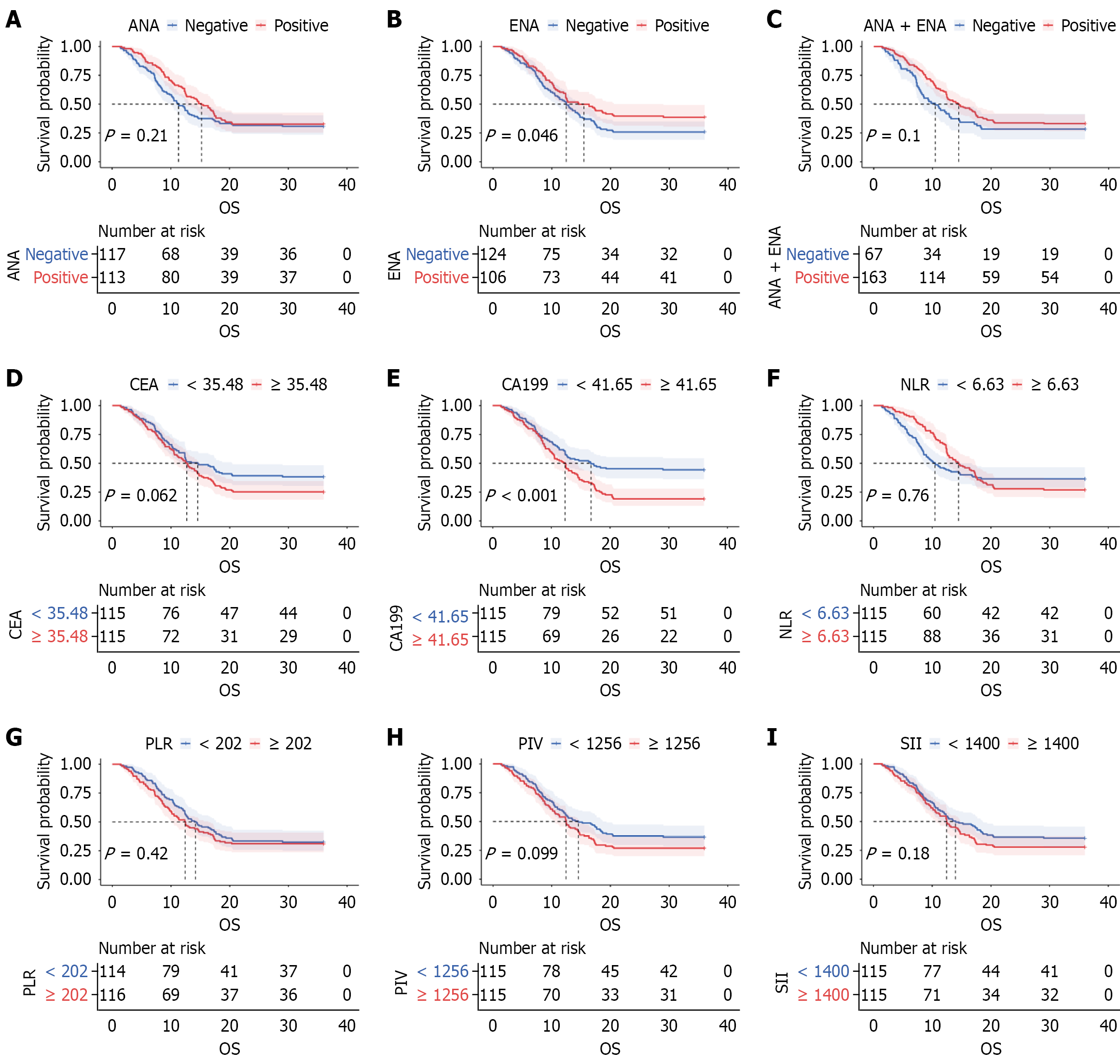
Figure 1 Kaplan-Meier analysis of overall survival according to autoantibody status and laboratory parameters.
A-H: Kaplan-Meier curves depict overall survival probabilities for patients stratified by antinuclear antibody (ANA) status (A), extractable nuclear antigen (ENA) status (B), combined ANA or ENA status (C), carcinoembryonic antigen levels using a cutoff of 35.48 (D), carbohydrate antigen 199 levels using a cutoff of 41.65 (E), neutrophil-to-lymphocyte ratio using a cutoff of 6.63 (F), platelet-to-lymphocyte ratio using a cutoff of 202 (G), pan-immune-inflammation value using a cutoff of 1256 (H); I: Systemic immune-inflammation index using a cutoff of 1400. ANA: Antinuclear antibody; ENA: Extractable nuclear antigen; OS: Overall survival; CEA: Carcinoembryonic antigen; CA199: Carbohydrate antigen 199; NLR: Neutrophil-to-lymphocyte ratio; PLR: Platelet-to-lymphocyte ratio; PIV: Pan-immune-inflammation value; SII: Systemic immune-inflammation index.
- Citation: Zheng PM, Ouyang LB, Wang R, Jing KY, Gao HJ, Zhu CK. Clinical significance of autoantibody profiling and systemic inflammation in predicting outcomes of gastric cancer patients undergoing immunotherapy. World J Gastroenterol 2026; 32(17): 117823
- URL: https://www.wjgnet.com/1007-9327/full/v32/i17/117823.htm
- DOI: https://dx.doi.org/10.3748/wjg.v32.i17.117823