
















Copyright: ©Author(s) 2026.
World J Gastroenterol. May 7, 2026; 32(17): 116590
Published online May 7, 2026. doi: 10.3748/wjg.v32.i17.116590
Published online May 7, 2026. doi: 10.3748/wjg.v32.i17.116590
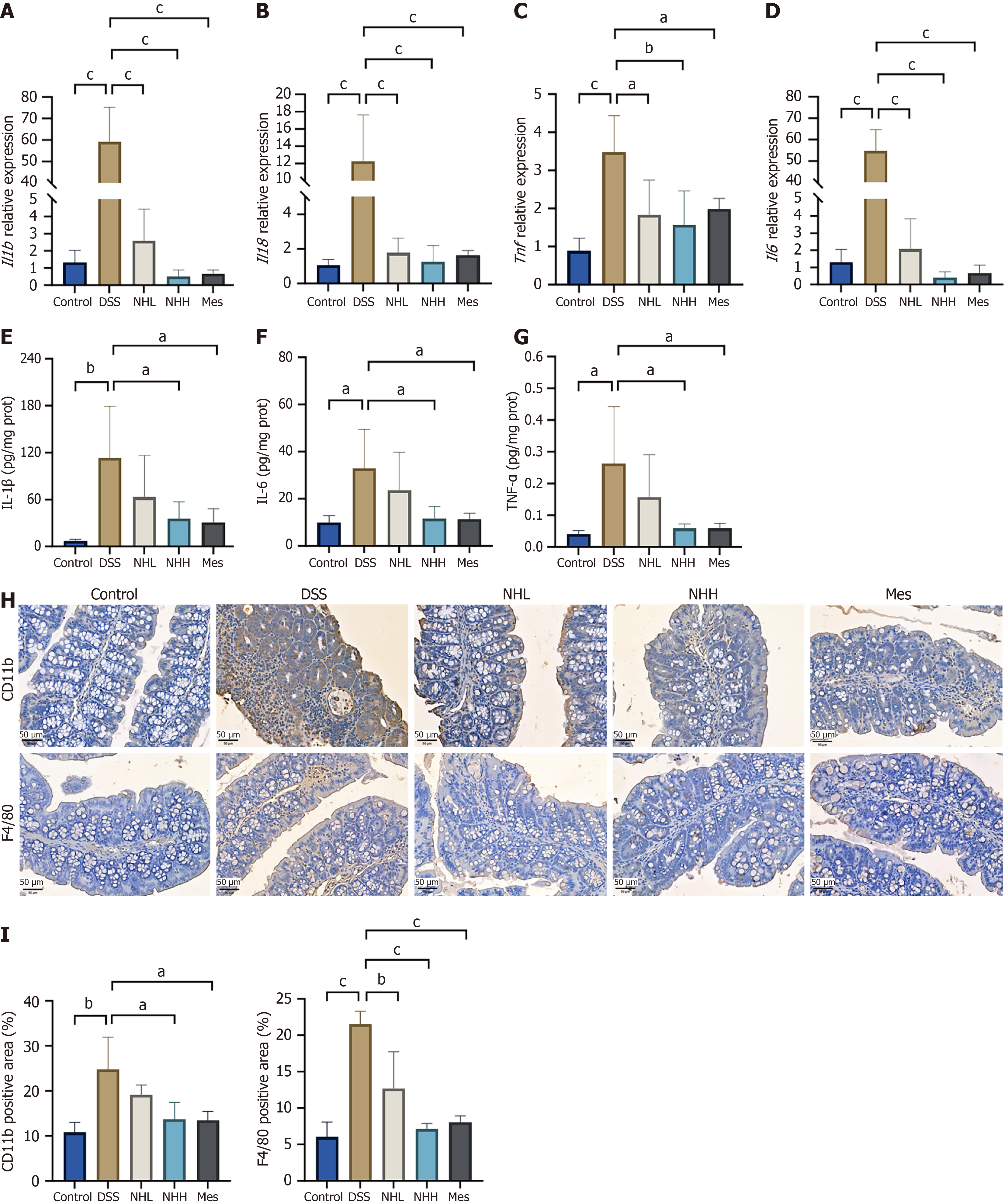
Figure 3 Niu Huang ameliorates dextran sulfate sodium-induced colitis in mice.
A-D: Quantitative polymerase chain reaction analysis of the mRNA expression of interleukin (Il)1b, Il18, tumor necrosis factor and Il6 (n = 4-5 in each group); E-G: Expression level of IL-1β, tumor necrosis factor-α, and IL-6 in colon tissue (n = 5 in each group); H: Representative immunohistochemistry images of CD11b and F4/80 in colon tissues; I: Quantitative analysis of immunohistochemistry results of CD11b and F4/80 (n = 3 in each group). aP < 0.05 vs dextran sulfate sodium group, bP < 0.01 vs dextran sulfate sodium group, cP < 0.001 vs dextran sulfate sodium group. TNF: Tumor necrosis factor; IL: Interleukin; DSS: Dextran sulfate sodium; NHL: Low-dose Niu Huang group; NHH: High-dose Niu Huang group; Mes: Mesalamine group.
- Citation: Shi J, Ma CY, Zhang XH, Liu KJ, Liu JY, Wang QG, Wang XQ, Cheng FF, Xu T. Niu Huang mitigates dextran sulfate sodium-induced colitis by modulating farnesoid X receptor activation and the complement 3/NLRP3 signaling pathway. World J Gastroenterol 2026; 32(17): 116590
- URL: https://www.wjgnet.com/1007-9327/full/v32/i17/116590.htm
- DOI: https://dx.doi.org/10.3748/wjg.v32.i17.116590