
















Copyright: ©Author(s) 2026.
World J Gastroenterol. Apr 28, 2026; 32(16): 116187
Published online Apr 28, 2026. doi: 10.3748/wjg.v32.i16.116187
Published online Apr 28, 2026. doi: 10.3748/wjg.v32.i16.116187
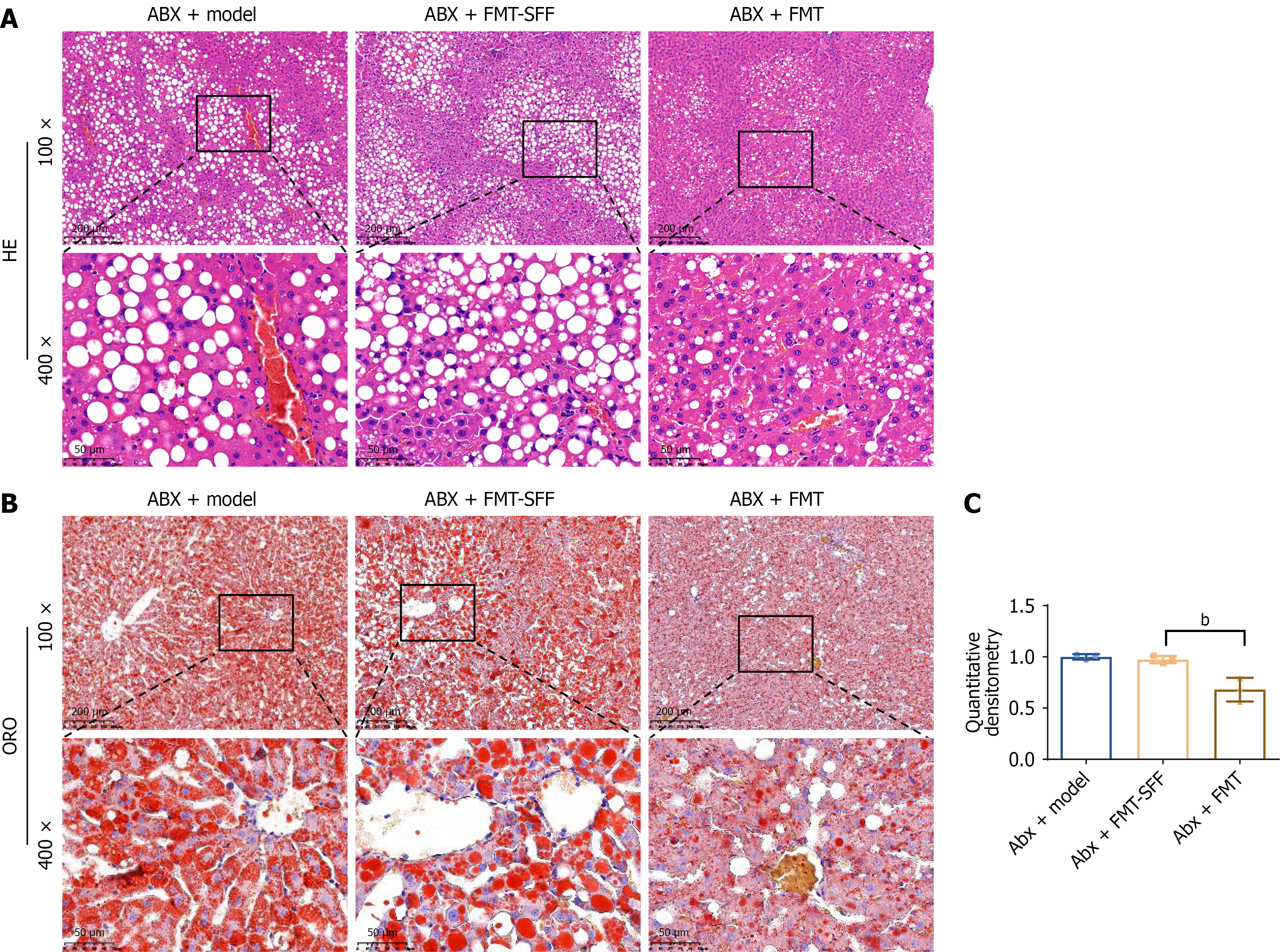
Figure 9 Fecal microbiota transplantation improved histopathological liver damage in metabolic dysfunction-associated steatotic liver disease rats.
A: Liver histology (hematoxylin eosin staining, representative images), 100 × (200 μm); 400 × (50 μm); B: Liver histology (oil red O staining, representative images). n = 6, 100 × (200 μm); 400 × (50 μm); C: Quantitative oil red O staining of rat liver tissue, n = 3. bP < 0.01. Statistical analysis was conducted using one-way analysis of variance with Tukey’s post hoc test, and results are presented as mean ± SD. Abx: Antibiotics; FMT: Fecal microbiota transplantation; HE: Hematoxylin eosin; ORO: Oil red O; SFF: Sterile fecal filtrate.
- Citation: Xiong JF, He Y, Jiang N, Liu YH, Chen GF, Zhao CQ, Zhang SY, Wu YJ, Xu H. Modulation of the gut-liver axis by oxymatrine alleviates metabolic dysfunction-associated steatotic liver disease. World J Gastroenterol 2026; 32(16): 116187
- URL: https://www.wjgnet.com/1007-9327/full/v32/i16/116187.htm
- DOI: https://dx.doi.org/10.3748/wjg.v32.i16.116187