
















Copyright: ©Author(s) 2026.
World J Gastroenterol. Apr 28, 2026; 32(16): 116187
Published online Apr 28, 2026. doi: 10.3748/wjg.v32.i16.116187
Published online Apr 28, 2026. doi: 10.3748/wjg.v32.i16.116187
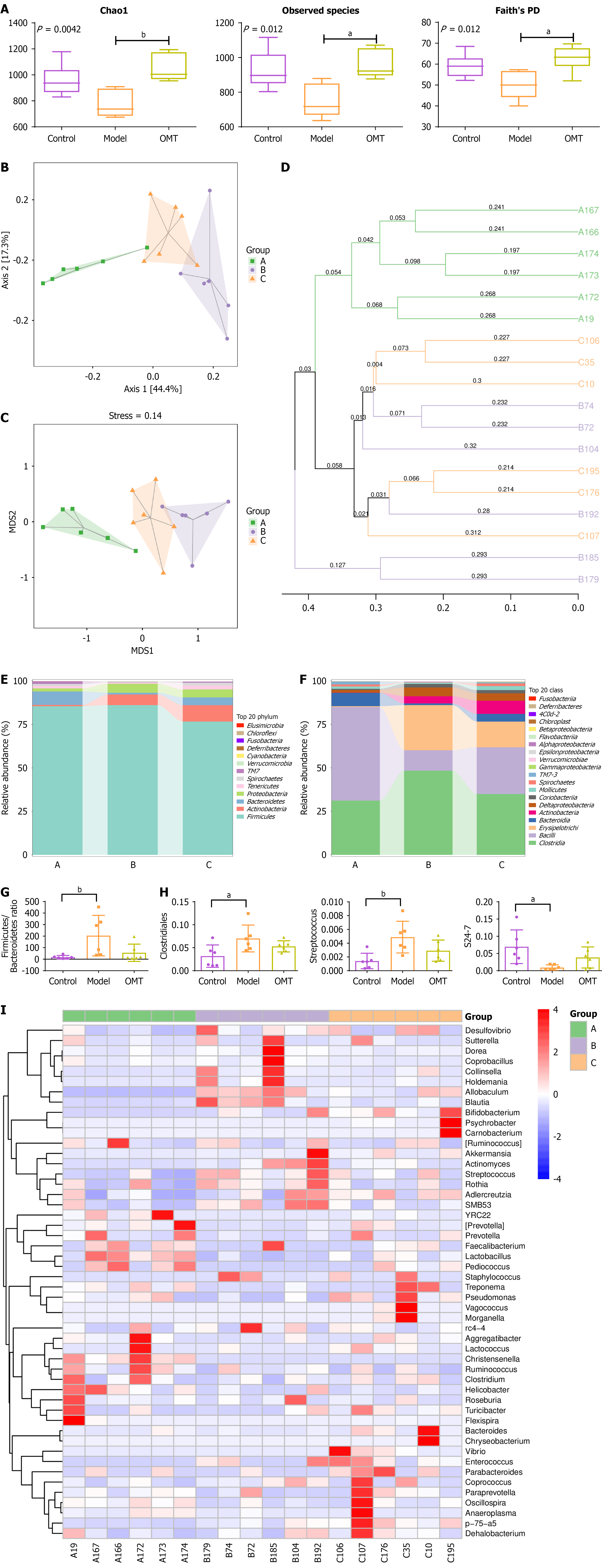
Figure 4 Oxymatrine enhances intestinal microbiota diversity in metabolic dysfunction-associated steatotic liver disease rats.
A: Chao1, observed species, and Faith’s phylogenetic diversity indices of the alpha diversity analysis, n = 6; B: Principal coordinate analysis results of the beta diversity analysis; C: Nonmetric multidimensional scaling results of the beta diversity analysis; D: Hierarchical clustering tree of the rats; E: Composition of the top 20 intestinal microbiota (phylum level); F: Composition of the top 20 intestinal microbiota (class level); G: Firmicutes/Bacteroidetes ratio at the phylum level, n = 6; H: The relative abundance of Clostridiales, Streptococcus and S24-7 in each group, n = 6; I: A heatmap of the top 50 different bacterial genera among the three groups (control, model, oxymatrine). aP < 0.05, bP < 0.01. Statistical analysis was conducted using one-way analysis of variance with Tukey’s post hoc test, and results are presented as mean ± SD. Group A: Control; Group B: Model; Group C: Oxymatrine; OMT: Oxymatrine; PD: Phylogenetic diversity.
- Citation: Xiong JF, He Y, Jiang N, Liu YH, Chen GF, Zhao CQ, Zhang SY, Wu YJ, Xu H. Modulation of the gut-liver axis by oxymatrine alleviates metabolic dysfunction-associated steatotic liver disease. World J Gastroenterol 2026; 32(16): 116187
- URL: https://www.wjgnet.com/1007-9327/full/v32/i16/116187.htm
- DOI: https://dx.doi.org/10.3748/wjg.v32.i16.116187