
















Copyright: ©Author(s) 2026.
World J Gastroenterol. Apr 14, 2026; 32(14): 114331
Published online Apr 14, 2026. doi: 10.3748/wjg.v32.i14.114331
Published online Apr 14, 2026. doi: 10.3748/wjg.v32.i14.114331
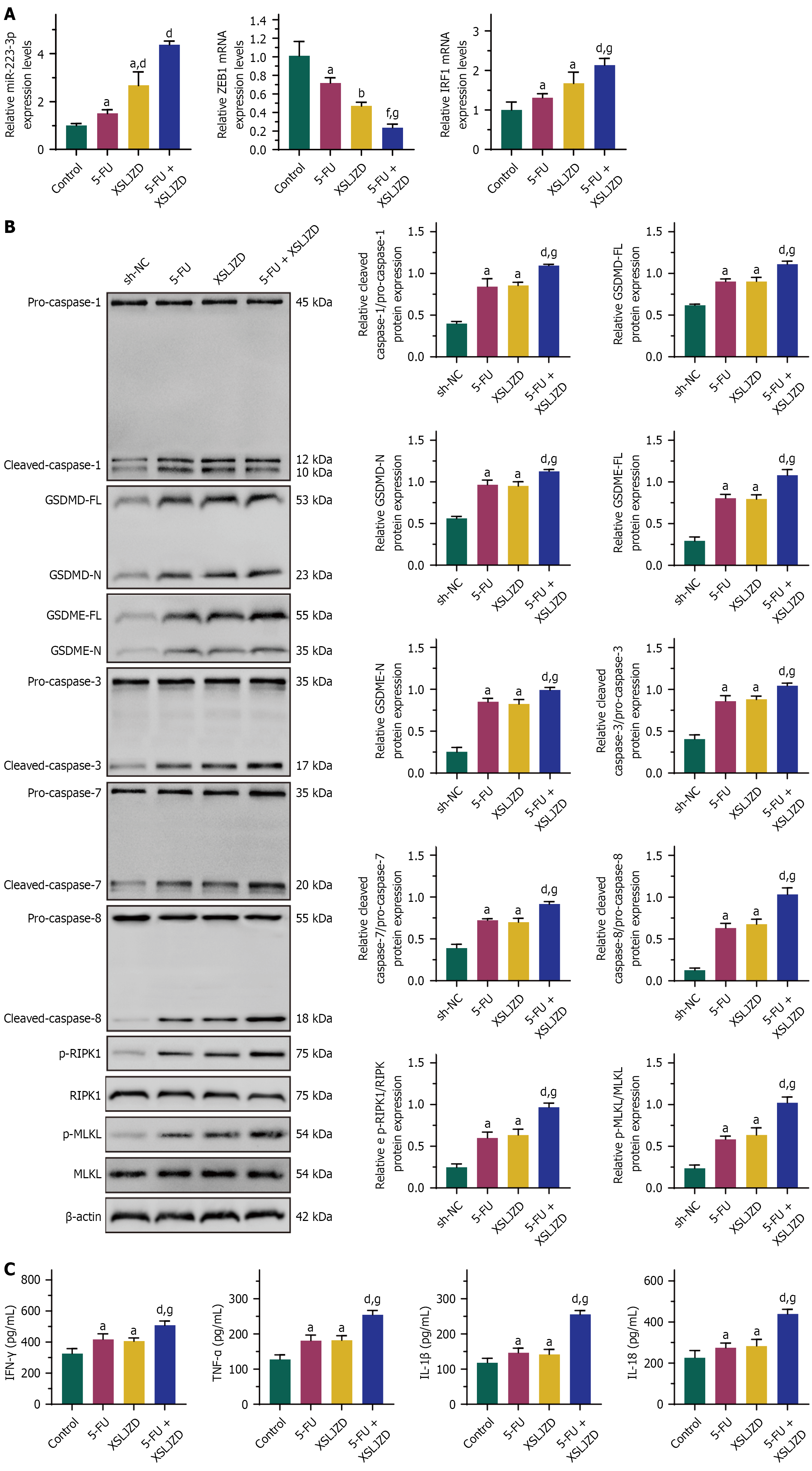
Figure 10 The combination of Xiangshaliujunzi decoction and 5-fluorouracil promoted miR-200a/ZEB1/IRF1-mediated PANoptosis in transplanted tumor tissues in mice.
The combination treatment group [5-fluorouracil (5-FU) + Xiangshaliujunzi decoction (XSLJZD)] showed higher levels of miR-200a-3p and IRF1 mRNA and lower ZEB1 mRNA compared to the individual 5-FU and XSLJZD groups. The combination treatment group (5-FU + XSLJZD) showed further increased levels of PANoptosis-related proteins and inflammatory cytokines [interferon (IFN)-γ, tumor necrosis factor (TNF)-α, interleukin (IL)-1β, and IL-18] compared to the 5-FU and XSLJZD groups individually. A: MiR-200a-3p, IRF1 mRNA and lower ZEB1 mRNA expression; B: PANoptosis-related proteins expression; C: IFN-γ, TNF-α, IL-1β, and IL-18 expression. aP < 0.05, bP < 0.01 vs control/sh-negative control. dP < 0.05, fP < 0.001 vs 5-FU. gP < 0.05 vs XSLJZD. XSLJZD: Xiangshaliujunzi decoction; NC: Negative control; 5-FU: 5-fluorouracil.
- Citation: Gao H, Yin DF, Xing XR, Zhou LJ, Yu R. MiR-200a-3p/ZEB1/IRF1-mediated PANoptosis prompts Xiangshaliujunzi decoction to overcome 5-fluorouracil resistance in gastric cancer. World J Gastroenterol 2026; 32(14): 114331
- URL: https://www.wjgnet.com/1007-9327/full/v32/i14/114331.htm
- DOI: https://dx.doi.org/10.3748/wjg.v32.i14.114331