
















Copyright: ©Author(s) 2026.
World J Gastroenterol. Apr 14, 2026; 32(14): 114331
Published online Apr 14, 2026. doi: 10.3748/wjg.v32.i14.114331
Published online Apr 14, 2026. doi: 10.3748/wjg.v32.i14.114331
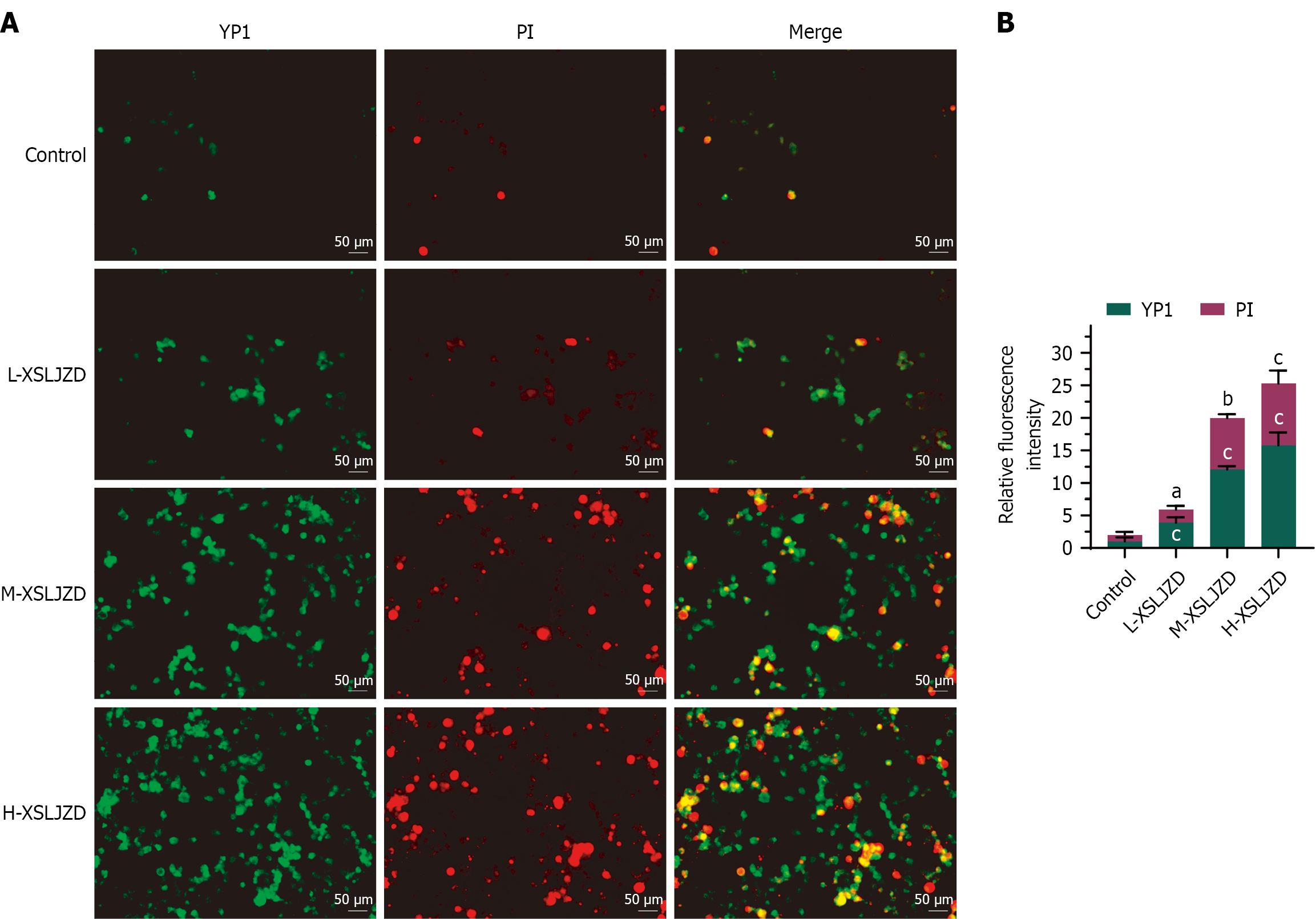
Figure 2 Xiangshaliujunzi decoction induced apoptosis, necroptosis and pyroptosis in a dose-dependent manner.
A: Apoptotic and necrotic cells were identified by green fluorescence (YO-PRO-1 positive), while necrotic and pyroptotic cells were identified by red fluorescence (PI positive); B: Bar chart of relative fluorescence intensity. The fluorescence intensity of the control group in the first replicate was set as the reference (value = 1), and intensities of the second and third replicates, as well as all Xiangshaliujunzi decoction (XSLJZD)-treated groups, were normalized to this reference. L-XSLJZD: 1.55 g/(kg·day); M-XSLJZD: 3.1 g/(kg·day); H-XSLJZD: 6.2 g/(kg·day). aP < 0.05, bP < 0.01, cP < 0.001 vs control, determined by one-way ANOVA with Tukey's post-hoc test. XSLJZD: Xiangshaliujunzi decoction.
- Citation: Gao H, Yin DF, Xing XR, Zhou LJ, Yu R. MiR-200a-3p/ZEB1/IRF1-mediated PANoptosis prompts Xiangshaliujunzi decoction to overcome 5-fluorouracil resistance in gastric cancer. World J Gastroenterol 2026; 32(14): 114331
- URL: https://www.wjgnet.com/1007-9327/full/v32/i14/114331.htm
- DOI: https://dx.doi.org/10.3748/wjg.v32.i14.114331