
















Copyright: ©Author(s) 2026.
World J Gastroenterol. Apr 14, 2026; 32(14): 111455
Published online Apr 14, 2026. doi: 10.3748/wjg.v32.i14.111455
Published online Apr 14, 2026. doi: 10.3748/wjg.v32.i14.111455
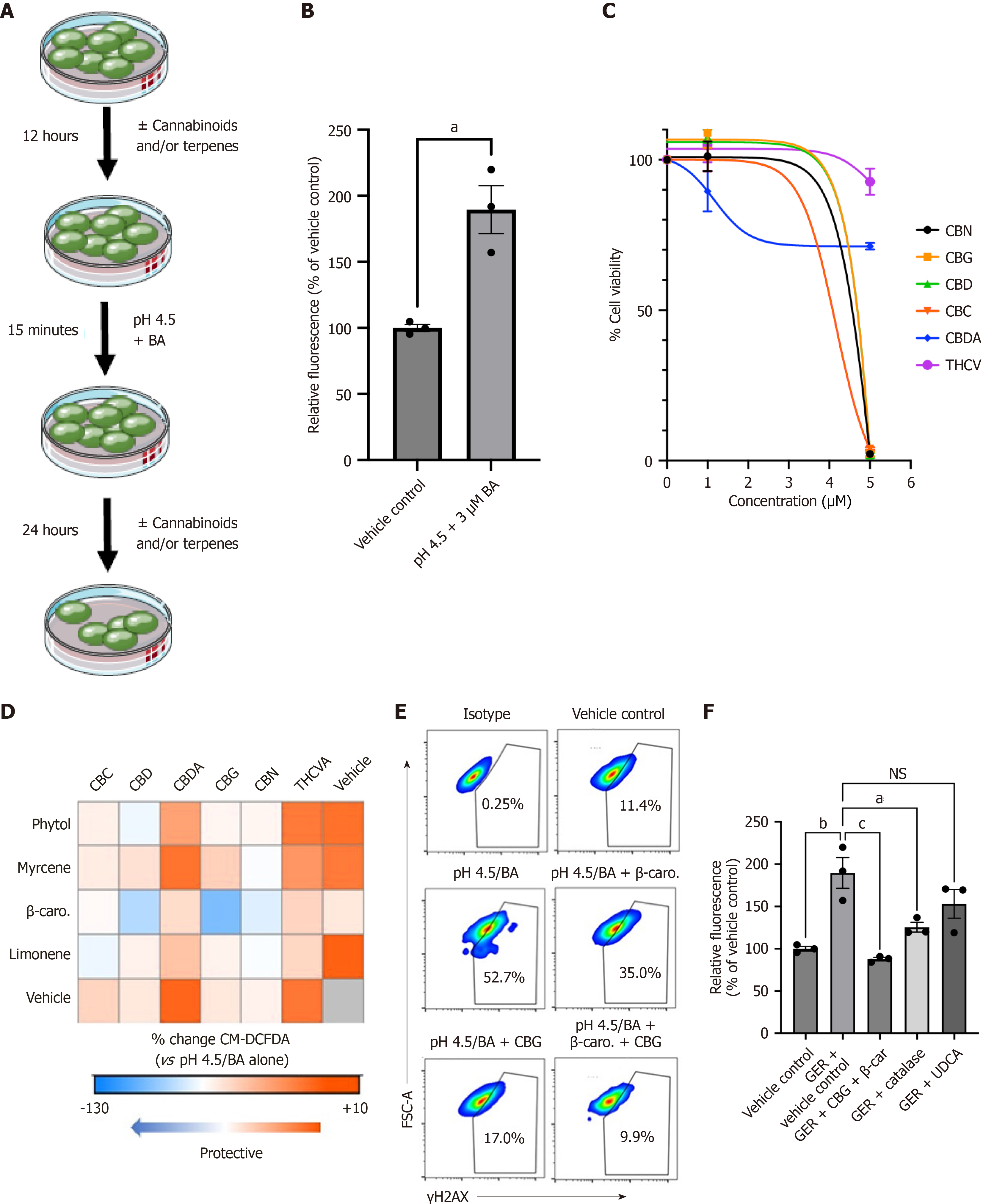
Figure 4 Cannabigerol and β-caryophyllene (1:5) reverse the damaging effect of the acid-containing gastroesophageal refluxate in metaplastic Barrett’s esophageal cells.
A: Experimental design schematic. Barrett’s esophageal cell line CP-A was treated with a vehicle control or cannabinoids in the presence or absence of terpenes for 12 hours, followed by an acute 15-minute exposure to a physiologically relevant low potential of hydrogen and bile acid cocktail, as described in the methods. The cells were either immediately analyzed for reactive oxygen species (ROS) via fluorescent detection of CM-DCFDA or recovered for 24 hours and analyzed for DNA damage using γ-H2AX flow cytometry; B: Bar graph illustrates the comparative analyses of ROS measured by CM-DCFDA fluorescence in CP-A cells following acute exposure to gastroesophageal reflux (GER). The samples were analyzed by flow cytometry, and the results are shown as percent increases relative to the vehicle control. The data were analyzed using an unpaired t-test with Welch’s correction (n = 3); C: Non-linearfit of the dose response cell viability analysis of CP-A cells after exposure to cannabinoids for 24 hours, analyzed using the MTS assay kit; D: Heat map shows changes in ROS induced by GER in CP-A cells pretreated with the cannabinoid and terpene combinations at a 1:5 ratio as determined by CM-DCFDA fluorescence. Data are expressed as the percent change when compared to GER alone; E: Representative flow cytometry analyses of DNA damage as determined by γ-H2AX fluorescence of CP-A cells pretreated with cannabigerol (CBG) and β-caryophyllene (β-car) following exposure to GER; F: Bar graph depicts the comparative analyses of ROS measured by CM-DCFDA fluorescence in CP-A cells exposed to GER and antioxidants (catalase), ursodeoxycholic acid, or the cannabinoid/terpene combination of CBG and β-car at a 1:5 ratio. The samples were analyzed by flow cytometry, and the results are shown as percent increases relative to the vehicle control. The data were analyzed using one-way analysis of variance with Šídák’s multiple comparisons test. aP < 0.05. bP < 0.01. cP < 0.001. NS: Not significant; pH: Potential of hydrogen; BA: Bile acids; CBN: Cannabinol; CBD: Cannabidiol; CBC: Cannabichromene; CBDA: Cannabidiolic acid; THCV: Tetrahydrocannabivarinic acid; FSC-A: Forward scatter area; CBG: Cannabigerol; β-car: Β-caryophyllene; GER: Gastroesophageal reflux; UDCA: Ursodeoxycholic acid.
- Citation: Goldman A, Gonzalez G, Karpova SA, Buon L, Shammas MA, Mashimo H, Frank MH, Frank NY. Optimal cannabinoid-terpene combination ratios suppress mutagenicity of gastric reflux in normal and metaplastic esophageal cells. World J Gastroenterol 2026; 32(14): 111455
- URL: https://www.wjgnet.com/1007-9327/full/v32/i14/111455.htm
- DOI: https://dx.doi.org/10.3748/wjg.v32.i14.111455