
















Copyright: ©Author(s) 2026.
World J Gastroenterol. Apr 14, 2026; 32(14): 111455
Published online Apr 14, 2026. doi: 10.3748/wjg.v32.i14.111455
Published online Apr 14, 2026. doi: 10.3748/wjg.v32.i14.111455
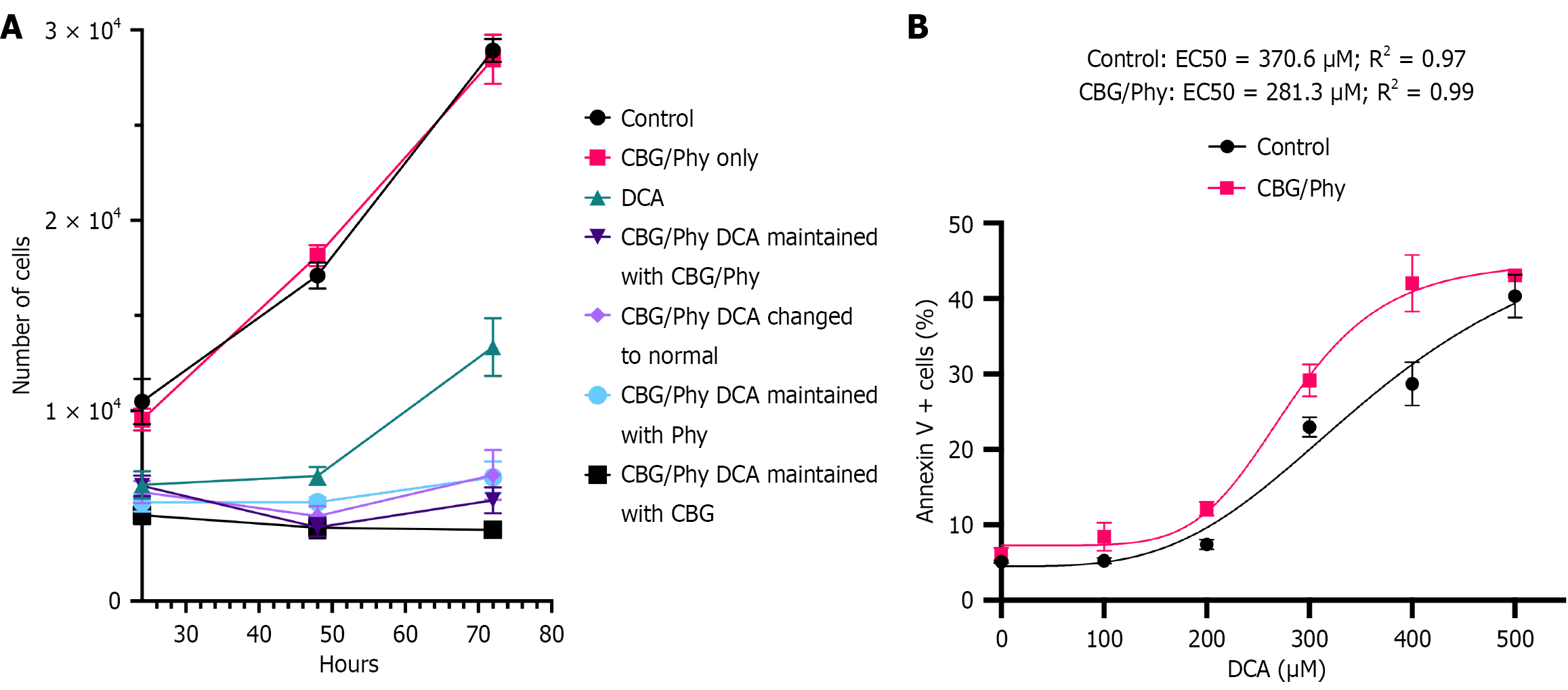
Figure 2 The effect of cannabigerol and phytol on the proliferation and apoptosis of deoxycholic acid-damaged esophageal cells.
A: XTT cell viability assay of HET1A cells subjected to 100 μmol/L deoxycholic acid (DCA) or vehicle control treatment for 24 hours in the presence or absence of cannabigerol (CBG) and phytol (Phy); B: The plot represents a non-linear regression analysis of the percentage of apoptotic cells in the HET1A cell line cultured with or without CBG/Phy pretreatment and exposed to DCA at concentrations ranging from 0 μmol/L to 500 μmol/L. DCA: Deoxycholic acid; EC50: Lethal dose 50%; CBG: Cannabigerol; Phy: Phytol.
- Citation: Goldman A, Gonzalez G, Karpova SA, Buon L, Shammas MA, Mashimo H, Frank MH, Frank NY. Optimal cannabinoid-terpene combination ratios suppress mutagenicity of gastric reflux in normal and metaplastic esophageal cells. World J Gastroenterol 2026; 32(14): 111455
- URL: https://www.wjgnet.com/1007-9327/full/v32/i14/111455.htm
- DOI: https://dx.doi.org/10.3748/wjg.v32.i14.111455