
















Copyright: ©Author(s) 2026.
World J Gastroenterol. Apr 14, 2026; 32(14): 111455
Published online Apr 14, 2026. doi: 10.3748/wjg.v32.i14.111455
Published online Apr 14, 2026. doi: 10.3748/wjg.v32.i14.111455
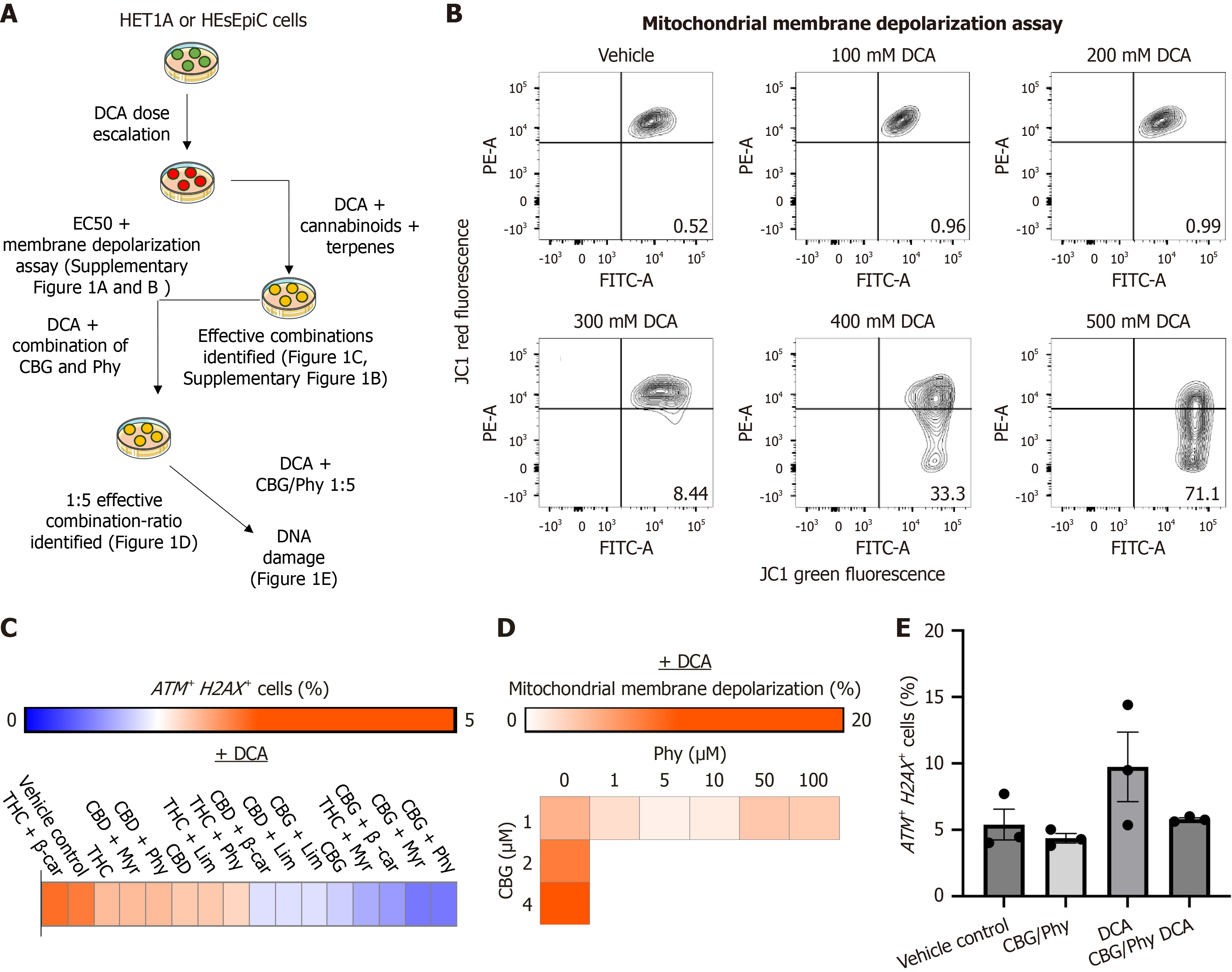
Figure 1 Cannabigerol and phytol combination ratio of 1:5 can reverse deoxycholic acid-induced mitochondrial depolarization and DNA damage in HET1A and human esophageal epithelial cells.
A: Schematic illustration of experimental design; B: Representative flow cytometry analyses of mitochondrial membrane potential in deoxycholic acid (DCA)-treated HET1A cells measured by red- and green-fluorescent changes performed using the MitoProbe JC-1 assay kit. Cells with normal mitochondrial membrane potential are depicted in the right upper corner (red), and the cells with reduced mitochondrial membrane potential are shown in the right lower corner (green); C: The heatmap illustrates the percentage of ATM+ H2AX+ cells in human esophageal epithelial cell cultures pretreated with diverse cannabinoids and terpenes at a 1:5 ratio, while exposed to 100 μmol/L DCA. Data were analyzed using the Muse Multi-color DNA damage kit (Cytek, United States); D: The heatmap illustrates the changes in the mitochondrial membrane potential in HET1A cells treated with varied concentrations and ratios of cannabigerol (CBG) and phytol (Phy) in the presence of 100 μmol/L DCA; E: The bar graph illustrates the percentage of ATM+ H2AX+ HET1A cells after treatment with CBG and Phy at 1:5 ratio in the presence of DCA. Data were analyzed using the Muse Multi-color DNA damage kit (Cytek, United States). HEsEpiC: Human esophageal epithelial cells; DCA: Deoxycholic acid; EC50: Lethal dose 50%; CBG: Cannabigerol; Phy: Phytol; THC: Tetrahydro cannabinoid; β-car: Β-caryophyllene; CBD: Cannabidiol; Myr: Myrcene; Lim: Limonene.
- Citation: Goldman A, Gonzalez G, Karpova SA, Buon L, Shammas MA, Mashimo H, Frank MH, Frank NY. Optimal cannabinoid-terpene combination ratios suppress mutagenicity of gastric reflux in normal and metaplastic esophageal cells. World J Gastroenterol 2026; 32(14): 111455
- URL: https://www.wjgnet.com/1007-9327/full/v32/i14/111455.htm
- DOI: https://dx.doi.org/10.3748/wjg.v32.i14.111455