
















Copyright: ©Author(s) 2026.
World J Gastroenterol. Apr 7, 2026; 32(13): 115536
Published online Apr 7, 2026. doi: 10.3748/wjg.v32.i13.115536
Published online Apr 7, 2026. doi: 10.3748/wjg.v32.i13.115536
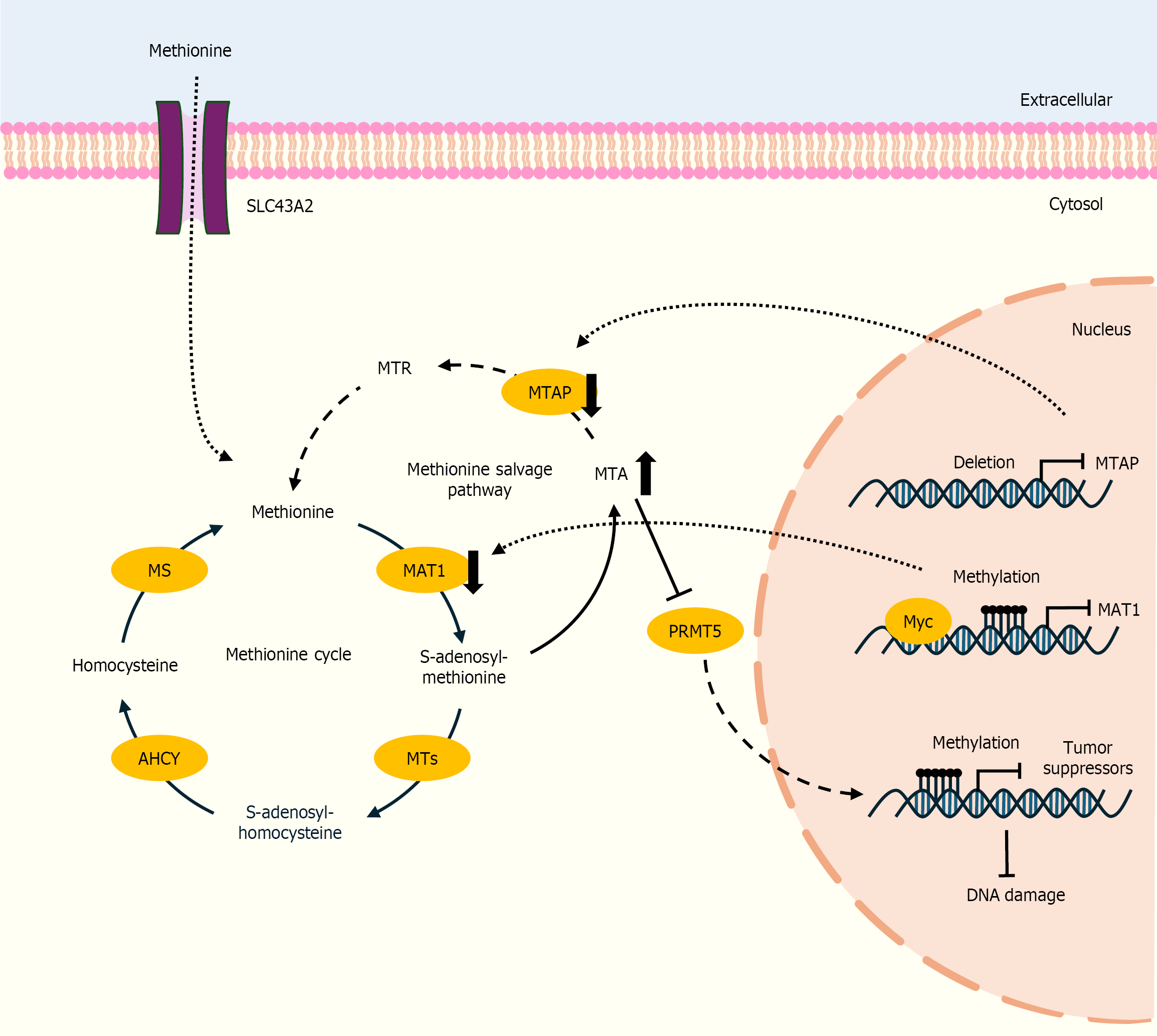
Figure 3 Metabolic pathways and the alteration of methionine metabolism in cholangiocarcinoma cells, including the methionine cycle and the methionine salvage pathway.
Loss of methylthioadenosine phosphorylase in the methionine salvage pathway leads to the accumulation of 5'-methylthioadenosine, thereby creating a hypomorphic state of protein arginine methyltransferase 5 (PRMT5), which selectively sensitizes cells to PRMT5 inhibition. The methionine adenosyltransferase 1 promoter is hypermethylated due to c-Myc-mediated transcriptional suppression, leading to increased tumor growth, invasion, and metastasis. The up or down direction of the arrows indicates whether levels in cholangiocarcinoma cells are increased or decreased. MTR: 5-methylthioribose; MTAP: Methylthioadenosine phosphorylase; MTA: 5'-methylthioadenosine; MAT1: Methionine adenosyltransferase 1; MS: Methionine synthase; AHCY: Ade
- Citation: Khawkhiaw K, Lert-Itthiporn W, Seyedasli N, Chiu CF, Saengboonmee C. Reprogramming of amino acid metabolism in cholangiocarcinoma: A potential target for metabolic-targeted therapy. World J Gastroenterol 2026; 32(13): 115536
- URL: https://www.wjgnet.com/1007-9327/full/v32/i13/115536.htm
- DOI: https://dx.doi.org/10.3748/wjg.v32.i13.115536