
















Copyright: ©Author(s) 2026.
World J Gastroenterol. Apr 7, 2026; 32(13): 115536
Published online Apr 7, 2026. doi: 10.3748/wjg.v32.i13.115536
Published online Apr 7, 2026. doi: 10.3748/wjg.v32.i13.115536
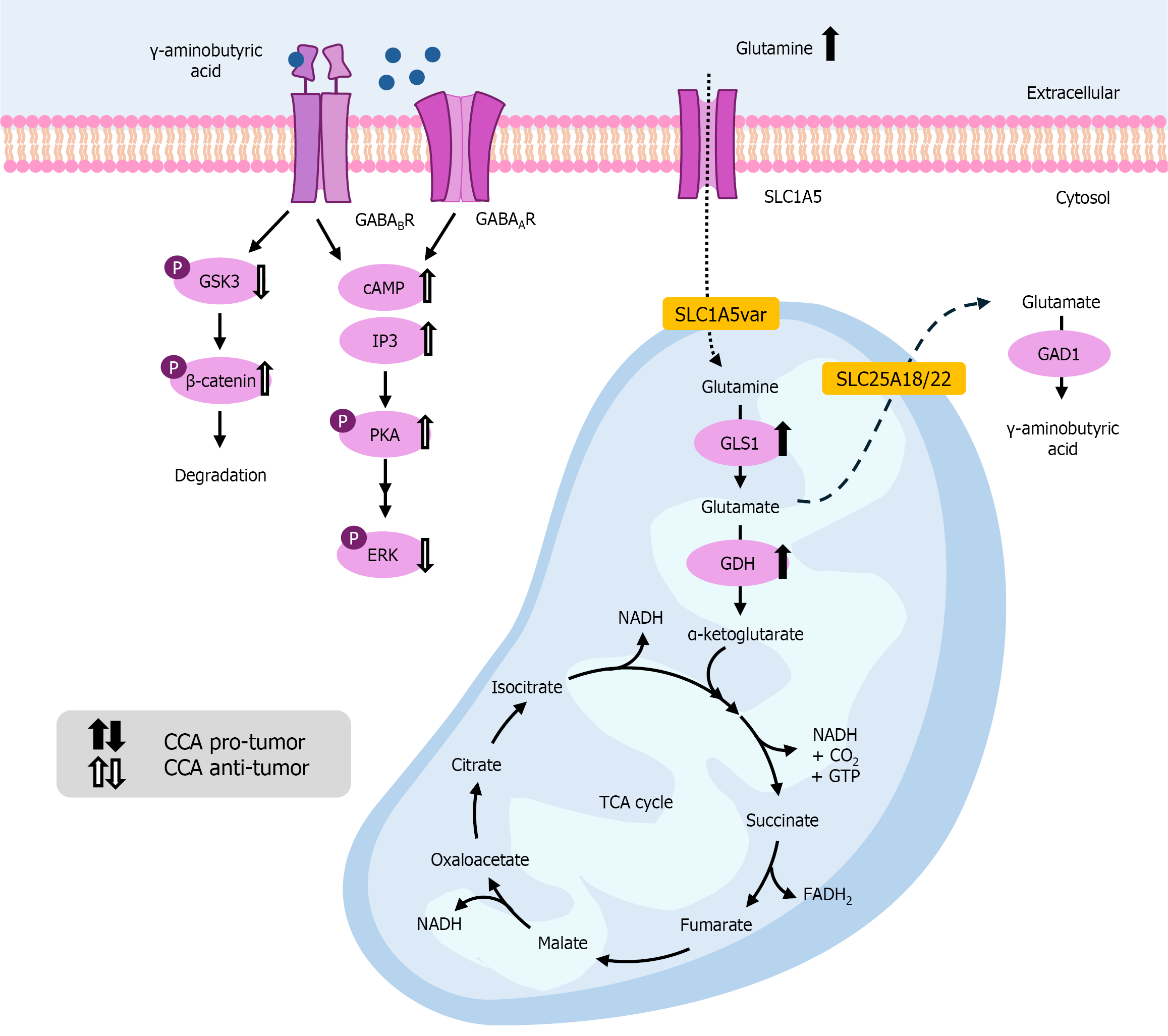
Figure 2 Metabolic pathways of gamma-aminobutyric acid and the effects of gamma-aminobutyric acid analogs on cholangiocarcinoma cell biology.
Gamma-aminobutyric acid (GABA) inhibits cholangiocarcinoma (CCA) cell proliferation via both cyclic AMP/protein kinase A and d-myo-inositol-1,4,5-triphosphate/Ca2+-dependent pathways, leading to downregulation of phosphorylated extracellular signal-regulated kinase 1/2. Moreover, an aminobutyric acid B2 receptor agonist can inhibit glycogen synthase kinase 3 phosphorylation, thereby further phosphorylating β-catenin, leading to its degradation. The up or down direction of the arrows indicates increased or decreased levels in CCA cells. Black arrows denote the pro-tumor effects of the genes or intermediates, while the white arrows denote their anti-tumor effects. GABA: γ-aminobutyric acid; GLS1: Glutaminase 1; GDH: Glutamate dehydrogenase; GAD1: Glutamate decarboxylase 1; cAMP: Cyclic adenosine monophosphate; IP3: Inositol trisphosphate; PKA: Protein kinase A; ERK: Extracellular signal-regulated kinase; GSK3: Glycogen synthase kinase-3.
- Citation: Khawkhiaw K, Lert-Itthiporn W, Seyedasli N, Chiu CF, Saengboonmee C. Reprogramming of amino acid metabolism in cholangiocarcinoma: A potential target for metabolic-targeted therapy. World J Gastroenterol 2026; 32(13): 115536
- URL: https://www.wjgnet.com/1007-9327/full/v32/i13/115536.htm
- DOI: https://dx.doi.org/10.3748/wjg.v32.i13.115536