
















Copyright: ©Author(s) 2026.
World J Gastroenterol. Apr 7, 2026; 32(13): 115536
Published online Apr 7, 2026. doi: 10.3748/wjg.v32.i13.115536
Published online Apr 7, 2026. doi: 10.3748/wjg.v32.i13.115536
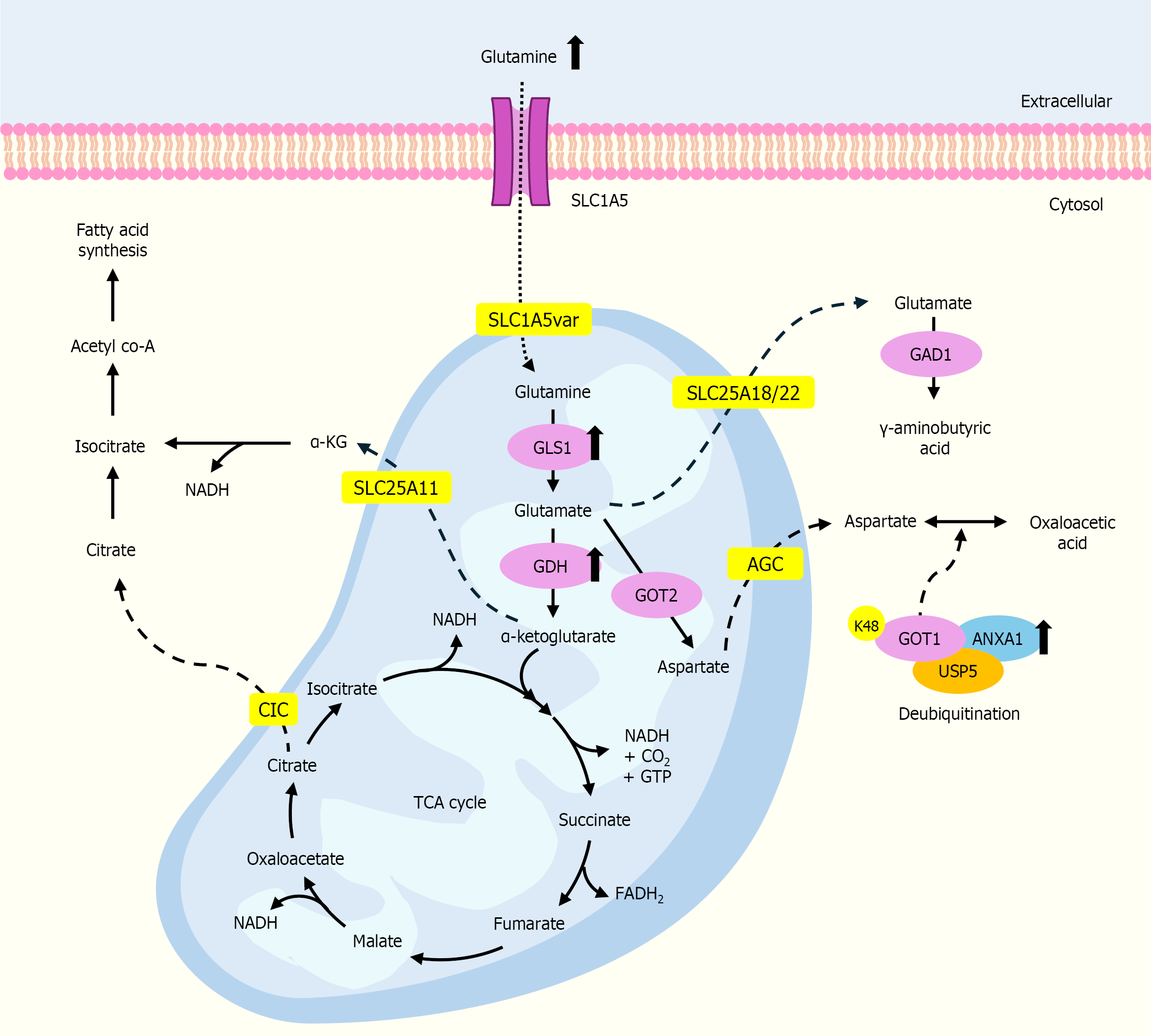
Figure 1 The alteration of glutamine metabolism in cholangiocarcinoma cells.
Glutaminolysis begins with the transportation of glutamine through the inner mitochondrial membrane through solute carrier family 1 member 5, followed by the conversion of glutamine to glutamate by GLSs. Mitochondrial glutamate can be converted to alpha-ketoglutarate by GDH1. Aspartate can be exported to the cytoplasm, undergo transamination, and converted to oxaloacetate by glutamate-oxaloacetate transaminase (GOT1). Annexin A1 generally functions as a scaffold protein, connecting ubiquitin-specific protease 5 with GOT1 and facilitating their interaction. This scaffolding activity promotes GOT1 deubiquitylation and stabilization, inhibiting its degradation via the ubiquitin-proteasome pathway. SLC1A5: Solute carrier family 1 member 5; AGC: Aspartate-glutamate carrier; GLS1: Glutaminase 1; GDH: Glutamate dehydrogenase; GOT: Glutamic-oxaloacetic tran
- Citation: Khawkhiaw K, Lert-Itthiporn W, Seyedasli N, Chiu CF, Saengboonmee C. Reprogramming of amino acid metabolism in cholangiocarcinoma: A potential target for metabolic-targeted therapy. World J Gastroenterol 2026; 32(13): 115536
- URL: https://www.wjgnet.com/1007-9327/full/v32/i13/115536.htm
- DOI: https://dx.doi.org/10.3748/wjg.v32.i13.115536