
















Copyright: ©Author(s) 2026.
World J Gastroenterol. Mar 28, 2026; 32(12): 115853
Published online Mar 28, 2026. doi: 10.3748/wjg.v32.i12.115853
Published online Mar 28, 2026. doi: 10.3748/wjg.v32.i12.115853
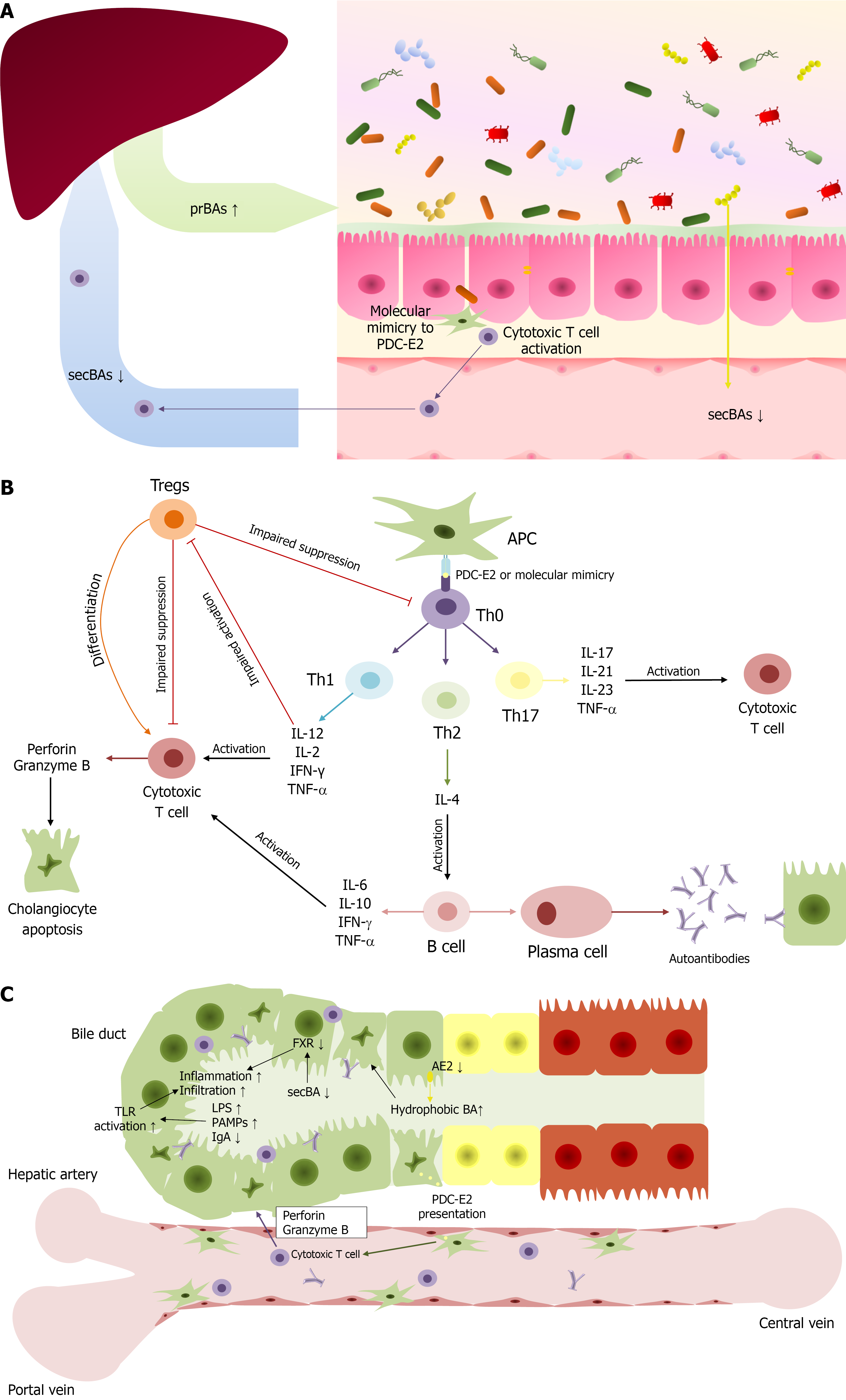
Figure 3 Gut microbiota in primary biliary cholangitis pathogenesis.
A: Bacterial molecular mimicry for E2 subunit of the pyruvate dehydrogenase complex (PDC-E2) can activate cytotoxic T cells, which transfer to the liver and attack cholangiocytes. Dysbiosis leads to the increased intestinal permeability and endotoxinemia, and decreased secondary bile acids (secBAs) production despite the increased intake of primary bile acids into the intestine; B: Antigen-presenting cells present PDC-E2 or molecules similar to it to cluster of differentiation 4+ T cells, that transform into T helper (Th) 1, Th2, Th17 cells with production of different cytokines (various interleukin, tumor necrosis factor-α, and interferon-γ) and activate both cytotoxic T cells and B cells. This process leads to increased autoantibodies secretion and cholangiocyte damage; C: Activated cytotoxic T cells induce cholangiocytes apoptosis. Suppressed anion exchanger 2 reduces the protection of cholangiocytes from hydrophobic bile acids in bile. Decreased secBAs lead to insufficient farnesoid X receptor activation and enhanced inflammation, as well as excessive levels of lipopolysaccharide and pathogen-associated molecular patterns activate Toll-like receptors. secBAs: Secondary bile acids; prBAs: Primary bile acids; PDC-E2: E2 subunit of the pyruvate dehydrogenase complex; Tregs: Regulatory T cells; Th: T helper; IL: Interleukin; IFN: Interferon; TNF: Tumor necrosis factor; APC: Antigen-presenting cells; TLR: Toll like receptor; LPS: Lipopolysaccharide; PAMPs: Pathogen-associated molecular patterns; IgA: Immunoglobulin A; FXR: Farnesoid X receptor; AE2: Anion exchanger 2; BA: Bile acid.
- Citation: Kiseleva Y, Maslennikov R, Poluektova E, Zolnikova O, Sigidaev A, Zharikov Y, Shirokova E, Ivashkin V. Microbiome-immune interactions in autoimmune liver diseases. World J Gastroenterol 2026; 32(12): 115853
- URL: https://www.wjgnet.com/1007-9327/full/v32/i12/115853.htm
- DOI: https://dx.doi.org/10.3748/wjg.v32.i12.115853