
















Copyright: ©Author(s) 2026.
World J Gastroenterol. Mar 28, 2026; 32(12): 114576
Published online Mar 28, 2026. doi: 10.3748/wjg.v32.i12.114576
Published online Mar 28, 2026. doi: 10.3748/wjg.v32.i12.114576
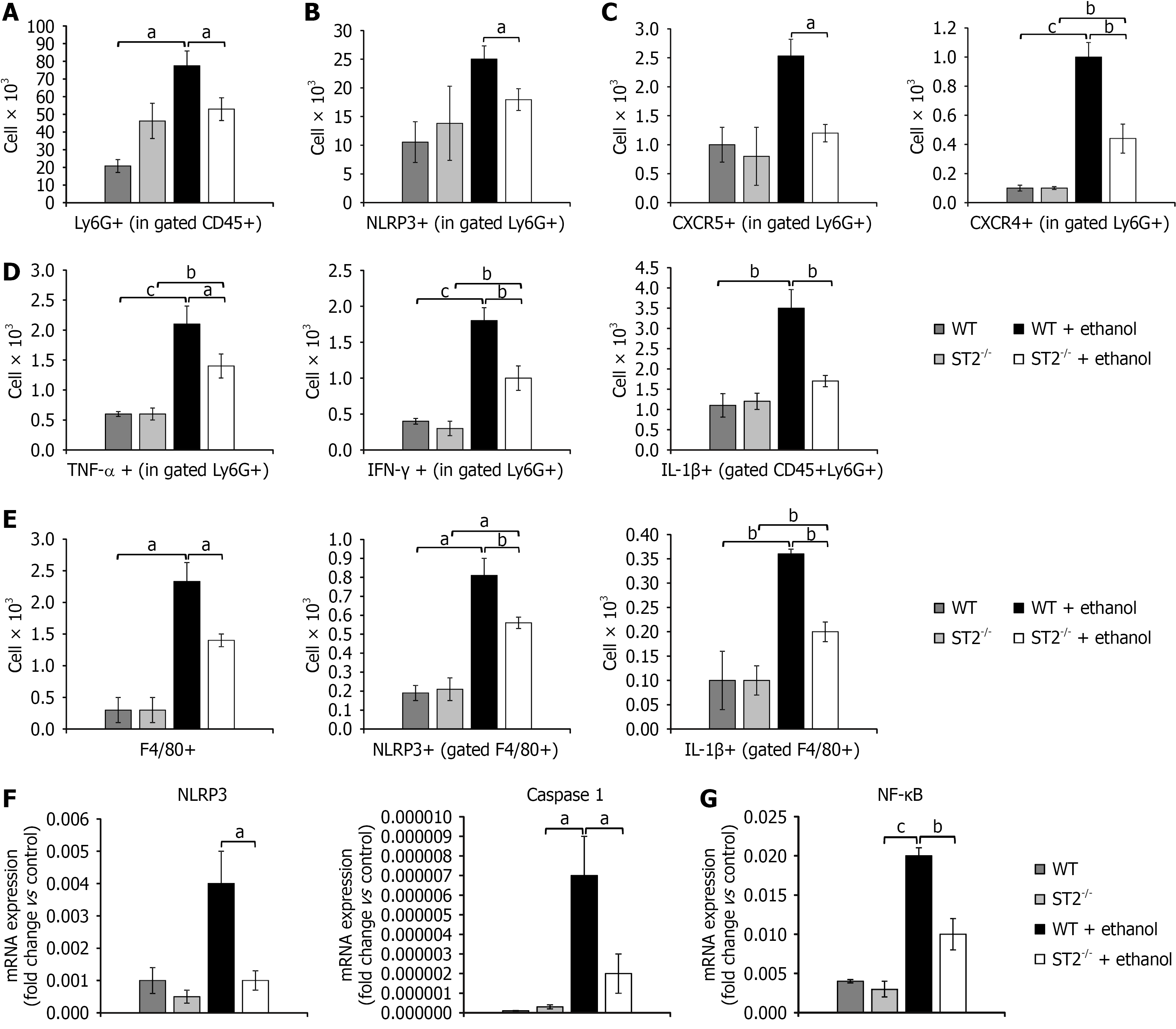
Figure 5 Suppression of tumorigenicity 2 gene deficiency attenuates neutrophil and macrophage activation and reduces gene expression of nuclear factor kappa B and NOD-like receptor family, pyrin domain containing 3.
A-D: Total count of neutrophils (Ly6G+) (A) in gastric tissue following ethanol administration, along with neutrophil subsets expressing NOD-like receptor family, pyrin domain containing 3 (NLRP3) (B), expressing C-X-C motif chemokine receptor 5 and C-X-C motif chemokine receptor 4 (C), and producing tumor necrosis factor-α, interferon-γ, and interleukin-1β (D); E: Total count of macrophages (F4/80+) in gastric tissue following ethanol exposure, including M1 macrophage subsets expressing NLRP3 and producing interleukin-1β. All parameters were analyzed by flow cytometry; F and G: The mRNA expression levels of NLRP3, caspase-1 (F), and nuclear factor kappa B (G) in gastric tissue detected by real-time quantitative reverse transcriptase polymerase chain reaction. Data are presented as mean ± SEM; n = 10 mice per group. aP < 0.05, bP < 0.01, cP < 0.001. WT: Wild type; ST2: Suppression of tumorigenicity 2; NLRP3: NOD-like receptor family, pyrin domain containing 3; CXCR: C-X-C motif chemokine receptor; TNF-α: Tumor necrosis factor-α; IL: Interleukin; NF-κB: Nuclear factor kappa B.
- Citation: Corovic IF, Pantic JM, Stanisavljevic IA, Pavlovic SM, Jovanovic IP, Radosavljevic GD, Simovic Markovic BJ. ST2 gene deficiency alleviates acute gastric injury in mice by modulating inflammation and epithelial cell death. World J Gastroenterol 2026; 32(12): 114576
- URL: https://www.wjgnet.com/1007-9327/full/v32/i12/114576.htm
- DOI: https://dx.doi.org/10.3748/wjg.v32.i12.114576