
















©Author(s) (or their employer(s)) 2026.
World J Gastroenterol. Mar 14, 2026; 32(10): 115334
Published online Mar 14, 2026. doi: 10.3748/wjg.v32.i10.115334
Published online Mar 14, 2026. doi: 10.3748/wjg.v32.i10.115334
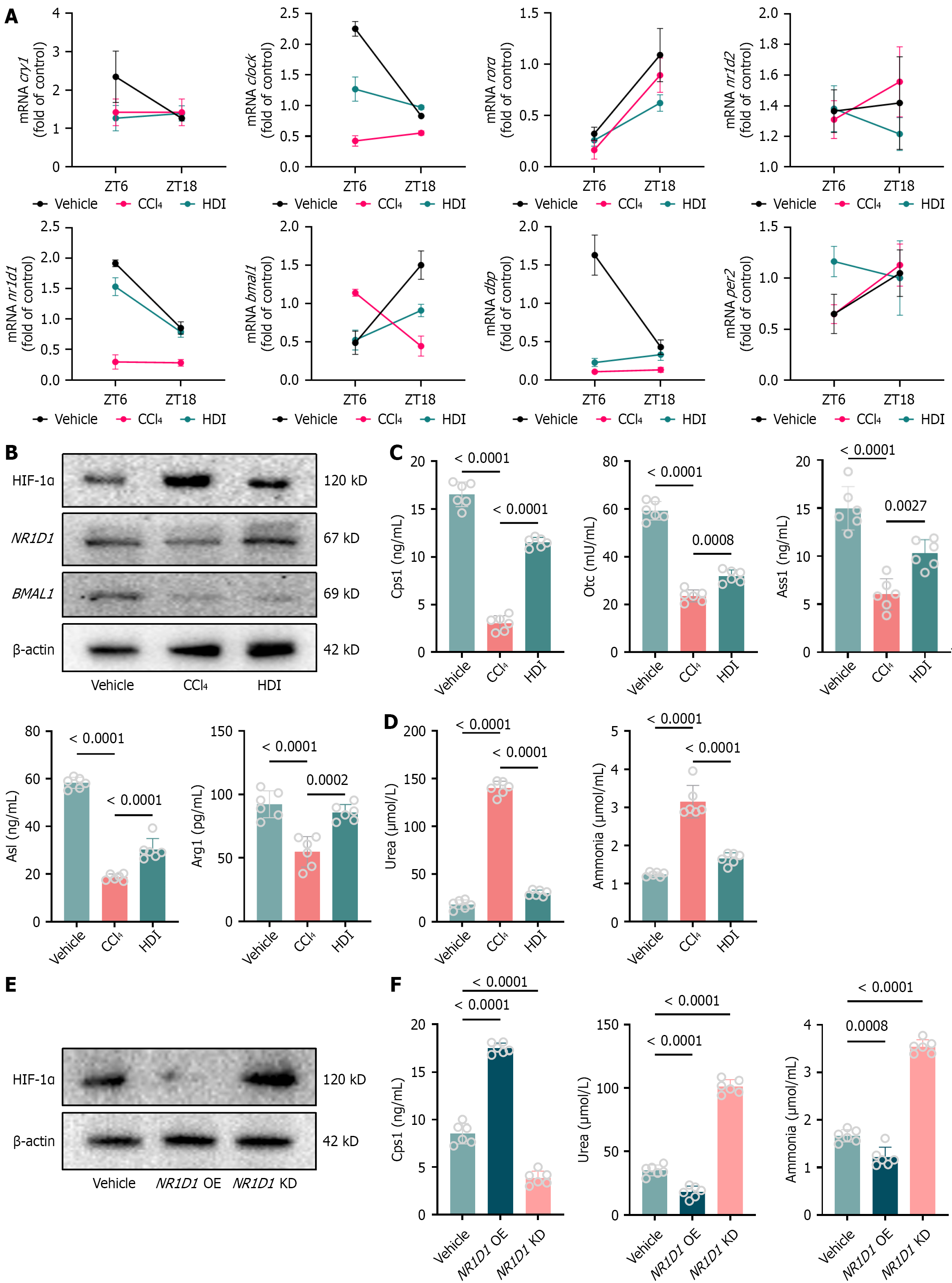
Figure 5 Hedyotis diffusa injection regulates the hepatic hypoxia inducible factor-1 signaling pathway and urea cycle through the circadian rhythm gene NR1D1.
A: The expression changes of circadian rhythm genes in mouse liver tissue before and after Hedyotis diffusa injection treatment using real-time polymerase chain reaction; B: The protein expression of hypoxia inducible factor (HIF)-1α, NR1D1, and BMAL1 analyzed by Western blot; C: Detection of urea cycle-related enzyme levels in liver tissue by enzyme-linked immunosorbent assay (ELISA); D: Detection of urea and ammonia levels in liver tissue by ELISA; E: Effect of NR1D1 on HIF-1α protein expression detected by Western blot; F: Effect of NR1D1 on carbamoyl phosphate synthetase 1, urea, and ammonia levels detected by ELISA. HDI: Hedyotis diffusa injection; CCl4: Carbon tetrachloride; ZT: Zeitgeber time; mRNA: Messenger RNA; HIF: Hypoxia inducible factor; CPS1: Carbamoyl phosphate synthetase 1; Otc: Ornithine transcarbamylase; Ass1: Argininosuccinate synthase 1; Asl: Argininosuccinate lyase; Arg-1: Arginase 1; KD: Knockdown; OE: Overexpression.
- Citation: Xia SW, Liu H, Yang KY, Gao YJ, Zhang MR, Zhou JW, Kong DS, Wu HY, Zhang F, Chen L. Integrative study reveals NR1D1 mediates Hedyotis diffusa’s antifibrosis via hypoxia inducible factor-1/ammonia axis. World J Gastroenterol 2026; 32(10): 115334
- URL: https://www.wjgnet.com/1007-9327/full/v32/i10/115334.htm
- DOI: https://dx.doi.org/10.3748/wjg.v32.i10.115334