
















©Author(s) (or their employer(s)) 2026.
World J Gastroenterol. Mar 14, 2026; 32(10): 115334
Published online Mar 14, 2026. doi: 10.3748/wjg.v32.i10.115334
Published online Mar 14, 2026. doi: 10.3748/wjg.v32.i10.115334
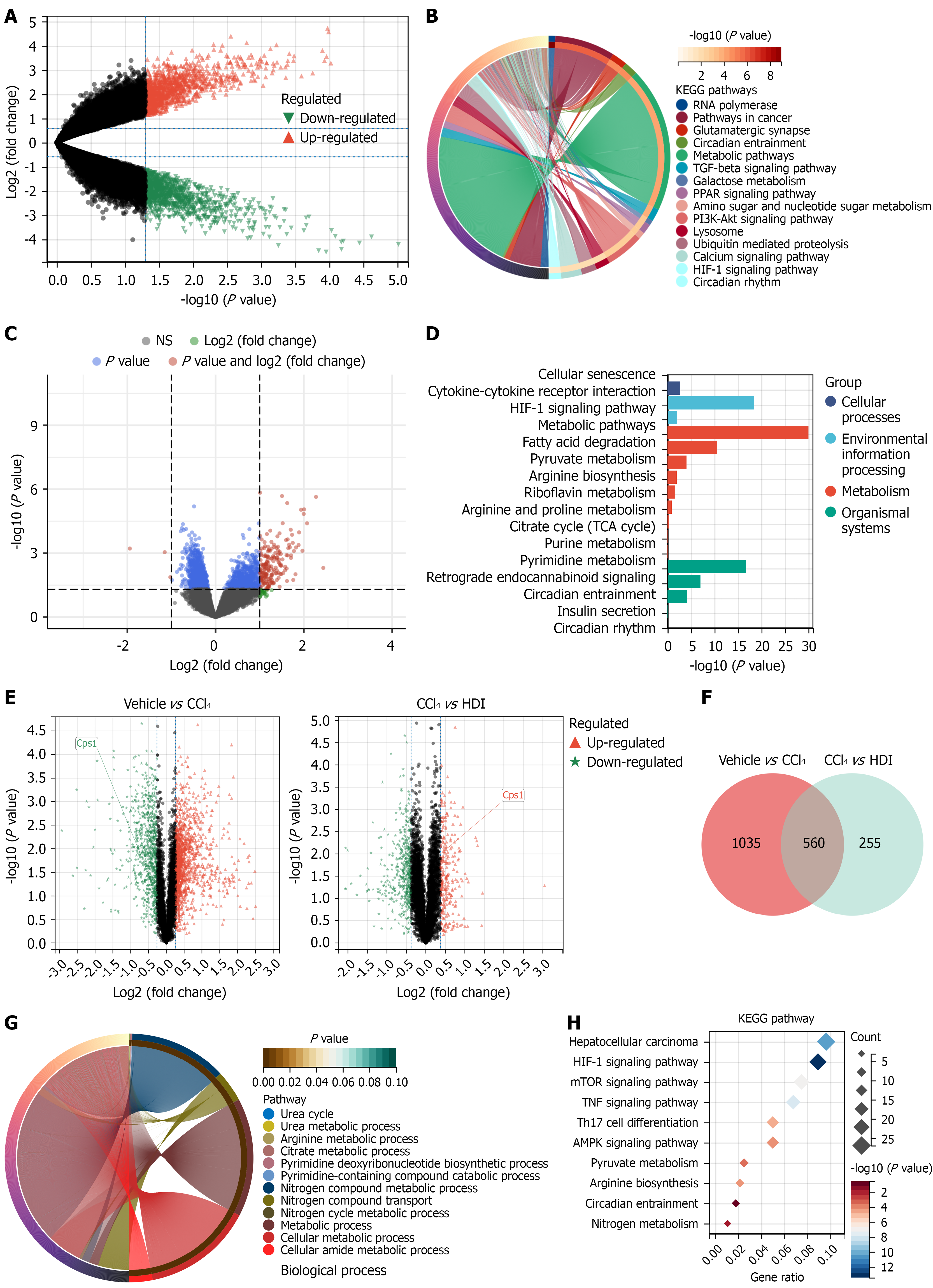
Figure 4 Hedyotis diffusa injection ameliorates liver fibrosis by influencing circadian rhythm, hypoxia inducible factor-1 signaling pathway and urea metabolic process.
A and B: GSE990887 dataset analysis; C and D: GSE33650 dataset analysis; E: Volcano analysis of proteomics in mice; F: Venn analysis of the differentially expressed proteins in these two groups: Control vs carbon tetrachloride (CCl4) and CCl4vs Hedyotis diffusa injection; G and H: Gene Ontology and Kyoto Encyclopedia of Genes and Genomes enrichment analyses. KEGG: Kyoto Encyclopedia of Genes and Genomes; TGF: Transforming growth factor; HIF: Hypoxia inducible factor; PPAR: Peroxisome proliferators-activated receptor; PI3K: Phosphatidylinositol 3-kinase; Akt: Protein kinase B; TCA: Tricarboxylic acid cycle; mTOR: Mammalian target of rapamycin; TNF: Tumor necrosis factor; AMPK: Adenosine 5’-monophosphate-activated protein kinase; Th17: T helper 17 cell.
- Citation: Xia SW, Liu H, Yang KY, Gao YJ, Zhang MR, Zhou JW, Kong DS, Wu HY, Zhang F, Chen L. Integrative study reveals NR1D1 mediates Hedyotis diffusa’s antifibrosis via hypoxia inducible factor-1/ammonia axis. World J Gastroenterol 2026; 32(10): 115334
- URL: https://www.wjgnet.com/1007-9327/full/v32/i10/115334.htm
- DOI: https://dx.doi.org/10.3748/wjg.v32.i10.115334