
















©Author(s) (or their employer(s)) 2026.
World J Gastroenterol. Mar 14, 2026; 32(10): 115334
Published online Mar 14, 2026. doi: 10.3748/wjg.v32.i10.115334
Published online Mar 14, 2026. doi: 10.3748/wjg.v32.i10.115334
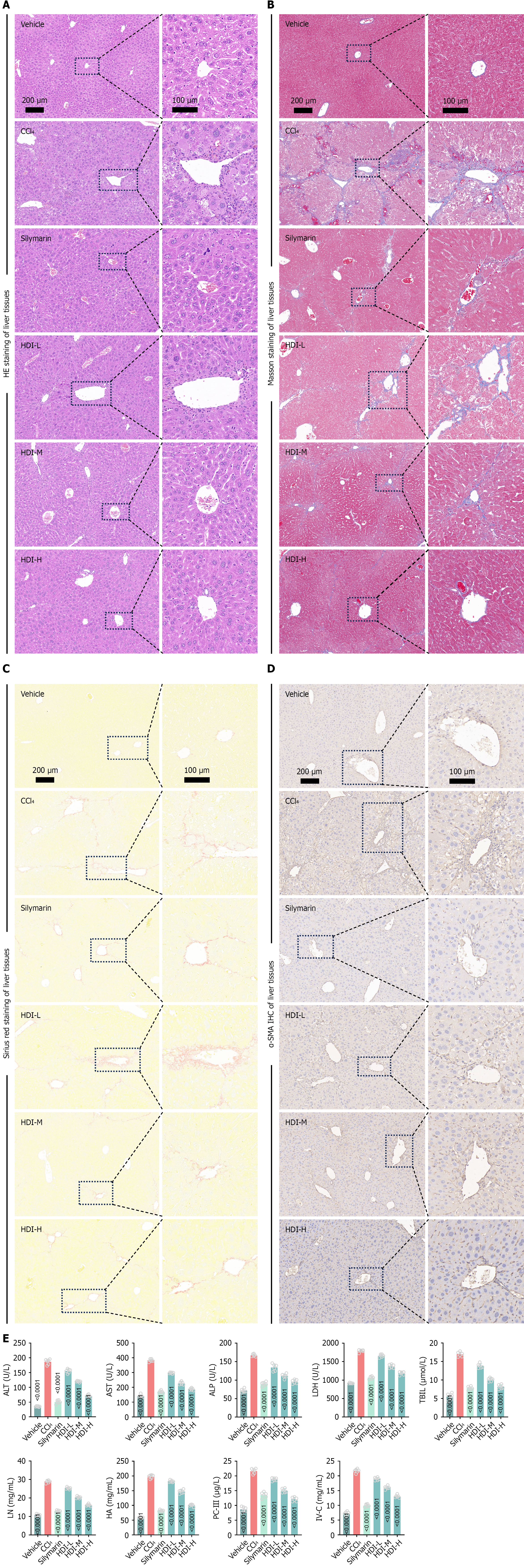
Figure 3 Hedyotis diffusa injection can ameliorate carbon tetrachloride-induced liver fibrosis in mice.
A: Hematoxylin-eosin; B: Masson; C: Sirius red staining; D: Α-smooth muscle actin immunohistochemistry; E: Serum biochemical indices of hepatic fibrosis and liver injury. P value listed, compared with carbon tetrachloride group. HE: Hematoxylin-eosin; HDI: Hedyotis diffusa injection; HD: Hedyotis diffusa; L: Low; M: Median; H: High; CCl4: Carbon tetrachloride; IHC: Immunohistochemistry; SMA: Smooth muscle actin; ALT: Alanine aminotransferase; AST: Aspartate aminotransferase; ALP: Alkaline phosphatase; LDH: Lactate dehydrogenase; TBIL: Total bilirubin; LN: Laminin; HA: Hyaluronidase; PC-III: Procollagen-III; IV-C: Type IV collagen.
- Citation: Xia SW, Liu H, Yang KY, Gao YJ, Zhang MR, Zhou JW, Kong DS, Wu HY, Zhang F, Chen L. Integrative study reveals NR1D1 mediates Hedyotis diffusa’s antifibrosis via hypoxia inducible factor-1/ammonia axis. World J Gastroenterol 2026; 32(10): 115334
- URL: https://www.wjgnet.com/1007-9327/full/v32/i10/115334.htm
- DOI: https://dx.doi.org/10.3748/wjg.v32.i10.115334