
















©Author(s) (or their employer(s)) 2026.
World J Gastroenterol. Mar 14, 2026; 32(10): 115167
Published online Mar 14, 2026. doi: 10.3748/wjg.v32.i10.115167
Published online Mar 14, 2026. doi: 10.3748/wjg.v32.i10.115167
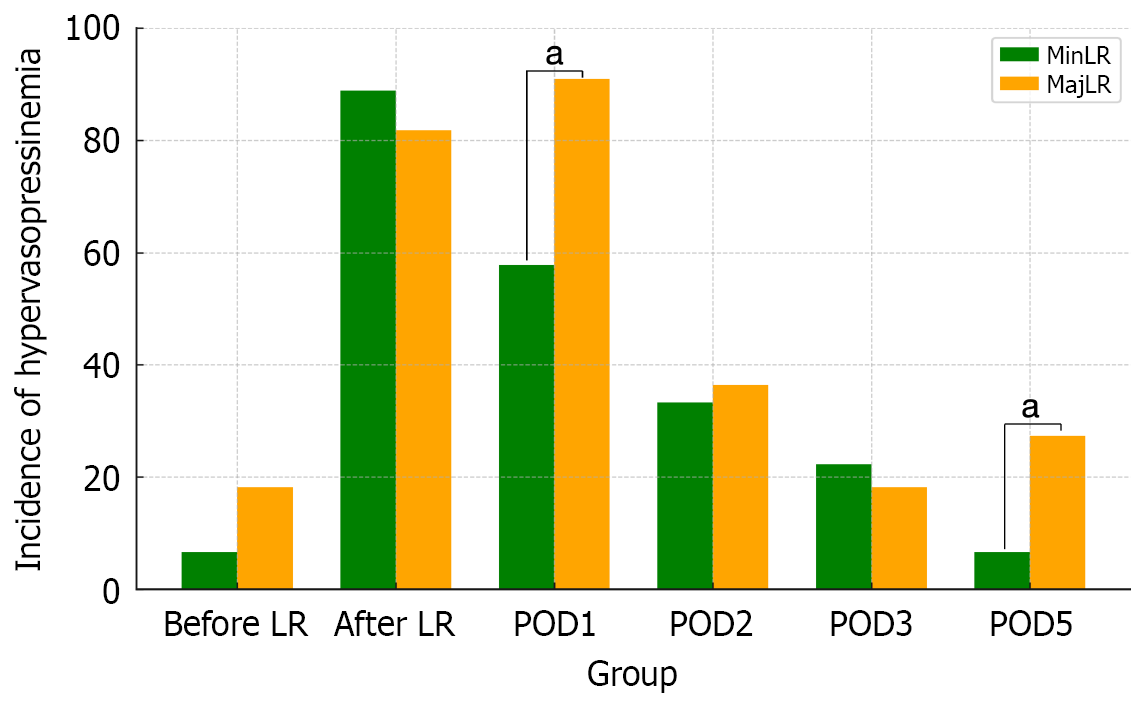
Figure 4 Incidence of hypervasopressinemia after liver resection according to surgical extent.
The major liver resection (MajLR) group (orange bars) had a higher proportion of patients with plasma arginine vasopressin ≥ 4.0 pg/mL compared to the minor liver resection group (green bars). Hypervasopressinemia was significantly more frequent in the MajLR group on postoperative day (POD) 1 and 5. Although the early increase on POD 1 likely reflects intraoperative fluid-restrictive management and hemodynamic shifts inherent to major liver resection, the persistence to POD 5 despite postoperative rehydration suggests a prolonged neuroendocrine response proportional to surgical stress. aP < 0.05. MinLR: Minor liver resection; MajLR: Major liver resection; LR: Liver resection; POD: Postoperative day.
- Citation: Aoki Y, Kawano Y, Ga R, Endo K, Ueda J, Shimizu T, Yoshida H. Vasopressin and fluid retention after liver resection: Comparison with the renin-angiotensin-aldosterone system by surgical extent and liver function. World J Gastroenterol 2026; 32(10): 115167
- URL: https://www.wjgnet.com/1007-9327/full/v32/i10/115167.htm
- DOI: https://dx.doi.org/10.3748/wjg.v32.i10.115167