
















©Author(s) (or their employer(s)) 2026.
World J Gastroenterol. Mar 14, 2026; 32(10): 113771
Published online Mar 14, 2026. doi: 10.3748/wjg.v32.i10.113771
Published online Mar 14, 2026. doi: 10.3748/wjg.v32.i10.113771
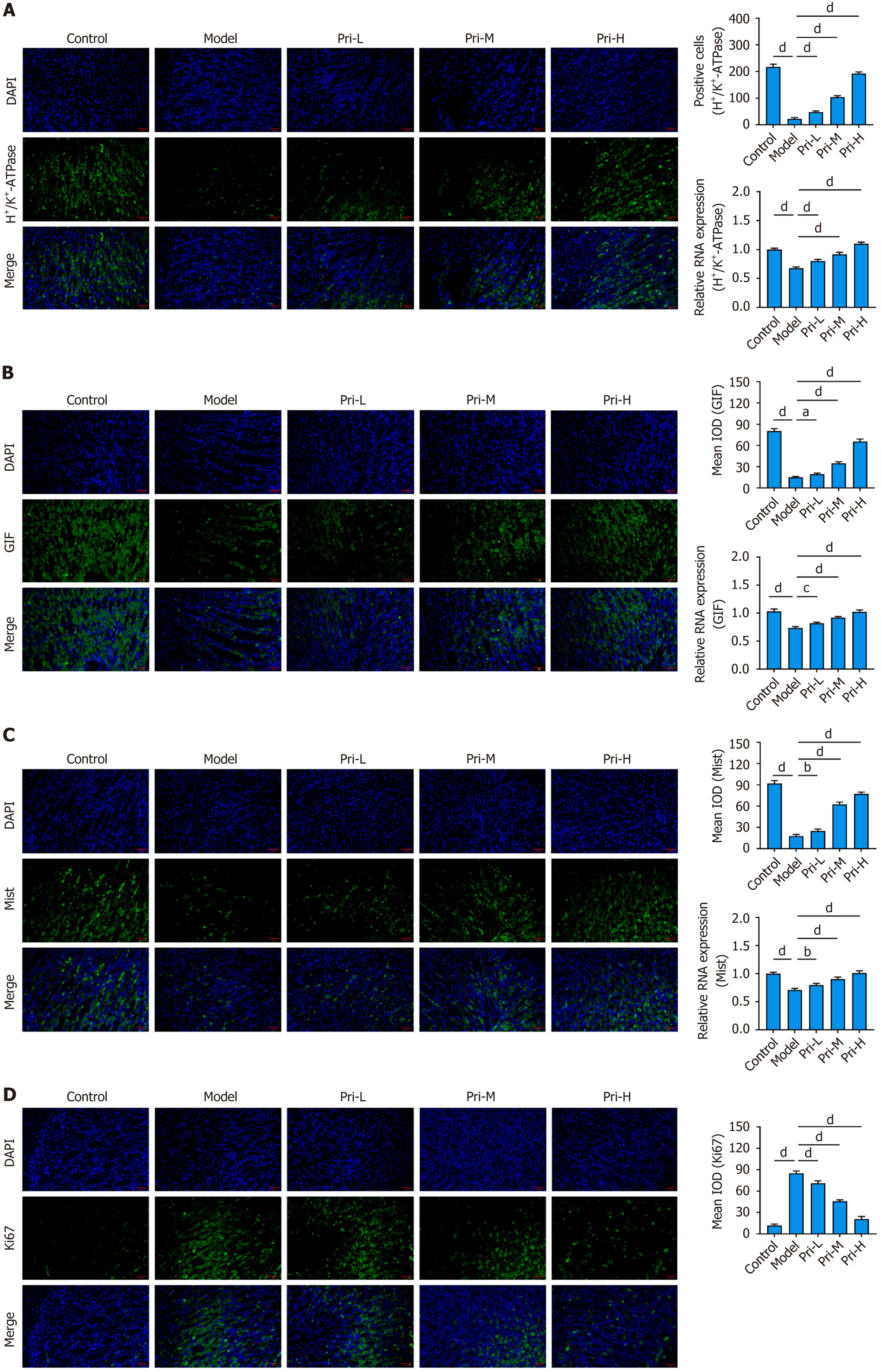
Figure 2 Pristimerin alleviates spasmolytic polypeptide-expressing metaplasia-related oxyntic atrophy in mice.
A-C: Immunofluorescence and reverse transcription quantitative polymerase chain reaction detection of hydrogen-potassium-adenosine-triphosphatase (parietal cells), gastric intrinsic factor and mist (chief cells) expression in gastric mucosa of high-dose tamoxifen-induced spasmolytic polypeptide-expressing metaplasia mice treated with pristimerin. Scale bar, 20 μm; D: Inhibitory effect of pristimerin on gastric mucosal cell proliferation in mice. Scale bar, 20 μm. aP < 0.05; bP < 0.01; cP < 0.001; dP < 0.0001. Values represent the mean ± SD (n = 6). DAPI: 4’,6-diamidino-2-phenylindole; H+/K+ ATPase: Hydrogen-potassium-adenosine-triphosphatase; GIF: Gastric intrinsic factor; Pri-L: Low-dose pristimerin; Pri-M: Medium-dose pristimerin; Pri-H: High-dose pristimerin; IOD: Integrated optical density.
- Citation: Wen JS, Pan ZW, Yao XD, Liu YQ, Zhu YD. Pristimerin ameliorates spasmolytic polypeptide-expressing metaplasia by modulating Cdkn1c (p57)-mediated glycolytic reprogramming. World J Gastroenterol 2026; 32(10): 113771
- URL: https://www.wjgnet.com/1007-9327/full/v32/i10/113771.htm
- DOI: https://dx.doi.org/10.3748/wjg.v32.i10.113771