
















©The Author(s) 2026.
World J Gastroenterol. Jan 7, 2026; 32(1): 113181
Published online Jan 7, 2026. doi: 10.3748/wjg.v32.i1.113181
Published online Jan 7, 2026. doi: 10.3748/wjg.v32.i1.113181
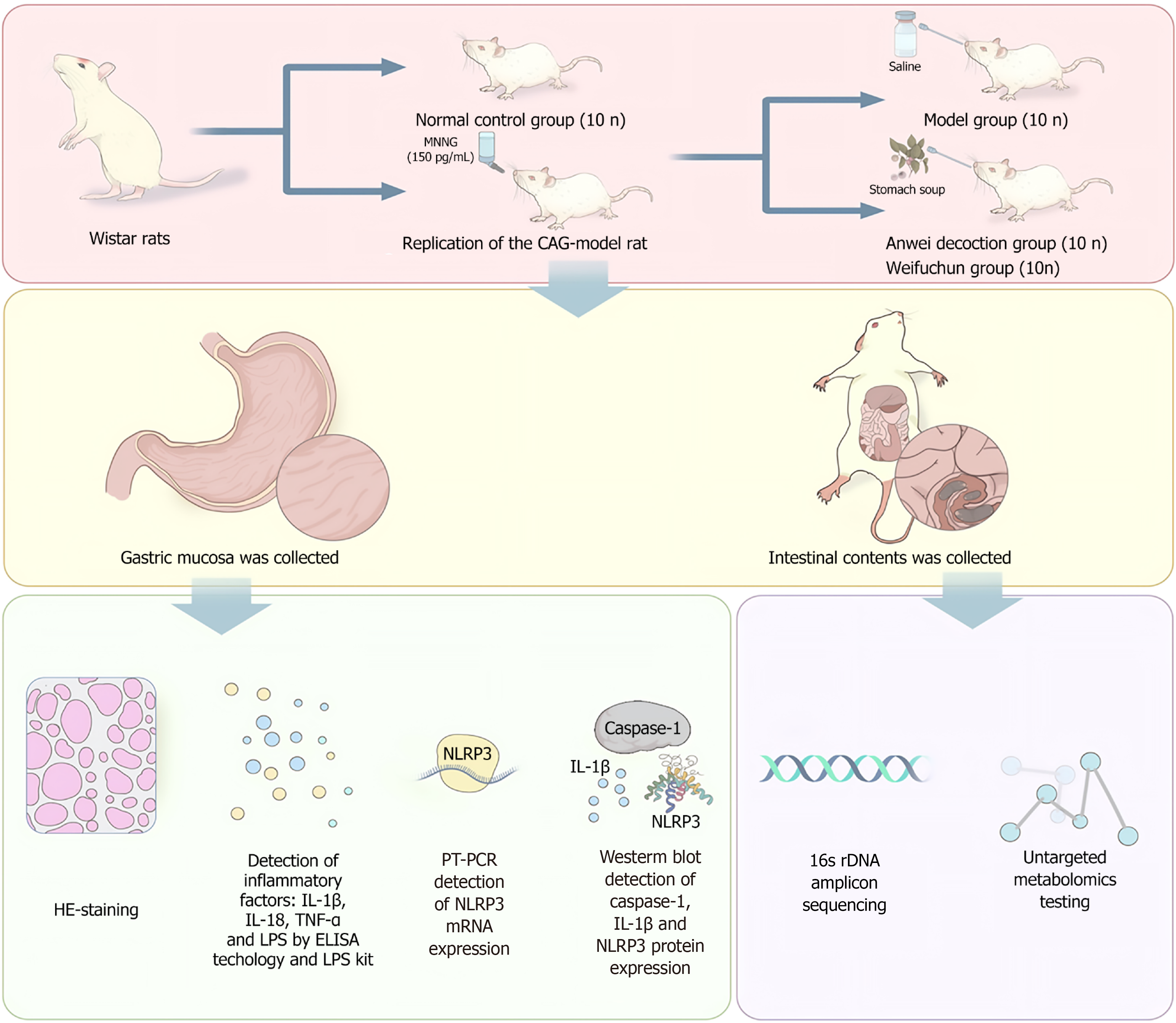
Figure 1 Experimental design: After 7 days of acclimatization, 10 rats were randomly selected as the normal control group.
The remaining rats underwent chronic atrophic gastritis model induction. Upon successful modeling, rats were randomly divided into the model group receiving saline gavage, the Anwei decoction (AWD) intervention group receiving AWD (10.71 g/kg) and the Weifuchun capsules (WFC) intervention group (receiving WFC at 0.43 g/kg) daily for 8 weeks. The normal control group was provided regular feeding and drinking water free. CAG: Chronic atrophic gastritis; MNNG: N-methyl-N’-nitro-N-nitrosoguanidine; HE: Hematoxylin-eosin; IL: Interleukin; TNF: Tumor necrosis factor; LPS: Lipopolysaccharide; ELISA: Enzyme-linked immunosorbent assay; qRT-PCR: Quantitative real-time polymerase chain reaction; mRNA: Messenger RNA.
- Citation: Qin H, Liu YY, Li Q, Wei SY, Huang LY, Zhou CF, Tan LY, Zhang JW, Wu DK, Tang YM. Anwei decoction alleviates chronic atrophic gastritis by modulating the gut microbiota-metabolite axis and NLRP3 inflammasome activity. World J Gastroenterol 2026; 32(1): 113181
- URL: https://www.wjgnet.com/1007-9327/full/v32/i1/113181.htm
- DOI: https://dx.doi.org/10.3748/wjg.v32.i1.113181