
















©The Author(s) 2026.
World J Gastroenterol. Jan 7, 2026; 32(1): 111428
Published online Jan 7, 2026. doi: 10.3748/wjg.v32.i1.111428
Published online Jan 7, 2026. doi: 10.3748/wjg.v32.i1.111428
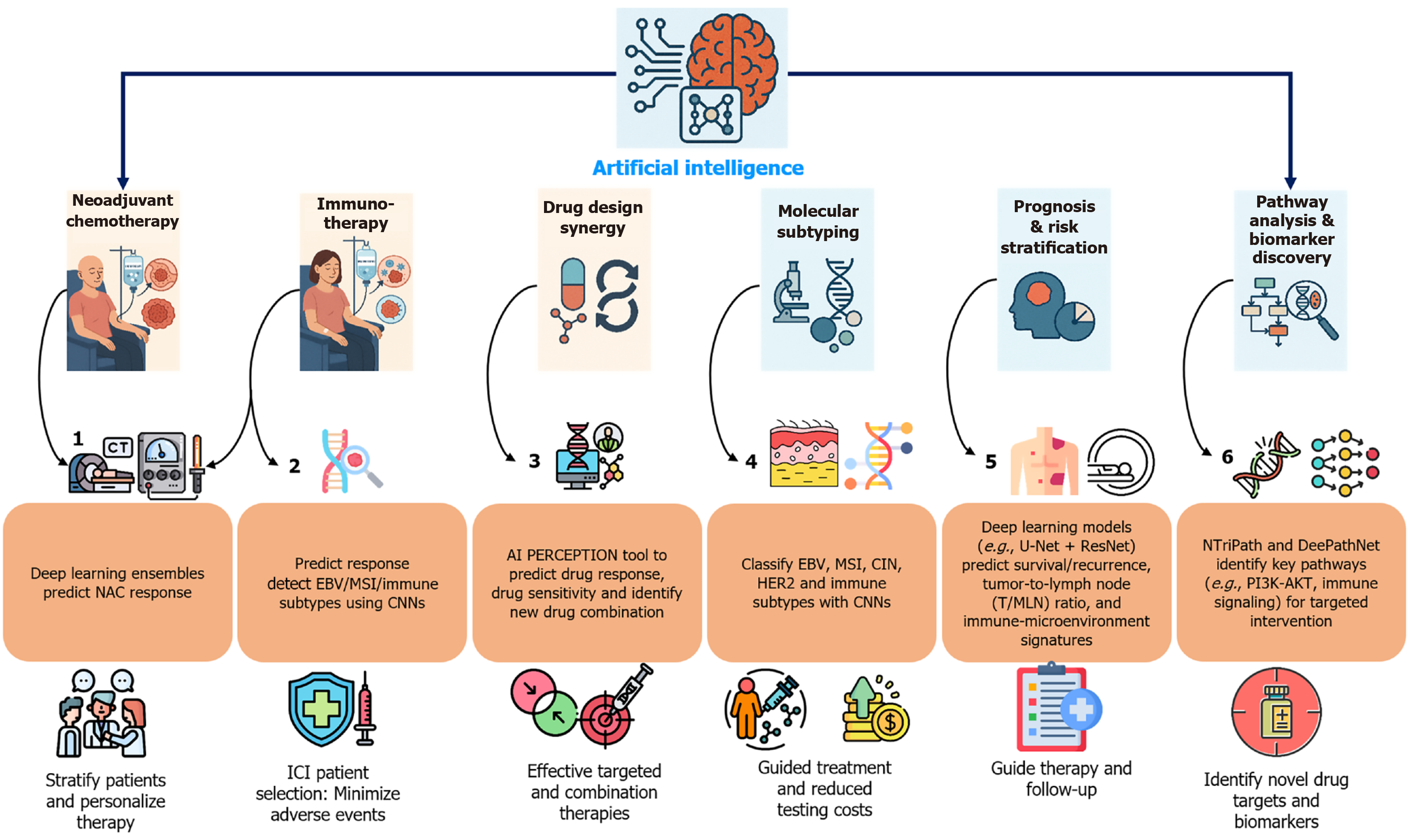
Figure 3 Artificial intelligence applications in gastrointestinal cancer therapeutics.
This schematic illustrates artificial intelligence approaches for neoadjuvant chemotherapy optimization and precision oncology. Panel labels (1-6) denote data sources: (1) Computed tomography (CT) scans + radiomics; (2) Radiomics + gene expression; (3) Multi-omics (genomics of drug sensitivity in cancer/cancer cell line encyclopedia); (4) Histology + genomics; (5) Whole slide imaging, CT, and immunohistochemistry; and (6) Somatic mutations + networks. NAC: Neoadjuvant chemotherapy; EBV: Epstein-Barr virus; MSI: Microsatellite instability; CNN: Convolutional neural network; CIN: Chromosomal instability; T/MLN: Tumor/metastasis lymph node; ICI: Immune checkpoint inhibitor.
- Citation: Suri C, Ratre YK, Pande B, Bhaskar L, Verma HK. Artificial intelligence and machine learning-driven advancements in gastrointestinal cancer: Paving the way for precision medicine. World J Gastroenterol 2026; 32(1): 111428
- URL: https://www.wjgnet.com/1007-9327/full/v32/i1/111428.htm
- DOI: https://dx.doi.org/10.3748/wjg.v32.i1.111428