
















©The Author(s) 2025.
World J Gastroenterol. Dec 28, 2025; 31(48): 112653
Published online Dec 28, 2025. doi: 10.3748/wjg.v31.i48.112653
Published online Dec 28, 2025. doi: 10.3748/wjg.v31.i48.112653
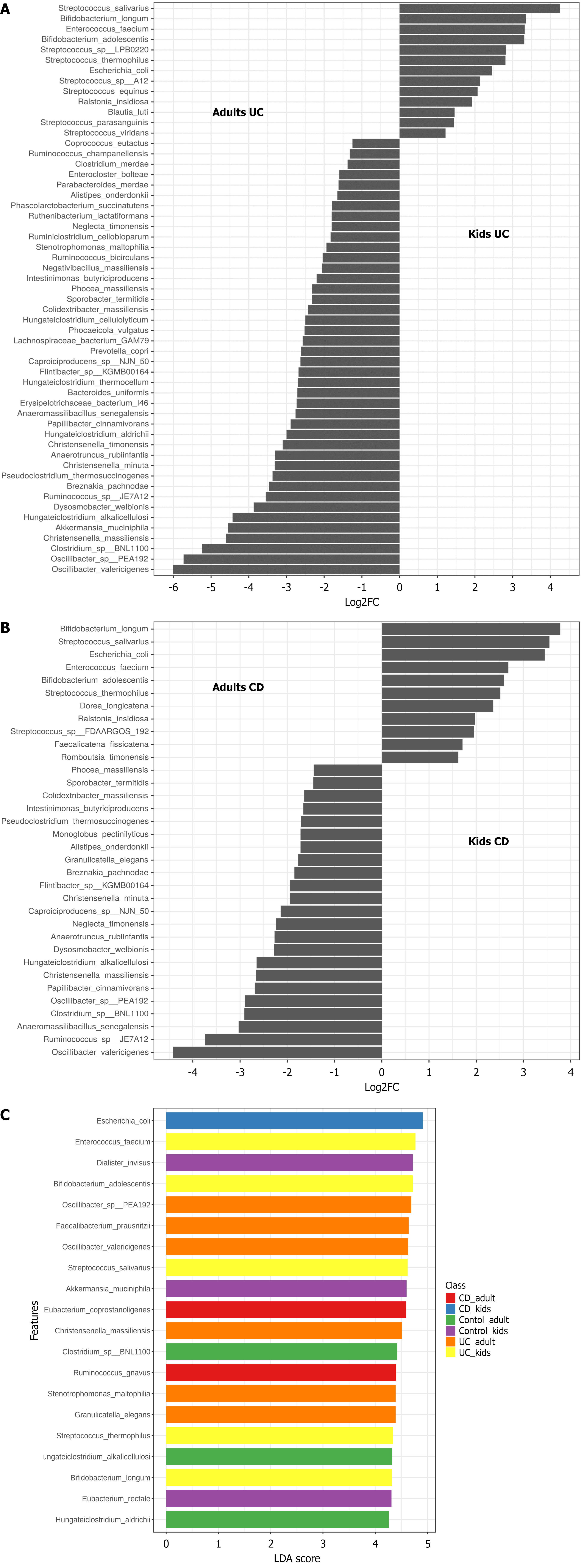
Figure 9 Difference between taxonomic composition of gut microbiome of paediatric and adult patients with ulcerative colitis and Crohn’s disease.
A: Results of identifying differentially abundant species between pediatric and adult ulcerative colitis patient’s groups using Maalsin2 with following thresholds minimum abundance = 0.01, minimum prevalence = 0.25, max significance = 0.05; B: Results of identifying differentially abundant species between pediatric and adult Crohn’s disease patient’s groups using Maalsin2 with following thresholds minimum abundance = 0.01, minimum prevalence = 0.25, maximum significance = 0.05; C: Results of identifying biomarker species of pediatric and adult controls, ulcerative colitis and Crohn’s disease patient’s groups using linear discriminant analysis effect size. The colors indicate biomarker species for the studied groups. UC: Ulcerative colitis; CD: Crohn’s disease; LDA: Linear discriminant analysis.
- Citation: Zakharzhevskaya NB, Erdes SI, Belousova EA, Samolygo IS, Manina MA, Kondrashova PV, Lomakina EY, Kardonsky DA, Vorobyeva EA, Shagaleeva OY, Silantyev AA, Kazakova VD, Kashatnikova DA, Kalachnuk TN, Kolesnikova IV, Chaplin AV, Markelova MI, Grigoryeva TV, Olekhnovich EI, Veselovsky VA, Morozov MD, Zoruk PY, Boldyreva DI, Vanyushkina AA, Efimov BA. Combined metabolomic and metagenomic analysis reveals inflammatory bowel disease diversity in pediatric and adult patients. World J Gastroenterol 2025; 31(48): 112653
- URL: https://www.wjgnet.com/1007-9327/full/v31/i48/112653.htm
- DOI: https://dx.doi.org/10.3748/wjg.v31.i48.112653