
















©The Author(s) 2026.
World J Gastroenterol. Dec 21, 2025; 31(47): 113496
Published online Dec 21, 2025. doi: 10.3748/wjg.v31.i47.113496
Published online Dec 21, 2025. doi: 10.3748/wjg.v31.i47.113496
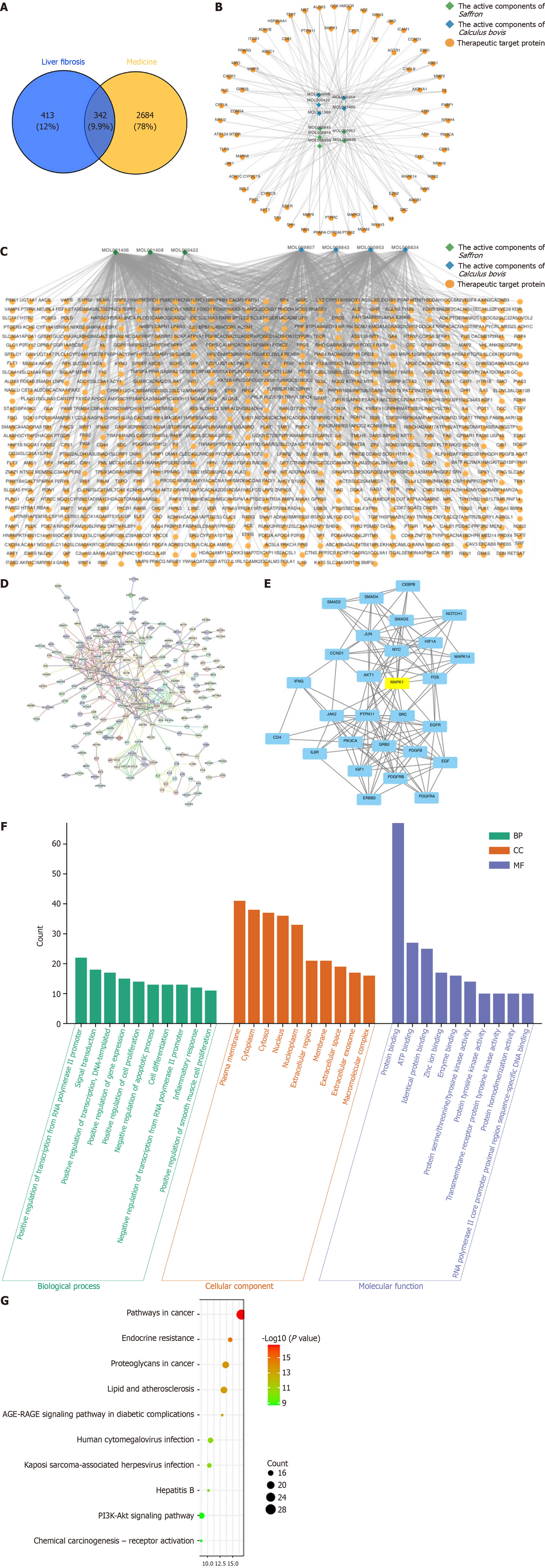
Figure 4 Mechanism of saffron and Calculus bovis against hepatic fibrosis based on network pharmacology.
A: Venn diagram of overlapping targets of saffron and Calculus bovis (Saf-Cal b) in the treatment of hepatic fibrosis; B: Network diagram of active ingredients and targets of Saf-Cal b in the Traditional Chinese Medicine Systems Pharmacology Database and Analysis Platform database; C: Network diagram of active ingredients and targets of Saf-Cal b in the Bioinformatics Annotation Database for Molecular Mechanism of Traditional Chinese Medicine database; D: Protein-protein interaction network; E: Core clustering network; F: Bar chart of Gene Ontology functional enrichment analysis (biological processes, cellular components, molecular function) of targets of Saf-Cal b in the treatment of hepatic fibrosis; G: Bubble chart of Kyoto Encyclopedia of Genes and Genomes pathway analysis of targets of Saf-Cal b in treating hepatic fibrosis. BP: Biological processes; CC: Cellular components; MF: Molecular functions; PI3K-Akt: Phosphatidylinositol 3-kinase/protein kinase B.
- Citation: Sun SN, Wang K, Xu Y, Ye F, Xia WN, Wang ZW, Liu F, He ZX, Chen M, Du QH. Saffron and Calculus bovis combination exerts anti-hepatic fibrotic effect in liver fibrosis rats via the mitogen-activated protein kinases pathway. World J Gastroenterol 2025; 31(47): 113496
- URL: https://www.wjgnet.com/1007-9327/full/v31/i47/113496.htm
- DOI: https://dx.doi.org/10.3748/wjg.v31.i47.113496