
















©The Author(s) 2026.
World J Gastroenterol. Dec 21, 2025; 31(47): 113496
Published online Dec 21, 2025. doi: 10.3748/wjg.v31.i47.113496
Published online Dec 21, 2025. doi: 10.3748/wjg.v31.i47.113496
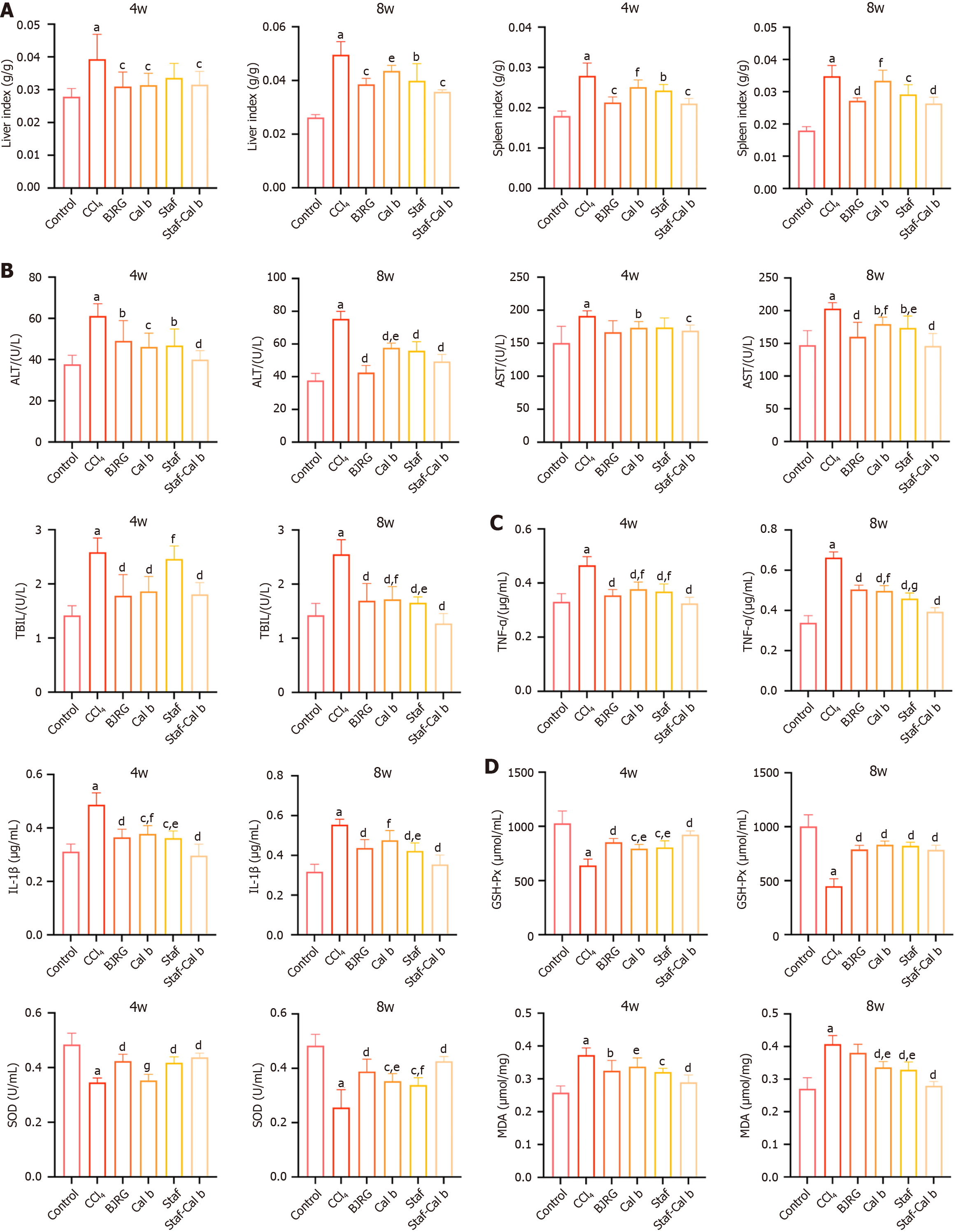
Figure 2 Effects of the saffron and Calculus bovis treatment on liver function, inflammatory responses, and oxidative stress.
A and B: Serum aspartate aminotransferase, alanine aminotransferase, and total bilirubin activities; C: Serum tumor necrosis factor-α and interleukin-1β levels; D: Glutathione peroxidase, superoxide dismutase and malondialdehyde concentration in the liver in the indicated groups. Data are shown as mean ± SD (n = 6). BJRG: Biejia Ruangan tablet; Saf: Saffron; Cal b: Calculus bovis; ALT: Alanine aminotransferase; AST: Aspartate aminotransferase; TBIL: Total bilirubin; TNF: Tumor necrosis factor; IL: Interleukin; GSH-PX: Glutathione peroxidase; SOD: Superoxide dismutase; MDA: Malondialdehyde. aP < 0.001 vs control group, bP < 0.05 vs CCl4 group, cP < 0.01 vs CCl4 group, dP < 0.001 vs CCl4 group, eP < 0.05 vs saffron and Calculus bovis group, fP < 0.01 vs saffron and Calculus bovis group, and gP < 0.001 vs saffron and Calculus bovis group.
- Citation: Sun SN, Wang K, Xu Y, Ye F, Xia WN, Wang ZW, Liu F, He ZX, Chen M, Du QH. Saffron and Calculus bovis combination exerts anti-hepatic fibrotic effect in liver fibrosis rats via the mitogen-activated protein kinases pathway. World J Gastroenterol 2025; 31(47): 113496
- URL: https://www.wjgnet.com/1007-9327/full/v31/i47/113496.htm
- DOI: https://dx.doi.org/10.3748/wjg.v31.i47.113496