
















©The Author(s) 2025.
World J Gastroenterol. Dec 21, 2025; 31(47): 113205
Published online Dec 21, 2025. doi: 10.3748/wjg.v31.i47.113205
Published online Dec 21, 2025. doi: 10.3748/wjg.v31.i47.113205
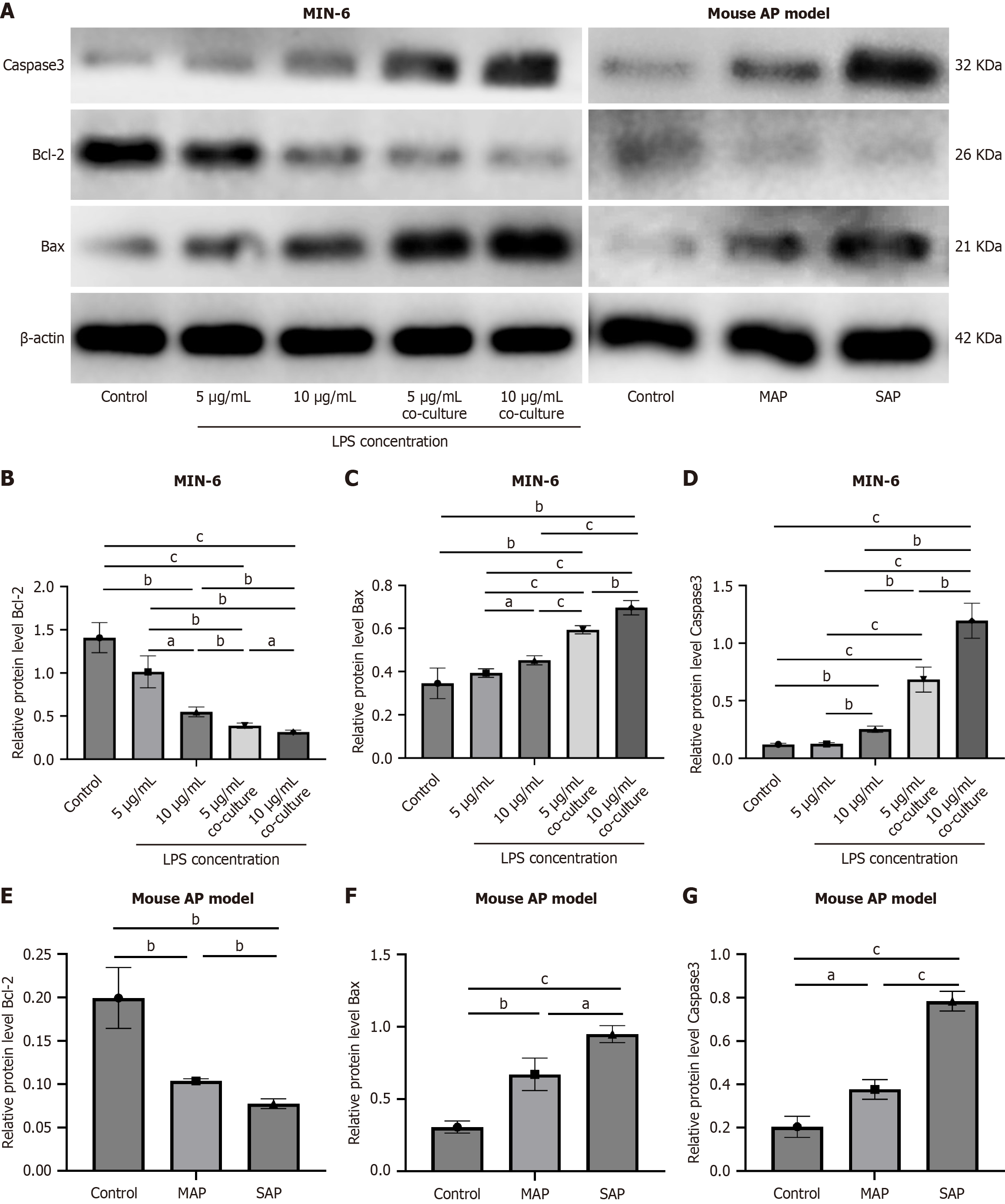
Figure 3 Acute pancreatitis induces islet β-cell apoptosis through the tumor necrosis factor-α-dependent Bax/Bcl-2/caspase-3 apoptotic signaling pathway.
A: Western blot analysis was performed to detect the expression of caspase-3, Bcl-2, and Bax in MIN-6 cells under control conditions, lipopolysaccharide stimulation, and co-culture with media from lipopolysaccharide-treated 266-6 cells, and in acute pancreatitis mouse tissues; B-D: Quantitative analysis of Bcl-2, Bax and caspase-3 relative protein expression in vitro acute pancreatitis model; E-G: Quantitative analysis of Bcl-2, Bax and caspase-3 relative protein expression in vivo acute pancreatitis model. Representative results from three independent replicate assays are shown. aP < 0.05, bP < 0.01, cP < 0.001. Data are presented as the mean ± SD. AP: Acute pancreatitis; LPS: Lipopolysaccharide; MAP: Mild acute pancreatitis; SAP: Severe acute pancreatitis.
- Citation: Chen HF, Gong C, Wang TT, Zhu JX, Li WP. Tumor necrosis factor-α promotes abnormal glucose metabolism after acute pancreatitis by inducing islet β-cell apoptosis via Bax/Bcl-2/caspase-3 signaling pathway. World J Gastroenterol 2025; 31(47): 113205
- URL: https://www.wjgnet.com/1007-9327/full/v31/i47/113205.htm
- DOI: https://dx.doi.org/10.3748/wjg.v31.i47.113205