
















©The Author(s) 2025.
World J Gastroenterol. Dec 21, 2025; 31(47): 113156
Published online Dec 21, 2025. doi: 10.3748/wjg.v31.i47.113156
Published online Dec 21, 2025. doi: 10.3748/wjg.v31.i47.113156
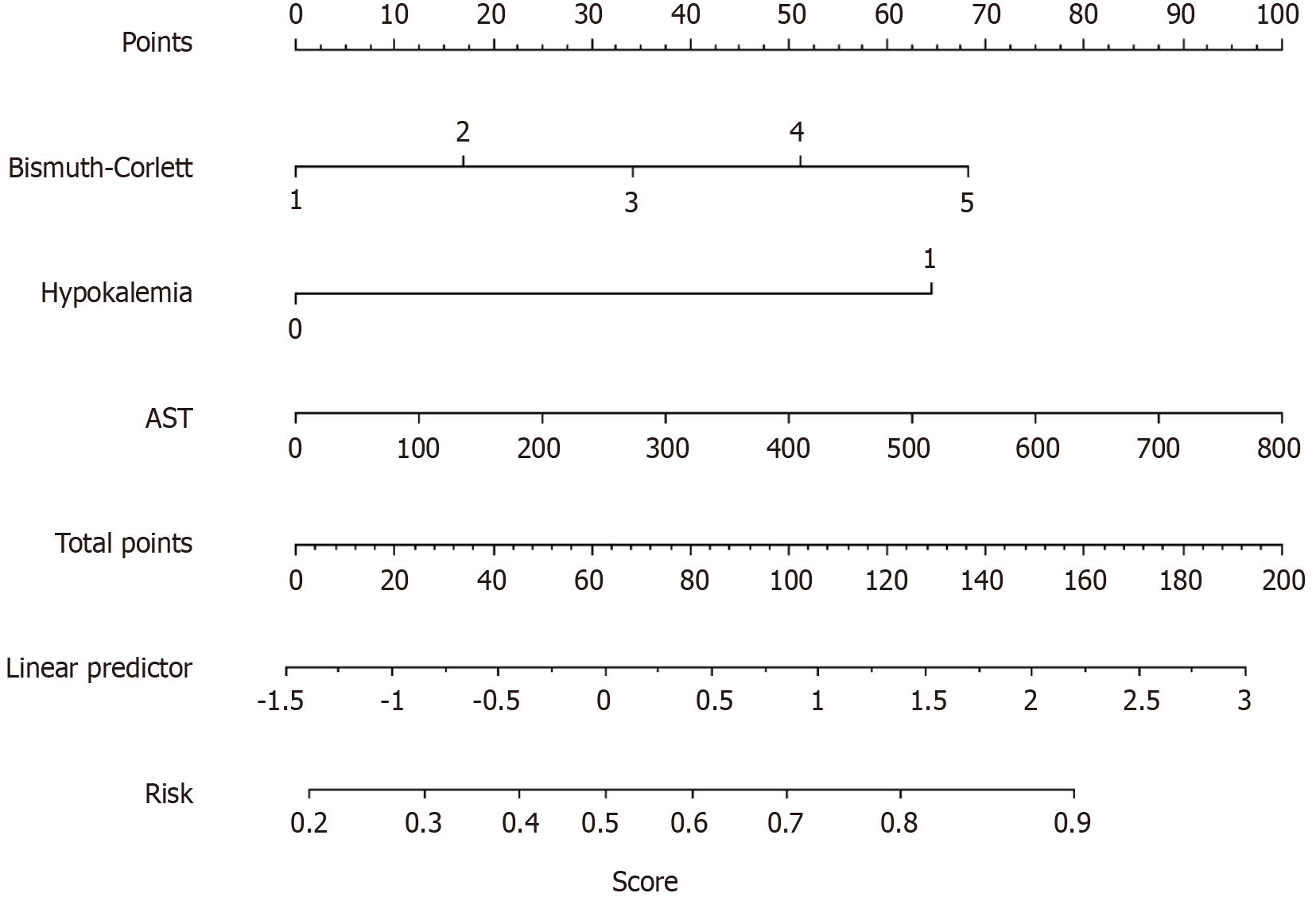
Figure 2 Nomogram for postoperative biliary infection.
The nomogram illustrates the risk of postoperative biliary infection (PBI) in individuals suffering from malignant perihilar biliary obstruction who underwent endoscopic retrograde cholangiopancreatography. To apply it, the clinician identifies the patient’s value on each variable axis and draws a line upward to assign points for that variable. After summing the points across all variables, the total is located on the overall points axis. From there, a line is drawn downward to the risk scale to estimate the probability of PBI. In this nomogram, a patient with hypokalemia is shown as 1 and the case without is denoted as 0; in the Bismuth-Corlett classification, “3” denotes type IIIa, “4” symbolizes type IIIb and “5” defines type IV. AST: Aspartate transaminase.
- Citation: Wang YF, Han K, An N, Sun YN, Gao F, Sun Y, Zhang D, Zhao ZF, Guo Q, Gu JN, Yang Z. Risk prediction of biliary infection after endoscopic drainage for malignant perihilar biliary obstruction: A 10-year multicenter retrospective study. World J Gastroenterol 2025; 31(47): 113156
- URL: https://www.wjgnet.com/1007-9327/full/v31/i47/113156.htm
- DOI: https://dx.doi.org/10.3748/wjg.v31.i47.113156