
















©The Author(s) 2025.
World J Gastroenterol. Dec 14, 2025; 31(46): 112664
Published online Dec 14, 2025. doi: 10.3748/wjg.v31.i46.112664
Published online Dec 14, 2025. doi: 10.3748/wjg.v31.i46.112664
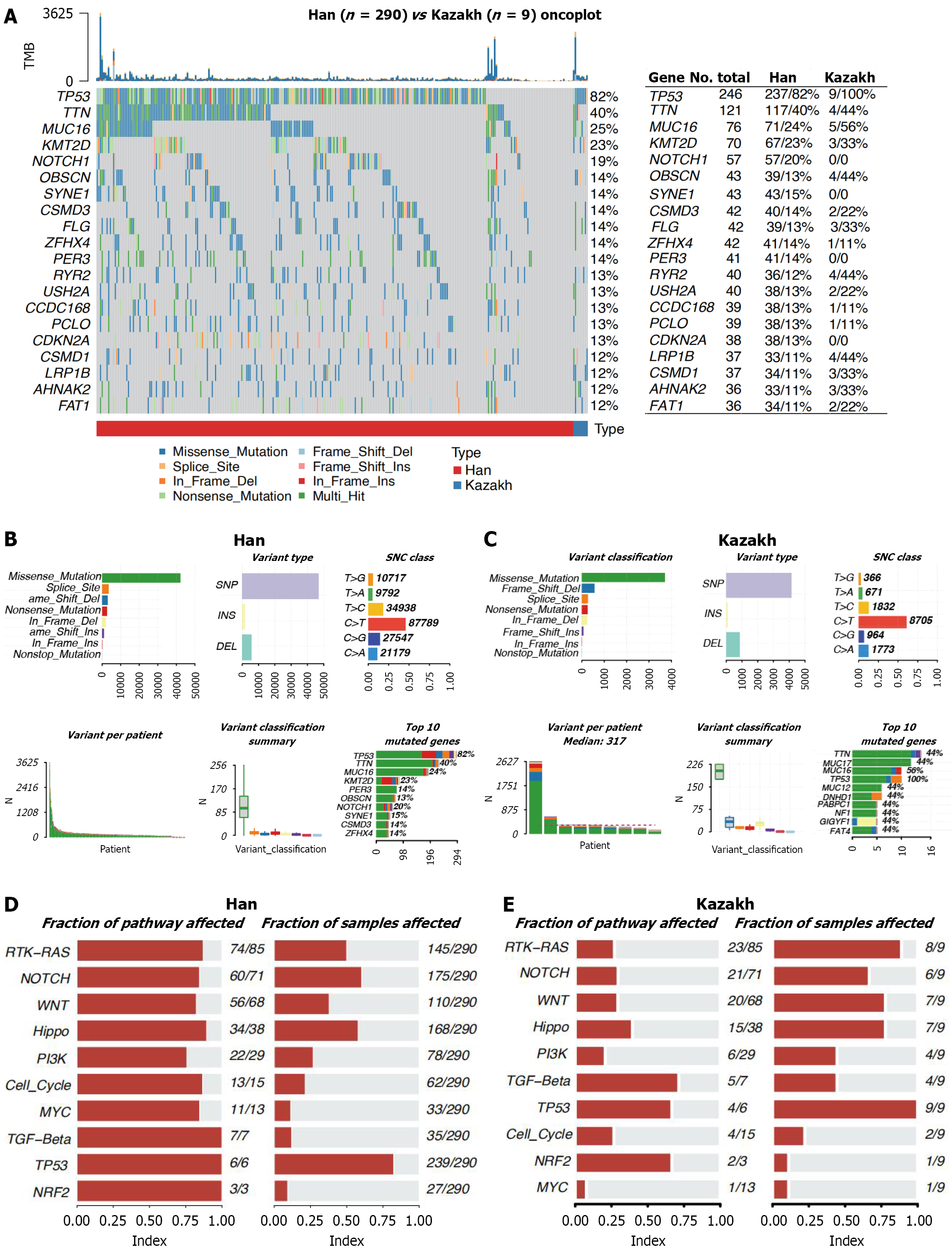
Figure 2 Significantly mutated genes in esophageal squamous cell carcinoma.
A: Significantly mutated genes (SMGs) identified by MutSigCV on a combined cohort of Han and Kazakh ethnics groups, Chinese whole-exome sequence samples. Each column denotes an esophageal squamous cell carcinoma patient, and each row is a gene. On top is the number of somatic mutations per sample. On the right are the mutation frequencies of each SMG. The bar plot on the top shows the composition of mutations in the gene. Genes are ordered by their mutation frequencies. The table on the right shows the number of mutation population of total, Han and Kazakh; B and C: Visualizing mutation summary. This maftools plot shows a summary of the multiple alignment format file. Highlighting the most mutated genes, single-nucleotide variant class, and variant classification distributions within a tumor type for Han and Kazakh patients; D and E: Fraction of pathway and sample affected for Han and Kazakh. SNV: Single nucleotide variant; SNP: Single nucleotide polymorphism; INS: Insertion; DEL: Deletion; PI3K: Phosphatidylinositol 3-kinase; TGF: Transforming growth factor; NRF2: Nuclear factor erythroid 2-related factor 2.
- Citation: Wei MX, Lei LL, Xu RH, Liu YX, Wang R, Han WL, Fan ZM, Xiao FK, Sheyhidin I, Ma L, Ku JW, Yin MZ, Ji AF, Bao QD, Gao SG, Han XN, Li XM, Chen PN, Zhao XK, Song X, Wang LD. Ethnic genomic differences in esophageal squamous cell carcinoma: Whole-exome sequencing of Han and Kazakh populations in China. World J Gastroenterol 2025; 31(46): 112664
- URL: https://www.wjgnet.com/1007-9327/full/v31/i46/112664.htm
- DOI: https://dx.doi.org/10.3748/wjg.v31.i46.112664