
















©The Author(s) 2025.
World J Gastroenterol. Dec 7, 2025; 31(45): 112720
Published online Dec 7, 2025. doi: 10.3748/wjg.v31.i45.112720
Published online Dec 7, 2025. doi: 10.3748/wjg.v31.i45.112720
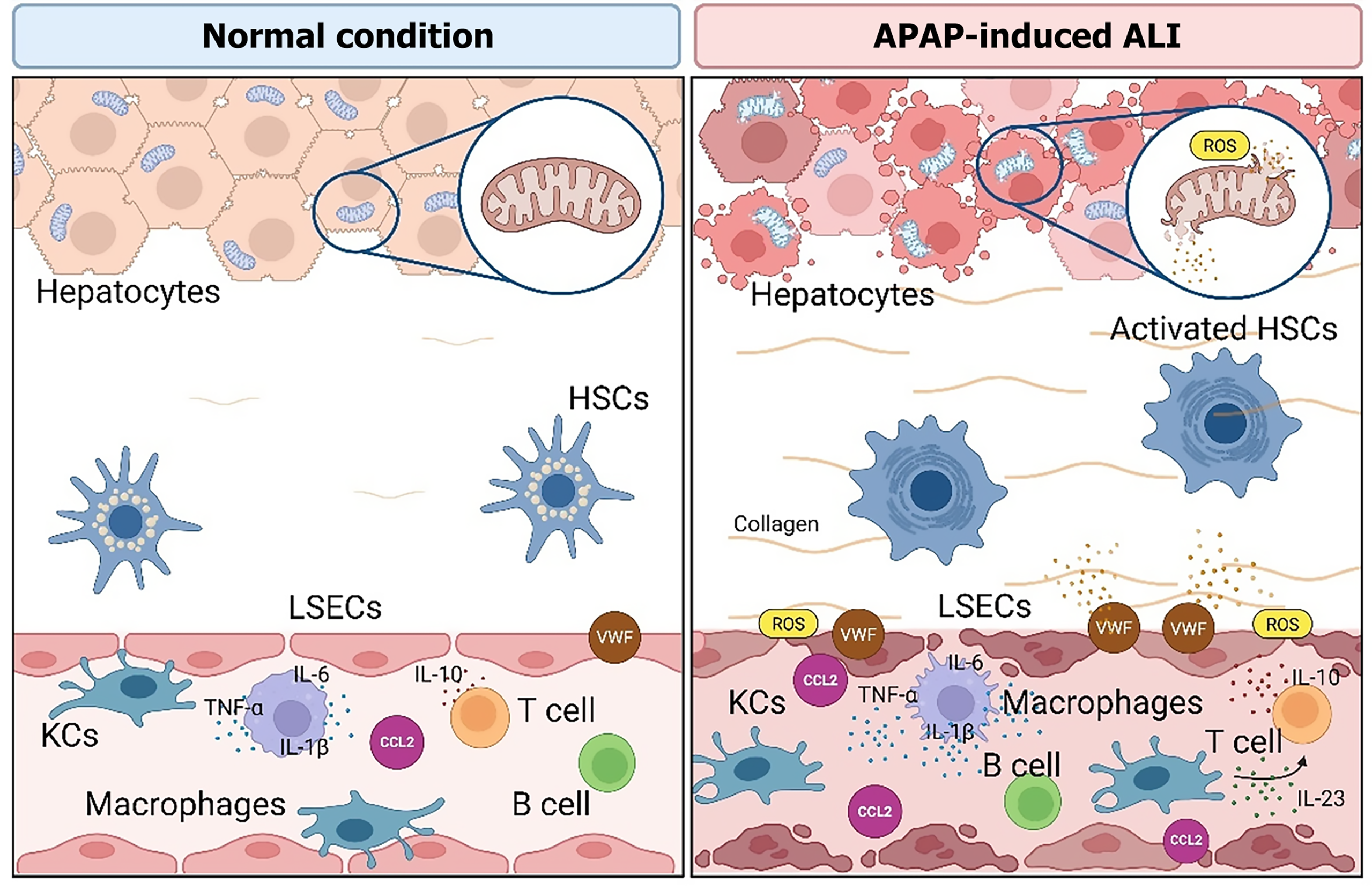
Figure 3 Overview of hepatic cell-type-specific responses in acetaminophen-induced acute liver injury.
This schematic depicts the coordinated actions of hepatic cell populations under both homeostatic conditions and following acetaminophen [N-acetyl-p-aminophenol (APAP)]-induced acute liver injury. An APAP overdose induces mitochondrial oxidative stress in hepatocytes, stimulates activation of hepatic stellate cells, elicits pro-inflammatory responses from Kupffer cells and monocyte-derived macrophages, and causes dysfunction of liver sinusoidal endothelial cells. The roles of adaptive immune cells, including T and B cells, are highlighted in the modulation of inflammation and tissue repair. This comprehensive illustration underlines the importance of multicellular dynamics governing both the progression and resolution phases of APAP-induced liver injury. APAP: N-acetyl-p-aminophenol (Acetaminophen); CCL2: Chemokine (C-C motif) ligand 2; HSCs: Hepatic stellate cells; IL: Interleukin; KCs: Kupffer cells; LSECs: Liver sinusoidal endothelial cells; ROS: Reactive oxygen species; TNF-α: Tumor necrosis factor-alpha; VWF: Von Willebrand factor. This figure was created using BioRender.
- Citation: Yang D, Kim B, Kim JW. Mechanistic insights into hepatic cell type-specific contributions to acetaminophen-induced acute liver injury. World J Gastroenterol 2025; 31(45): 112720
- URL: https://www.wjgnet.com/1007-9327/full/v31/i45/112720.htm
- DOI: https://dx.doi.org/10.3748/wjg.v31.i45.112720