
















©The Author(s) 2025.
World J Gastroenterol. Dec 7, 2025; 31(45): 112618
Published online Dec 7, 2025. doi: 10.3748/wjg.v31.i45.112618
Published online Dec 7, 2025. doi: 10.3748/wjg.v31.i45.112618
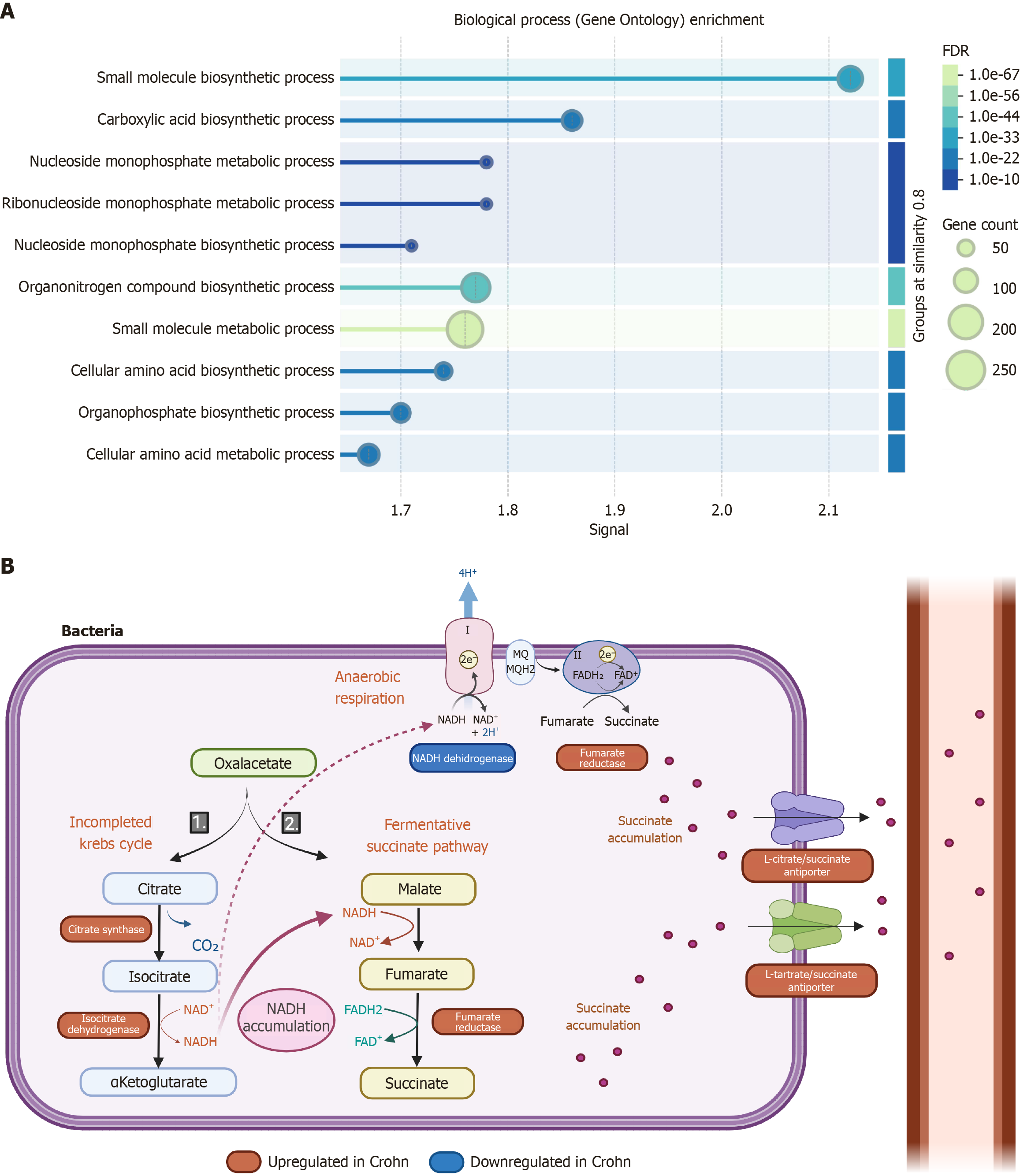
Figure 4 Functional analysis reveals succinate as a key metabolite associated with microbial dysbiosis in Crohn’s disease.
A: Gene Ontology enrichment analysis of microbial functions reveals a significant increase in carboxylic acid biosynthesis pathways in faecal microbiota from active Crohn’s disease (CD) patients compared with non-inflammatory bowel diseases controls (false discovery rate = 1 × 10-44), with succinate emerging as a central metabolite; B: Schematic representation of the main metabolic pathways active in strict anaerobic gut bacteria in CD patients. These bacteria exhibit upregulation of glycolytic enzymes and of specific enzymes of the (incomplete) tricarboxylic acid cycle - namely citrate synthase and isocitrate dehydrogenase - leading to increased NADH production. In the context of reduced NADH dehydrogenase activity, the excess NADH is diverted towards fermentative and anaerobic respiratory pathways, favouring succinate production. Fumarate reductase, an enzyme responsible for reducing fumarate to succinate, is also upregulated. Additionally, transporters such as L-citrate/succinate and L-tartrate/succinate are significantly increased, promoting succinate export from the bacterial cell. This metabolic reprogramming reflects adaptations typical of strict anaerobes and may contribute to the accumulation of microbial-derived succinate observed in CD. Figure created with BioRender.com. FDR: False discovery rate.
- Citation: Boronat-Toscano A, Queipo-Ortuño MI, Monfort-Ferré D, Suau R, Vañó-Segarra I, Valldosera G, Cepero C, Astiarraga B, Clua-Ferré L, Plaza-Andrade I, Aranega-Martín L, Cabrinety L, Abadia de Barbarà C, Castellano-Castillo D, Moliné A, Caro A, Domènech E, Sánchez-Herrero JF, Benaiges-Fernandez R, Fernández-Veledo S, Vendrell J, Ginés I, Sumoy L, Manyé J, Menacho M, Serena C. Dialister-driven succinate accumulation is associated with disease activity and postoperative recurrence in Crohn’s disease. World J Gastroenterol 2025; 31(45): 112618
- URL: https://www.wjgnet.com/1007-9327/full/v31/i45/112618.htm
- DOI: https://dx.doi.org/10.3748/wjg.v31.i45.112618