
















©The Author(s) 2025.
World J Gastroenterol. Dec 7, 2025; 31(45): 112618
Published online Dec 7, 2025. doi: 10.3748/wjg.v31.i45.112618
Published online Dec 7, 2025. doi: 10.3748/wjg.v31.i45.112618
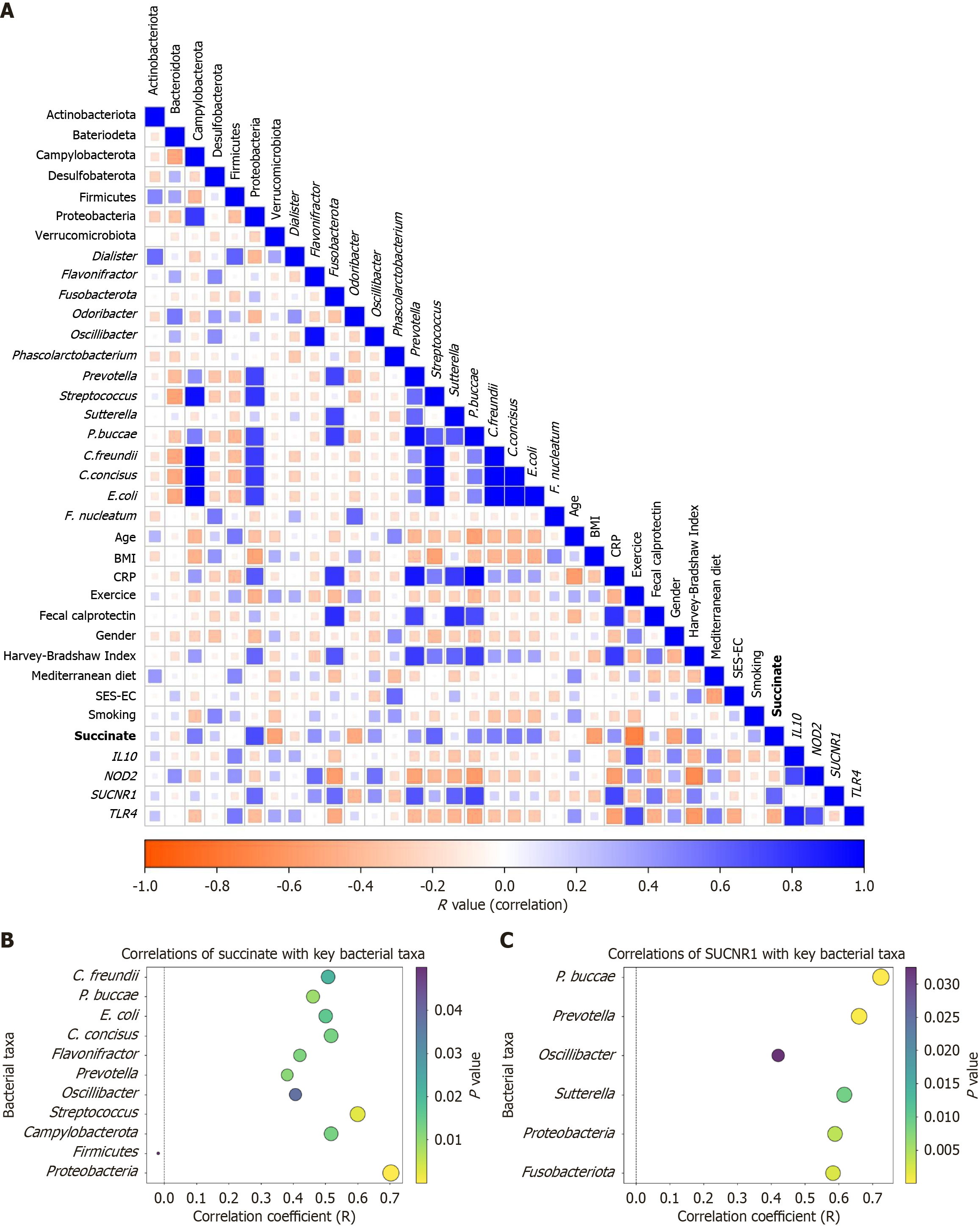
Figure 2 Correlation between gut microbiota metabolite succinate, microbial composition, and inflammatory markers.
A: Correlogram displaying Pearson’s correlation coefficients among succinate levels, microbial relative abundances, and clinical and biological parameters in the study cohort (n = 31); B: Correlation between circulating succinate levels and specific microbial taxa; C: Correlation between the succinate receptor 1 and specific microbial taxa. SUCNR1: Succinate receptor 1.
- Citation: Boronat-Toscano A, Queipo-Ortuño MI, Monfort-Ferré D, Suau R, Vañó-Segarra I, Valldosera G, Cepero C, Astiarraga B, Clua-Ferré L, Plaza-Andrade I, Aranega-Martín L, Cabrinety L, Abadia de Barbarà C, Castellano-Castillo D, Moliné A, Caro A, Domènech E, Sánchez-Herrero JF, Benaiges-Fernandez R, Fernández-Veledo S, Vendrell J, Ginés I, Sumoy L, Manyé J, Menacho M, Serena C. Dialister-driven succinate accumulation is associated with disease activity and postoperative recurrence in Crohn’s disease. World J Gastroenterol 2025; 31(45): 112618
- URL: https://www.wjgnet.com/1007-9327/full/v31/i45/112618.htm
- DOI: https://dx.doi.org/10.3748/wjg.v31.i45.112618