
















©The Author(s) 2025.
World J Gastroenterol. Nov 28, 2025; 31(44): 113793
Published online Nov 28, 2025. doi: 10.3748/wjg.v31.i44.113793
Published online Nov 28, 2025. doi: 10.3748/wjg.v31.i44.113793
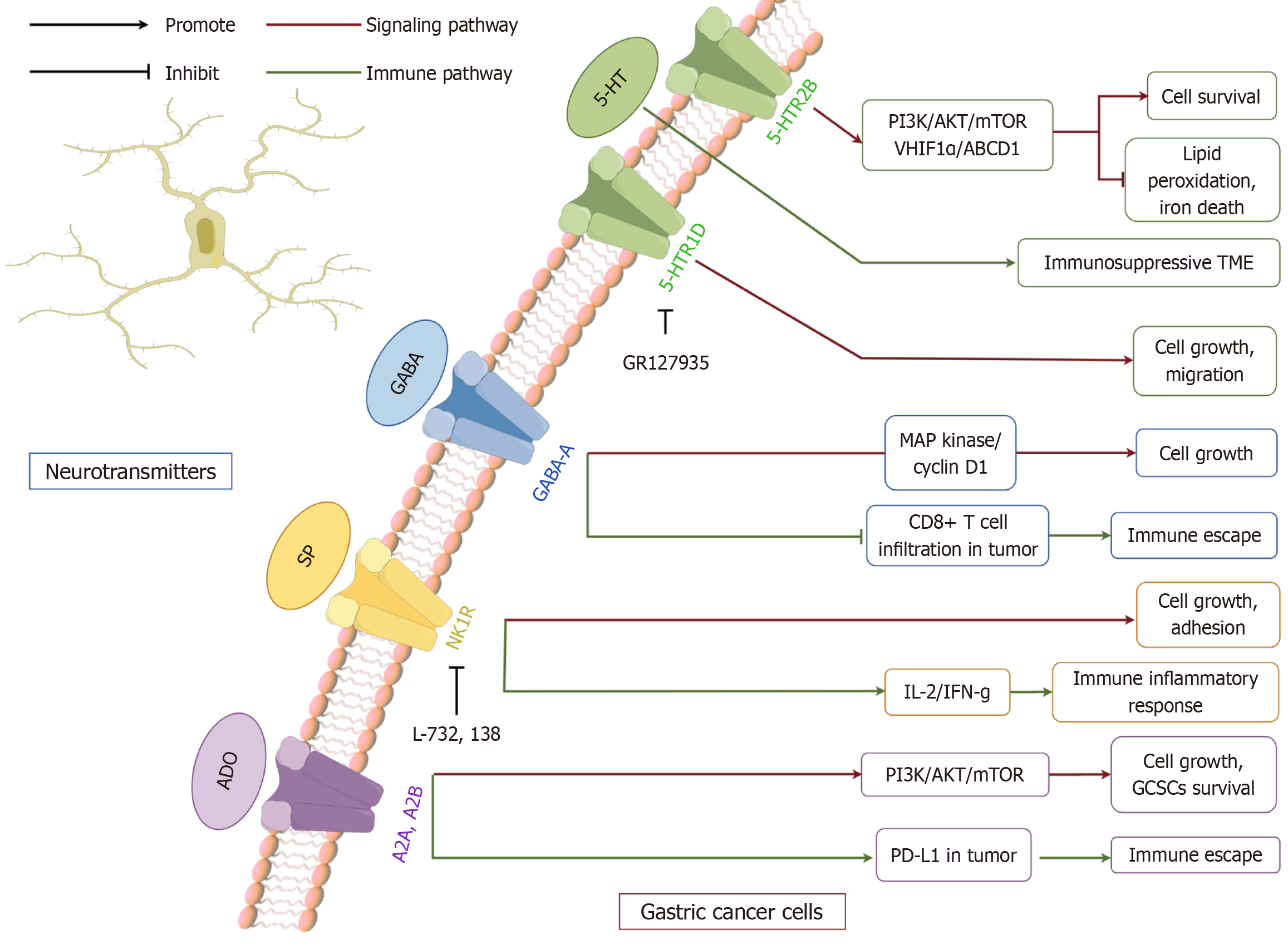
Figure 3 The interaction between serotonin, γ-aminobutyric acid, substance P, adenosine and gastric cancer.
Neurotransmitters from the monoamine, amino acid, peptide, and purine classes—namely serotonin (5-HT), γ-aminobutyric acid (GABA), substance P (SP), and adenosine (ADO)—interact with overexpressed receptors on gastric carcinoma cells, leading to the activation of distinct intracellular signaling networks. In particular, 5-HT engages HTR2B to stimulate the PI3K pathway, which supports cellular survival and proliferation while suppressing ferroptosis and apoptosis; through HTR1D, it further drives proliferative activity. GABA primarily connects with MAPK signaling, thereby fostering tumor expansion and metabolic reprogramming. SP triggers immune mediators such as IL-2, amplifying inflammatory responses. ADO, acting via A2A/B-dependent PI3K signaling, promotes tumor development and upregulates PD-L1 expression, enabling immune escape. Collectively, these ligand-receptor interactions initiate pathway-specific cascades that converge on hallmark tumor phenotypes, including growth, migration, invasion, and immune modulation, highlighting their diverse contributions to gastric carcinoma progression (by figdraw.com, Supplementary material). 5-HT: Serotonin; GABA: Γ-aminobutyric acid; SP: Substance P; ADO: Adenosine; TME: Tumor microenvironment.
- Citation: Liu YZ, Liu WX, Deng WH. Advances in the study of the relationship between neurotransmitters and gastric cancer. World J Gastroenterol 2025; 31(44): 113793
- URL: https://www.wjgnet.com/1007-9327/full/v31/i44/113793.htm
- DOI: https://dx.doi.org/10.3748/wjg.v31.i44.113793