
















©The Author(s) 2025.
World J Gastroenterol. Nov 28, 2025; 31(44): 112833
Published online Nov 28, 2025. doi: 10.3748/wjg.v31.i44.112833
Published online Nov 28, 2025. doi: 10.3748/wjg.v31.i44.112833
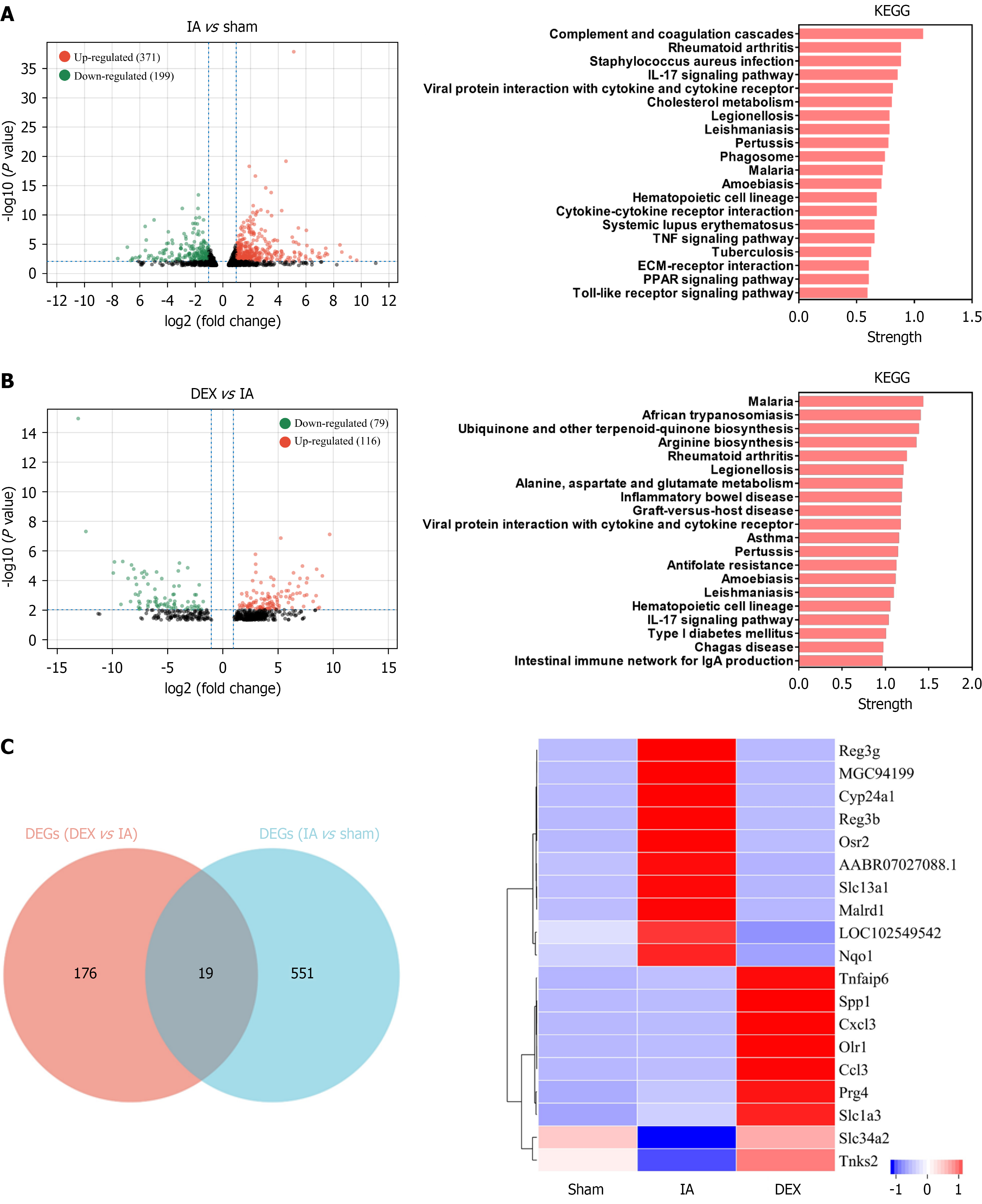
Figure 3 Exploring the potential molecular mechanisms underlying dexmedetomidine-mediated gut protection using transcriptome sequencing (RNA-sequencing).
A: A comparative analysis between the intestinal anastomosis (IA) and the sham groups (screening criteria: Fold change > 2 and P < 0.01) identified 570 differentially expressed genes (DEGs), with 371 upregulated and 199 downregulated genes. Kyoto Encyclopedia of Genes and Genomes (KEGG) enrichment analysis of these 570 DEGs is shown in the right panel; B: Comparative analysis between the IA + dexmedetomidine (DEX) group and the IA group (screening criteria: Fold change > 2 and P < 0.01) identified 195 DEGs, including 116 upregulated and 79 downregulated DEGs. KEGG enrichment analysis of these 195 DEGs is presented in the right panel; C: The intersection of the two sets of DEGs revealed 19 overlapping genes. These genes, which both mediate IA progression and are modulated by DEX and represent potential therapeutic targets. A heatmap also illustrated the expression levels of these 19 genes across the three experimental groups. KEGG: Kyoto Encyclopedia of Genes and Genomes; TNF: Tumor necrosis factor; IL: Interleukin; ECM: Extracellular matrix; PPAR: Peroxisome proliferators-activated receptor; DEX: Dexmedetomidine; IA: Intestinal anastomosis; Sham group: Underwent abdominal only opening and closure.
- Citation: Chen Y, Li CT, Wang JB, Tang WL, Zhao Y, Chen Y, Liao LM, Zhang LC, Lin TH, Cao ZF. Dexmedetomidine enhances anastomotic healing partly via the Wnt/β-catenin pathway in a rat model of colon surgery. World J Gastroenterol 2025; 31(44): 112833
- URL: https://www.wjgnet.com/1007-9327/full/v31/i44/112833.htm
- DOI: https://dx.doi.org/10.3748/wjg.v31.i44.112833