
















©The Author(s) 2025.
World J Gastroenterol. Nov 21, 2025; 31(43): 112797
Published online Nov 21, 2025. doi: 10.3748/wjg.v31.i43.112797
Published online Nov 21, 2025. doi: 10.3748/wjg.v31.i43.112797
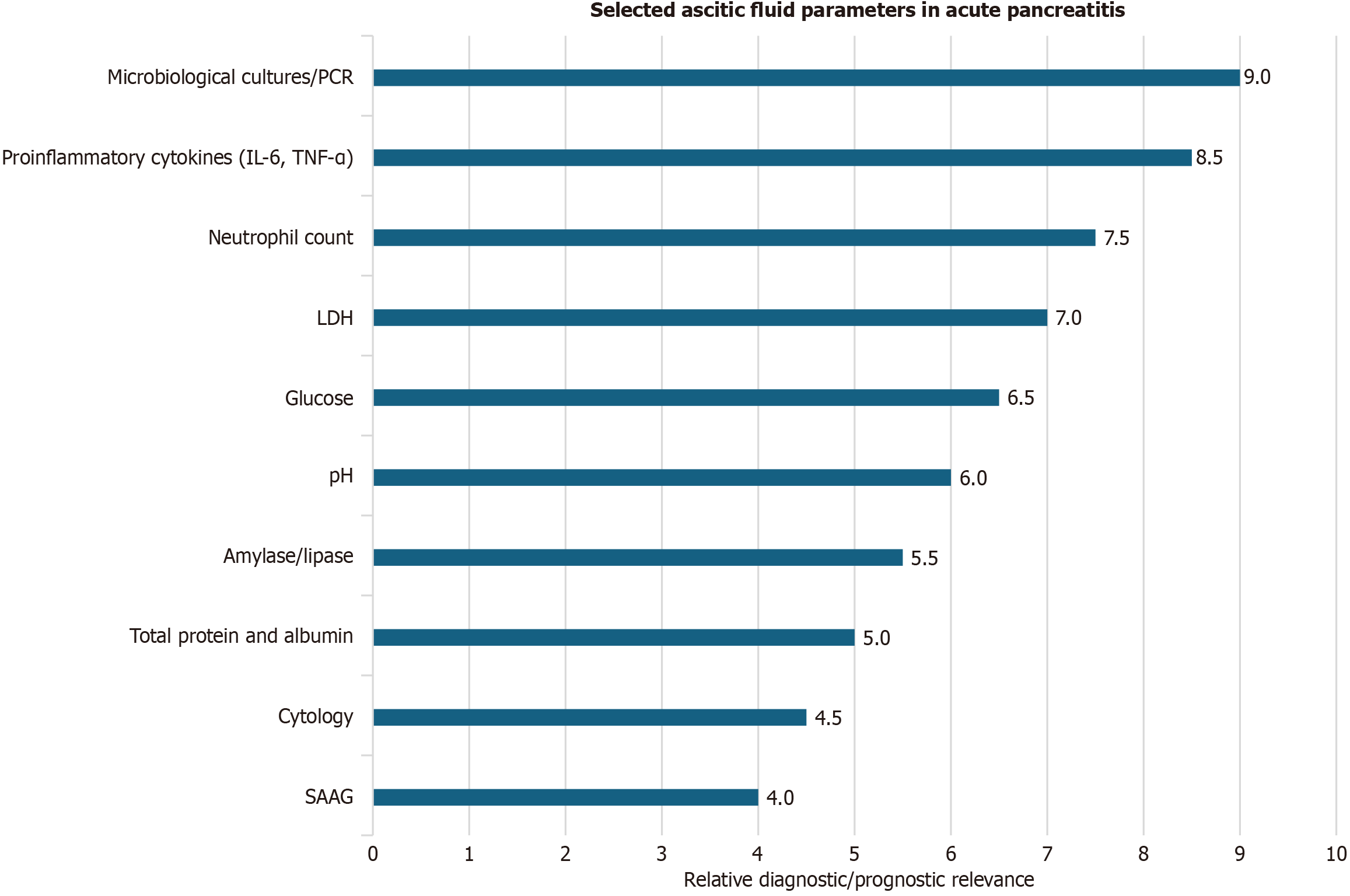
Figure 2 Selected ascitic fluid parameters with potential diagnostic and prognostic value in acute pancreatitis.
Microbiological cultures/PCR are critical for detecting superinfection or infected necrosis. Proinflammatory cytokines (interleukin-6, tumor necrosis factor-alpha) are specific indicators of systemic inflammation and risk of organ failure though less available and more costly. Neutrophil count reflects inflammatory burden and is useful in resource-limited settings. Lactate dehydrogenase is inexpensive and widely available but relatively nonspecific. Glucose and pH at reduced levels suggest infection. Amylase/Lipase support the diagnosis of pancreatic ascites due to ductal disruption. Total protein and albumin characterize the exudative nature and indicate vascular permeability. Serum-ascites albumin gradient differentiates pancreatic ascites from portal hypertension. Cytology excludes malignancy. When interpreted together, combinations such as LDH plus neutrophil count may increase predictive accuracy. IL-6: Interleukin-6; TNF: Tumor necrosis factor; LDH: Lactate dehydrogenase; SAAG: Serum-ascites albumin gradient.
- Citation: Zerem E, Zerem D, Vila Š, Bajgorić S. Ascites in acute pancreatitis: A window into disease severity. World J Gastroenterol 2025; 31(43): 112797
- URL: https://www.wjgnet.com/1007-9327/full/v31/i43/112797.htm
- DOI: https://dx.doi.org/10.3748/wjg.v31.i43.112797