
















©The Author(s) 2025.
World J Gastroenterol. Nov 14, 2025; 31(42): 111706
Published online Nov 14, 2025. doi: 10.3748/wjg.v31.i42.111706
Published online Nov 14, 2025. doi: 10.3748/wjg.v31.i42.111706
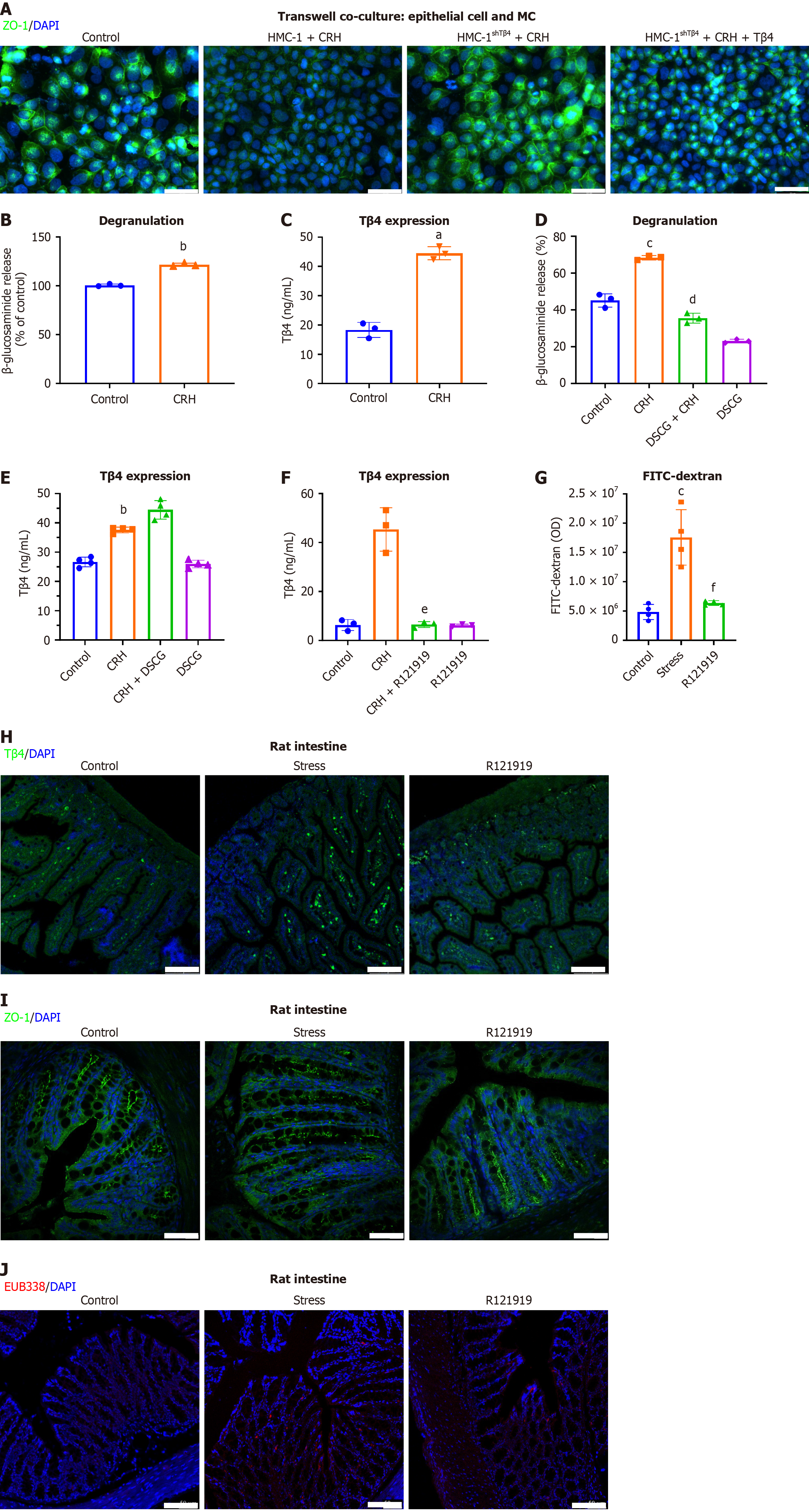
Figure 8 Thymosin β4 release from mast cells is driven by corticotropin-releasing hormone/corticotropin-releasing hormone receptor 1 signaling, bypassing degranulation.
A: HMC-1 cells or Thymosin β4 knock down HMC-1 cells (shTβ4) were co-cultured with Caco2 cells monolayers. The immunofluorescence staining of zonulin 1 (ZO-1) was evaluated. Scale bar, 50 μm; B and C: After treatment of HMC-1 cells with corticotropin-releasing hormone (CRH) (500 nmol/L) for 15 minutes, (B) the level of degranulation and (C) the secretion of Tβ4 were determined; D and E: The cells were treated with DSCG before CRH, and (D) the level of degranulation and (E) the secretion of Tβ4 were determined; F: The concentration of Tβ4 in HMC-1 after pre-administration with CRH receptor 1 antagonist (R121919) followed by CRH treatment; G: Stressed rats were injected with R121919 (10 mg/kg), and the intestinal barrier permeability was assessed by FD4 assay; H and I: Representative immunofluorescence of the intestine for (H) Tβ4 (Scale bar, 100 μm) and (I) ZO-1, Scale bar, 50 μm; J: Representative FISH staining for bacterial infiltration using EUB338 probe (red) and DAPI (blue). Scale bar, 100 μm. Bar, SD, aP < 0.001 vs Control, bP < 0.01 vs Control, cP < 0.05 vs Control, dP < 0.001 vs CRH group, eP < 0.05 vs CRH group, fP < 0.05 vs stress group. MC: Mast cell; ZO-1: Zonulin 1; CRH: Corticotropin-releasing hormone; Tβ4: Thymosin β4.
- Citation: Sun YS, Bai XQ, Sun KD, Li J, Liu L, Chen YY, Zeng ZY, Wang Q, Guo YB. Thymosin β4 released by mast cells under stress conditions impairs intestinal epithelial barrier via IL22RA1/JAK1/STAT3 signaling in irritable bowel syndrome. World J Gastroenterol 2025; 31(42): 111706
- URL: https://www.wjgnet.com/1007-9327/full/v31/i42/111706.htm
- DOI: https://dx.doi.org/10.3748/wjg.v31.i42.111706