
















©The Author(s) 2025.
World J Gastroenterol. Nov 7, 2025; 31(41): 111174
Published online Nov 7, 2025. doi: 10.3748/wjg.v31.i41.111174
Published online Nov 7, 2025. doi: 10.3748/wjg.v31.i41.111174
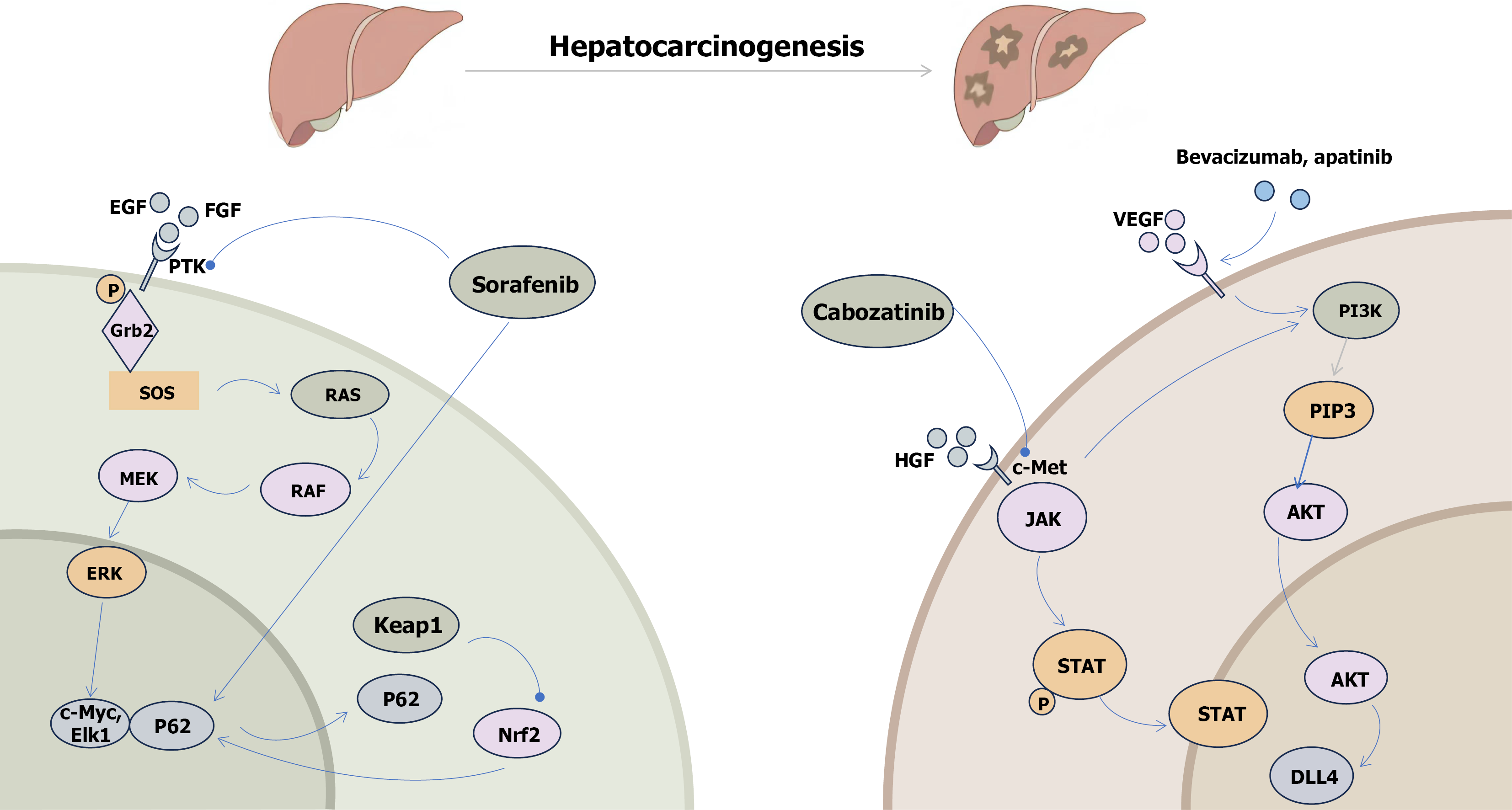
Figure 1 The hepatocarcinogenesis-related signaling pathways and their drugs of action are critical for understanding liver cancer biology and developing targeted therapies.
Sorafenib inhibits the expression of c-Myc and ETS transcription factor 1 through multiple rapidly accelerated fibrosarcoma/mitogen-activated protein kinase kinase/extracellular signal-regulated kinase signaling pathways, including the Janus kinase/signal transducer and activator of the transcription pathway, while promoting the expression of pro-death markers like P62. Cabozantinib exerts its anti-liver cancer effects primarily through the phosphatidylinositol 3-kinase/phosphatidylinositol-(3,4)-P2/protein kinase B pathway. Additionally, bevacizumab and apatinib target liver cancer by inhibiting key downstream signaling molecules in the phosphatidylinositol 3-kinase/phosphatidylinositol-(3,4)-P2/protein kinase B pathway, thereby modulating the cellular response to these anti-tumor therapies. These findings underscore the importance of understanding the molecular mechanisms of drug action in the development of more effective liver cancer treatments. EGF: Epidermal growth factor; FGF: Fibroblast growth factor; PTK: Protein tyrosine kinases; RAF: Rapidly accelerated fibrosarcoma; MEK: Mitogen-activated protein kinase kinase; ERK: Extracellular signal-regulated kinase; Elk1: ETS transcription factor 1; Keap1: Kelch-like ECH-associated protein 1; Nrf2: Nuclear factor erythroid 2-related factor 2; VEGF: Vascular endothelial growth factor; PI3K: Phosphatidylinositol 3-kinase; PIP3: Phosphatidylinositol-(3,4,5)-P3; HGF: Hepatocyte growth factor; AKT: Protein kinase B; STAT: Signal transducer and activator of the transcription; DLL4: Delta-like ligand 4.
- Citation: Han JF, Jia ZY, Fan X, Zhao XY, Cheng LY, Xia YX, Ji XR, Zang WQ. Mechanisms of ferroptosis in primary hepatocellular carcinoma and progress of artificial intelligence-based predictive modeling in hepatocellular carcinoma. World J Gastroenterol 2025; 31(41): 111174
- URL: https://www.wjgnet.com/1007-9327/full/v31/i41/111174.htm
- DOI: https://dx.doi.org/10.3748/wjg.v31.i41.111174